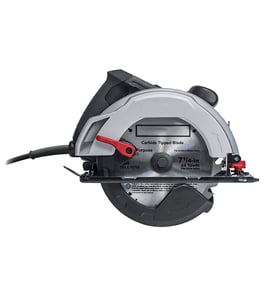

What is the best rated circular saw?
The best-rated circular saw is the one that matches how you cut most often (corded vs. cordless, blade size, and power). For most DIY and jobsite users, a 7-1/4 inch cordless brushless saw is the top all-around pick; for heavy framing, a worm drive style is a common pro favorite.
- Best all-around (most users): 7-1/4 inch cordless, brushless motor, magnesium shoe
- Best for heavy framing: worm drive (or rear-handle) for torque and line-of-sight
- Best value corded: 15-amp class, 7-1/4 inch sidewinder
- Best for sheet goods: saw with a rigid base, good dust port, and a quality guide/track setup
- Best for portability: compact 6-1/2 inch cordless (lighter, shorter runtime under load)
| What you’re comparing | What “better” looks like | Why it matters |
|---|---|---|
| Power system | Brushless cordless or strong 15-amp corded | Maintains speed in thick lumber |
| Blade size | 7-1/4 inch (most versatile) | Cut depth and blade availability |
| Base/shoe | Flat, rigid, stays square | Straighter cuts, less binding |
| Bevel capacity | Smooth bevel adjustment, solid detents | Faster angle cuts, fewer re-checks |
| Safety/control | Electric brake, good guard action | Cleaner stops, fewer surprises |
Your Skil 107 (Type 3) is a classic 10 inch super duty saw; it’s typically chosen for power and cut capacity rather than being the lightest or most compact option. If you’re comparing “best rated” saws today, use your 107 as the benchmark for cut depth and torque, then decide whether you want modern convenience (cordless, brake, lighter weight) or maximum capacity.
A “top-rated” saw on paper can still cut poorly if it doesn’t match your materials. Choosing the right blade size, base rigidity, and power level reduces binding, improves cut accuracy, and helps the motor last longer.
For safe DIY habits that apply to power tools like circular saws, use our guide: are diy appliance repairs safe.
Last updated: February 2026
What are the three types of saws?
The three most common saw types we group by cutting action are circular saws (spinning blade for straight cuts), reciprocating saws (push-pull blade for rough cutting and demolition), and hand saws (manual cutting for controlled, precise work). For a Skil 107 circular saw, you are in the circular-saw category.
| Saw type | Cutting motion | Best for | Typical strengths | Common limitations |
|---|---|---|---|---|
| Circular saw | Rotating blade | Straight cuts in lumber and sheet goods | Fast, portable, versatile with the right blade | Not ideal for tight curves |
| Reciprocating saw | Back-and-forth stroke | Demolition, pruning, rough cuts | Cuts many materials, good in tight spaces | Rougher cut quality |
| Hand saw | Manual stroke | Finish work, small jobs, jobsite backups | Quiet, controlled, no power needed | Slower, more effort |
- Pick a circular saw for long, straight cuts in plywood, framing lumber, and decking.
- Pick a reciprocating saw when speed matters more than finish quality (demo, nail-embedded wood).
- Pick a hand saw for small cuts, trim adjustments, or when power is not practical.
- Match the blade type to the material (wood, metal-cutting, carbide-tipped, fine-tooth).
- Use the right safety basics: eye protection, stable work support, and keep the cord clear of the cut.
Using the correct saw type improves cut quality, reduces kickback risk, and helps your Skil 107 (10-inch super duty power saw, type 3) perform the way it was designed to, especially when you pair it with the right blade and cutting technique.
For more DIY repair and maintenance guidance, we recommend starting with are diy appliance repairs safe.
Last updated: February 2026
Is SKIL a good brand of saw?
Yes. Skil circular saws, including the Skil 107 (10" super duty power saw, Type 3), are generally a solid value for DIY and light-to-moderate jobsite use when you match the saw’s power and build quality to the work you do. For heavy daily cutting, durability depends more on the specific model and maintenance than the brand name alone.
We judge a saw by how it performs in real cuts and how well it holds up over time.
- Cut performance: power under load, smooth starts, and consistent blade speed
- Accuracy: stable base/shoe, minimal blade wobble, and reliable depth/bevel locks
- Durability: motor life, switch life, cord strain relief, and bearing condition
- Serviceability: ability to inspect wiring, brushes (if equipped), and fasteners
- Safety and control: guard return action, handle comfort, and trigger feel
| Use case | What Skil typically does well | What to watch for |
|---|---|---|
| DIY home projects | Good value, capable for common lumber cuts | Don’t overload with thick hardwood or long rip cuts nonstop |
| Remodel and weekend jobsite | Works well if maintained and used within limits | Cord, switch, and bearings show wear sooner with daily use |
| Heavy pro production cutting | Some models can handle it | Choose higher-duty builds; keep blades sharp and inspect often |
- If you mostly cut 2x lumber, plywood, and trim, Skil is typically a good match.
- If you regularly cut thick hardwood, wet pressure-treated lumber, or long rips, prioritize a higher-duty saw and premium blades.
- If your saw bogs down, smells hot, or trips breakers, the workload or blade condition is the issue more often than the brand.
A “good” saw is the one that stays accurate and safe while meeting your workload. With any circular saw, a sharp blade, solid electrical connections, and a smooth guard return do more for results than brand reputation.
For basic electrical checks that help you judge tool condition, use our guides: how to tell if a fuse is blown and how to use a multimeter to test electrical parts video.
Last updated: February 2026
Why is a worm-drive saw better?
A worm-drive saw is better for heavy framing-style cutting because it delivers higher torque and a steadier, more planted feel under load. Your Skil 107 (Type 3) is a direct-drive (sidewinder) style saw; worm-drive benefits apply when you are comparing drive types, not describing this model’s internal drive.
Worm-drive designs trade blade speed (RPM) for torque. That helps the saw keep pulling through thick, wet, or dense lumber with less bogging.
- Higher torque for long rips and thick framing stock
- More stable feel in the cut due to heavier build
- Often preferred for repetitive framing cuts (rafters, stair stringers)
- Typically runs cooler under sustained load
- Common layouts can improve sightline depending on user preference
A sidewinder style saw like the Skil 107 (Type 3) is often the better pick when you need speed and portability.
- Lighter for overhead work and ladder cuts
- Higher RPM for fast crosscuts and sheet goods
- More compact for tight spaces
- Usually quicker to start and stop between cuts
| Feature | Worm-drive | Sidewinder (direct-drive) |
|---|---|---|
| Torque under load | Higher | Moderate |
| Blade speed (RPM) | Lower | Higher |
| Weight | Heavier | Lighter |
| Best fit | Framing, long rips, sustained cutting | General cutting, portability |
Matching the drive style to the job reduces binding and kickback risk, and it also reduces fatigue. If your Skil 107 is struggling, the fix is often blade choice and setup (sharp framing blade, correct depth, straightedge guide) rather than switching drive types.
If you are troubleshooting power loss or intermittent running (cord, switch, brushes, connections), testing safely with a meter speeds up diagnosis; use how to use a multimeter to test electrical parts video.
Last updated: February 2026
How deep can a 7 1/4 inch circular saw cut?
A 7-1/4 inch circular saw typically cuts about 2-3/8 inches at 0° (90° to the shoe) and about 1-11/16 inches at 45°. Your Skil model 107 TYPE 3 is a different class of saw (listed as a 10-inch saw), so use the depth adjustment on the saw to set the exact cut depth you need.
Most 7-1/4 inch saws land in this range:
| Blade size | 0° (straight) typical max depth | 45° bevel typical max depth |
|---|---|---|
| 7-1/4 in. | ~2-3/8 in. | ~1-11/16 in. |
Set depth by blade projection, not by blade diameter alone.
- Unplug the saw before adjusting the shoe.
- Loosen the depth lock and set the shoe so the blade teeth extend about 1/4 to 3/8 inch below the workpiece.
- Tighten the depth lock firmly so the shoe cannot slip.
- Re-check depth after changing bevel angle; beveling reduces depth.
- Make a short test cut in scrap to confirm clearance and control.
Even with the same blade size, these factors change cutting capacity:
- Bevel angle (more bevel equals less depth)
- Blade wear (smaller effective diameter)
- Shoe thickness and guard design
- Blade type (thin kerf vs. full kerf) and how freely it clears chips
- Material thickness, density, and feed rate
Setting the blade just past the material improves control, reduces kickback risk, and helps the motor maintain speed, especially when cutting thicker lumber.
If you are diagnosing a power or electrical issue while the saw is under load, use how to use a multimeter to test electrical parts video.
Last updated: February 2026
