
Are radial arm saws worth anything?
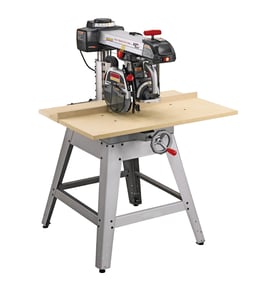
Yes, a radial arm saw can be worth money, but the value depends mostly on condition, completeness, and local demand. For a Craftsman 11329510 12" radial arm saw, a clean, complete saw that runs smoothly is typically worth more than one missing guards, fence parts, or with motor issues.
What drives value the most
- Safety and completeness: blade guard, anti-kickback parts, table/fence pieces, and working return spring matter.
- Motor health: smooth start-up, no burning smell, no excessive sparking at brushes, and steady speed under load.
- Arm and carriage condition: minimal play in the carriage bearings, solid column lock, and a tight yoke lock.
- Accuracy: holds 90 degrees crosscut and returns to the same setting repeatedly.
- Cosmetics and rust: surface rust is common; heavy pitting on ways/arm lowers value.
Quick checklist before you price or buy
- Unplug the saw; verify the switch works correctly and the cord is not cracked.
- Slide the carriage through full travel; it should feel smooth, not gritty or loose.
- Lock the arm at 90 degrees; push on the arm and yoke to check for movement.
- Spin the arbor by hand (unplugged); it should turn freely without grinding.
- Confirm you have key accessories (wrenches, guards, table hardware) if included.
Typical value ranges (used market)
These are common ranges for older 12" radial arm saws like the Craftsman 11329510; local pricing varies by region and season.
| Condition | What it usually means | Typical range |
|---|---|---|
| Parts/repair | Missing key parts, motor issues, heavy rust | $0 to $75 |
| Working, average | Runs, basic adjustments hold, normal wear | $75 to $200 |
| Clean, complete | Guards/table present, smooth carriage, accurate | $200 to $400 |
Why it matters
Radial arm saws are heavy, durable tools, but buyers discount them quickly when safety parts are missing or the motor needs work. A complete, accurate saw is far easier to sell and safer to use.
For help confirming you have the correct model identification before shopping for components, use how to find your appliance model number (and what it means for parts).
Last updated: February 2026
What are common problems with radial arm saws?
Common problems on a Craftsman 11329510 12" radial arm saw include cuts that are not square, the arm or carriage that will not travel smoothly, excessive vibration, and electrical issues like a motor that will not start. Most problems trace back to alignment, worn bearings/bushings, or loose hardware.
Most common symptoms and likely causes
- Inaccurate or out-of-square cuts: fence not straight, arm yoke not set square, blade not true, table not flat
- Rough or sticky carriage travel: dirty rails, dry rollers/bearings, damaged track surfaces
- Excessive vibration or chatter: dull/warped blade, loose arbor hardware, worn motor bearings, saw not bolted down
- Motor hums but won’t start: bad start capacitor (if equipped), stuck switch, low voltage, binding blade
- Trips breaker or overheats: overloaded circuit, extension cord too small, failing motor, pinched wiring
- Blade won’t raise/lower or hold height: worn elevation mechanism, loose lock, sawdust-packed threads
Quick checks we recommend (safe, high-impact)
- Unplug the saw before any inspection or adjustment.
- Confirm the saw is bolted to a solid bench and the table is not warped.
- Check the blade for missing teeth, pitch buildup, or wobble; replace if questionable.
- Verify the fence is straight and securely fastened; re-square the arm and yoke.
- Clean and lightly lubricate moving surfaces (remove sawdust buildup first).
- If the motor will not start, test the switch and power path with a meter.
Troubleshooting guide by symptom
| Symptom | What to check first | Typical fix |
|---|---|---|
| Cuts not square | fence and arm/yoke alignment | re-align and tighten locks |
| Carriage binds | rail cleanliness and roller condition | clean, adjust, lubricate |
| Vibration | blade condition and mounting tightness | replace blade, tighten hardware |
| No start | outlet, cord, switch | repair wiring/switch, correct power |
| Breaker trips | cord gauge, circuit load | use proper circuit/cord, reduce load |
Why it matters
A radial arm saw that is out of alignment or vibrating can pull through the cut unpredictably, which hurts accuracy and increases kickback risk. Keeping the carriage travel smooth and the blade true is the fastest way to restore safe, repeatable cuts.
For electrical testing steps, we use the same approach shown in how to use a multimeter to test electrical parts video.
Last updated: February 2026
When did Craftsman stop making radial arm saws?
Craftsman radial arm saws (including the Craftsman 11329510 12-inch radial arm saw) were largely discontinued in the early 1990s; most were no longer sold new through Sears by about 1992, with some smaller 8-inch versions continuing into the mid-1990s. This aligns with the market shift toward miter saws and updated guarding designs.
What “stopped making” usually means for Craftsman radial arm saws
Craftsman is a brand name used across multiple manufacturing eras, so customers typically mean one of these:
- Sears stopped offering new radial arm saw models in catalogs and stores
- Production of the common 10-inch and 12-inch platforms ended
- Parts availability shifted to service and legacy support rather than new-tool sales
- The category declined as compound miter saws became the go-to for crosscuts
How to date your specific saw (11329510)
We recommend using the identification information on the saw to narrow down the build period and correct parts lookup.
- Check the model tag on the arm, column, or base (should read 11329510)
- Look for a serial number and any date code on the tag
- Note the motor plate details (amps, volts, RPM) for matching electrical parts
- Compare your guard, yoke, and table style to confirm the exact configuration
A quick reference:
| What you have | What it tells you | Why it matters |
|---|---|---|
| Model number 11329510 | Identifies the platform | Ensures correct diagrams and part matching |
| Serial/date code | Narrows manufacturing window | Helps avoid ordering the wrong revision |
| Guard style | Indicates safety-era design | Affects fit of guard and hardware |
Why it matters
Radial arm saw parts and assemblies (guard components, switches, wiring, table hardware) can vary by revision even within the same model family. Dating the saw helps us match the right diagrams and avoid repeat repairs.
Helpful related DIY reading
If you are troubleshooting power, wiring, or a switch issue on a legacy radial arm saw, these guides help with safe testing basics:
- How to use a multimeter to test electrical parts video
- How to tell if a fuse is blown
- How to repair broken or damaged wires video
Last updated: February 2026