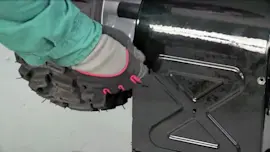
Owner’s manual
 View engine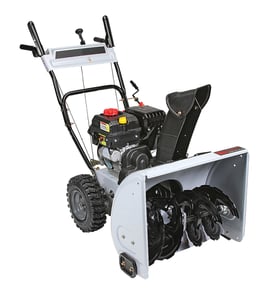




How many years should a snowblower last?
A gas snowblower like the Craftsman C950-52915-0 lasts 15 years with normal residential use and routine maintenance. With consistent oil checks, correct skid adjustment, and proper off-season storage, it reaches that full service life without major performance drop-offs.
Typical lifespan by use
- Light use (small driveway, a few storms): 15 years
- Average use (regular storms each winter): 15 years
- Heavy use (long runs, wet or icy snow, frequent storms): 15 years
What makes a snowblower reach 15 years
The biggest difference is maintenance and storage habits. Your manual calls out key practices like checking oil before every start, running at full throttle for best performance, and removing snow and ice buildup after use. Use the owner's manual as your baseline schedule.
- Check engine oil level before every start
- Keep the engine at full throttle while blowing snow (adjust ground speed instead)
- Inspect auger and impeller for ice or debris before starting
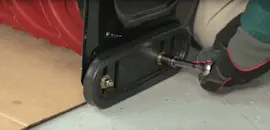
- Set skid shoes correctly for your surface (pavement vs. gravel)
- Let the engine idle briefly after use to melt accumulated snow and ice
- Prep for storage by draining or treating fuel when storing 30+ days
Maintenance items that most often decide longevity
Wear items are normal over time; replacing them on schedule prevents bigger failures.
| Item | What it affects | When to address it |
|---|---|---|
| Engine oil | Engine life and starting | Before every use; change on schedule |
| Spark plug | Starting and power | If hard starting or misfiring |
| Fuel system (old gas) | Surging, stalling, no-start | Before off-season storage |
| Belts and shear pins | Auger/drive performance | When slipping or breaking |
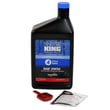
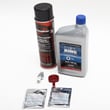
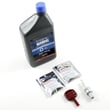
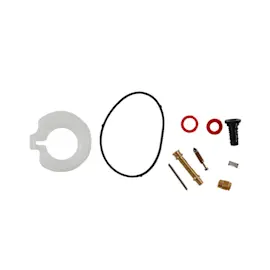
If you want a simple way to stay on top of common tune-up items, use a kit such as the snowblower engine tune-up kit 730280.
Why it matters
A snowblower that is maintained to its full 15-year lifespan starts easier, throws snow farther, and avoids mid-storm breakdowns. Storage steps are especially important because fuel left sitting can create gum deposits in the carburetor and fuel system.
Last updated: February 2026
Should I spray my snowblower with WD-40?
Yes; for a Craftsman C950-52915-0 snow blower, a light spray on the inside of the discharge chute and on the auger housing can help reduce snow sticking and clogging. Keep sprays off belts, friction surfaces, and hot engine parts, and clean off buildup after use.
Where it is OK to spray (and where it is not)
Use a light coat only on slick, non-friction surfaces.
- OK: inside the chute and chute deflector (helps snow slide)
- OK: auger housing surfaces that contact snow
- Not recommended: drive disc and friction wheel area (can cause slipping)
- Not recommended: belts, pulleys, and idler surfaces (can attract grime and slip)
- Not recommended: muffler, engine, or any hot surfaces (fire risk)
- Not recommended: controls and cables where you need grip (can feel “greasy”)
Best practice for your C950-52915-0 after snowblowing
Your manual calls out steps that also help prevent freeze-up and corrosion.
- Let the engine idle a few minutes after finishing to melt snow and ice on the engine
- Remove ice and snow accumulation from the entire machine before storage
- Inspect the auger and impeller for ice or debris before the next start
- Check the oil level before every start and keep it in the safe range
Quick decision guide
| Goal | What to do | When |
|---|---|---|
| Reduce chute clogging | Light spray inside chute and deflector | Before each storm or as needed |
| Prevent rust in storage | Clean, dry, then protect bare metal | End of season |
| Avoid drive slipping | Keep sprays away from friction drive parts | Always |
Why it matters
Overspray on the friction drive system can cause loss of traction, and spraying near hot engine parts creates a safety hazard. Focusing only on snow-contact surfaces gives the anti-stick benefit without creating new problems.
For model-specific maintenance and storage steps (including cleaning, lubrication points, and end-of-season rust prevention), follow the owner's manual.
Last updated: February 2026
Is it cheaper to repair or replace a snowblower?
It’s cheaper to repair your Craftsman C950-52915-0 snow blower when the fix is routine maintenance or a small wear item (tune-up, belt adjustment, shear bolt) and the total cost stays well under about half the price of a comparable new machine. Replacement makes more sense when you’re facing repeated breakdowns or major drivetrain or engine work.
A practical cost rule we use
- Repair when the total repair cost is under ~50% of the cost of a comparable new snow blower.
- Replace when the repair is over ~50%, or when multiple major issues stack up in the same season.
Quick “repair vs replace” checklist
Repair is usually the better value when:
- The engine runs well and the issue is maintenance (oil, spark plug, fuel system cleaning).
- The unit fails to discharge due to common causes like a loose/damaged auger drive belt, cable adjustment, or a broken shear bolt (all called out in the troubleshooting guidance in the owner's manual).
- The auger housing and frame are solid and straight.
Replace is usually the better value when:
- You need major work such as engine replacement, gear case rebuild, or repeated drive system failures.
- You have frequent repairs season after season.
- Parts and labor together approach the cost of a newer unit with updated features.
Typical repair types and what they mean
| Issue type | Common examples | Usually repair or replace? |
|---|---|---|
| Routine maintenance | Oil change, spark plug service, tune-up | Repair |
| Wear items | Belts, skid shoes, scraper bar adjustments | Repair |
| Safety or mechanical damage | Auger/gear case damage, major drivetrain wear | Often replace |
Parts that often keep repair costs low
For basic maintenance on this model, a tune-up kit is often the most cost-effective first step:
Why it matters
A snow blower like the Craftsman C950-52915-0 is designed for regular upkeep (oil capacity and spark plug specs are listed in the owner's manual). When you stay ahead of maintenance, you avoid the expensive failures that push the decision toward replacement.
Last updated: February 2026
How to tell if a snowblower auger belt is bad?
On a Craftsman snow blower model C950-52915-0, a bad (or badly adjusted) auger drive belt shows up as weak snow throwing or augers that stop under load; the belt may be loose, damaged, or slipping. Our manual also notes that belts stretch during normal use and need periodic checks.
Quick symptoms you can spot
- Auger/impeller does not turn when the auger clutch is engaged
- Snow discharge is weak, inconsistent, or stops in heavy snow
- Squealing noise when you engage the auger (belt slipping)
- Burning rubber smell after trying to throw snow
- Visible belt damage: cracks, fraying, glazing (shiny spots), missing chunks
- Belt looks intact but feels slack when engaged (stretched belt)
What the C950-52915-0 manual says to check
The C950-52915-0 owner's manual points to two common causes when the unit will not discharge snow:
| What you see | Most likely cause | What to do next |
|---|---|---|
| Won’t discharge snow | Auger drive belt loose or damaged | Inspect belt; adjust tension or replace belt |
| Won’t discharge snow | Auger control cable out of adjustment | Check cable adjustment before replacing parts |
Simple belt tension check (model-specific)
If the auger belt is loose, the manual’s adjustment procedure targets belt deflection:
- Disconnect the spark plug wire before any inspection or adjustment.
- Remove the belt cover.
- Move the auger idler pulley toward the belt in small increments (the manual starts with about 1/8 inch).
- With the auger clutch engaged, check belt deflection opposite the idler pulley.
- Correct tension is about 1/2 inch (12.5 mm) deflection with moderate pressure.
- Reinstall the belt cover; then re-check and adjust cables after belt work.
Why it matters
A slipping auger belt reduces auger/impeller speed, so the machine cannot process snow efficiently. It also creates heat and wear that can damage the belt faster and make mid-storm failures more likely.
Parts and maintenance that help prevent belt problems
Seasonal maintenance helps you catch belt stretch early. If you are doing a tune-up at the same time, we often see customers pair belt service with an engine refresh using a kit such as the snowblower engine tune-up kit 730280.
Last updated: February 2026
How to tell what year a Craftsman snowblower is?
For a Craftsman snow blower like model C950-52915-0, the most reliable way to identify the year is to use the model and serial information from the product identification label, then cross-check what you find with the documentation in the C950-52915-0 owner's manual. The serial format is the key to the build date.
Find the model and serial information
We use the model number to confirm you are looking at the correct parts and manual, and we use the serial number to determine the production timeframe.
Look for a product identification label on the machine; common label locations on snow blowers include areas on the frame or housing where it is protected but still visible.
- Check the rear frame area near the wheels
- Check the side of the frame near the engine mounting area
- Check the auger housing area (outer panels)
- Check near the belt cover or control panel area
Decode the serial number (what to look for)
Craftsman snow blower serial numbers are commonly encoded with a date pattern. When you write down the serial, look for a section that resembles a date.
- A 6-digit pattern that looks like MMDDYY (month, day, year)
- A month and year code (for example, MMYY)
- A leading group of digits that appears to represent a production date
Quick reference table
| Item you find | What it tells us | Best use |
|---|---|---|
| Model number C950-52915-0 | Exact configuration and parts breakdown | Match diagrams and part names correctly |
| Serial number | Production date code | Determine the year of manufacture |
| Engine model/type/code | Engine build date | Confirm the timeframe if the unit label is unclear |
Why it matters
The year helps us match the correct parts and service procedures for wear items like belts, friction drive components, and ignition parts, especially when similar Craftsman snow blowers changed designs over time.
Helpful next step for seasonal upkeep
If you are already checking labels and doing preseason maintenance, a tune-up kit is a practical add-on for this model; see the snowblower engine tune-up kit 730280.
Last updated: February 2026