 Owner’s manual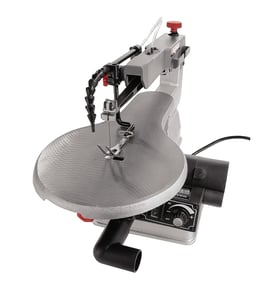

Are all scroll saw blades universal?
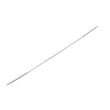
No. Scroll saw blades are not universal because scroll saws use different blade-end styles and clamping systems. Your Craftsman scroll saw model 137216200 is designed to accept 5-inch plain-end or pin-end blades, so you need blades that match those ends and fit the blade holders.
According to the owner's manual, this saw accepts:
- 5-inch pin-end blades (faster blade changes, common for general cutting)
- 5-inch plain-end blades (more blade choices for fine, intricate work)
Plain-end blades are typically the better choice when you want fine, accurate, intricate cuts, especially in 3/4-inch or thinner material.
Use these factors to pick a blade that actually works for your project and your saw:
- Blade end type: pin-end or plain-end (both are supported on 137216200)
- Material being cut: wood, plastic, or non-ferrous metal (use the correct blade type)
- Thickness: thinner stock usually cuts cleaner with finer blades
- Tooth pattern and size: finer teeth for tight curves and smooth edges; coarser for faster cuts
- Blade condition: avoid dull or bent blades (they wander and can bind)
| What you’re checking | What to look for | Why it matters |
|---|---|---|
| Blade length | 5-inch | Matches the saw’s blade holders and tension range |
| Blade end style | Pin-end or plain-end | Must match the clamp style you’re installing into |
| Teeth direction | Teeth point downward toward the table | Helps the work stay on the table and cuts correctly |
| Tension | Properly tensioned before starting | Reduces blade breakage and improves cut accuracy |
Using the wrong blade style or size can cause poor tracking, excessive vibration, blade breakage, or binding in the kerf. Using the correct 5-inch pin-end or plain-end blade and setting proper tension gives cleaner cuts and safer control.
Last updated: February 2026
How thick of wood can you cut with a scroll saw?
On the Craftsman 137216200 scroll saw, we get the best results cutting wood under 1 inch thick. You can cut thicker stock, but you must feed the wood very slowly and avoid twisting the blade to prevent deflection and breakage (details are in the owner's manual).
- Best quality cuts: under 1 inch thick wood
- Thicker than 1 inch: possible, but expect slower cutting, more blade wear, and more chance of wandering cuts
- Hardwoods vs. softwoods: hardwoods typically require a slower feed rate and careful blade choice
- Tight curves: thinner stock and narrower blades cut curves more cleanly
The manual notes that this saw accepts 5-inch plain-end or pin-end blades. It also recommends plain-end blades for fine, accurate, intricate work on 3/4 inch or thinner material.
- Use fine, narrow blades for thin wood (around 1/4 inch or less) and intricate scrolling
- Use wider blades for thicker material (but they reduce your ability to cut tight curves)
- Install the blade with teeth pointing downward to keep the workpiece from lifting
| Wood thickness | What to expect | Best approach |
|---|---|---|
| 1/4 inch or less | Best for intricate cuts | Fine, narrow blade; moderate speed |
| 3/4 inch or less | Clean, accurate scrolling | Plain-end blade; steady feed |
| Under 1 inch | Best overall results | Match blade TPI to the cut; control speed |
| Over 1 inch | Slower cuts; more breakage risk | Very slow feed; avoid twisting blade |
Scroll saw blades remove material mainly on the downstroke and have very small teeth, so thick stock increases friction and side-load on the blade. Feeding too fast or twisting the workpiece is what usually causes blade deflection, rough edges, and broken blades.
Last updated: February 2026
Should I get pinless or pinned scroll saw blades?
For the Craftsman 137216200 scroll saw, we recommend pinless (plain-end) blades for most projects because they give you more blade choices and better control for fine, intricate cuts. Pinned (pin-end) blades install faster, so they are handy for quick, general cutting.
Your saw is designed to use 5-inch plain-end (pinless) or pin-end (pinned) blades, so you can choose based on the type of work you do. For the exact blade installation and tensioning steps, follow the owner's manual.
| Feature | Pinless (plain-end) blades | Pinned (pin-end) blades |
|---|---|---|
| Best for | Fine, accurate, intricate work | Faster blade changes, general cutting |
| Material thickness | Great on 3/4 inch or thinner (typical use) | Often preferred for thicker, rougher work |
| Blade selection | Widest variety (including very fine sizes) | More limited selection |
| Kerf (cut width) | Can be thinner with finer blades | Typically a bit wider |
| Installation | Takes a little longer | Usually quicker |
- Choose pinless (plain-end) when you want tight turns, delicate fretwork, and cleaner detail.
- Choose pinned (pin-end) when you want convenience and you are doing simpler curves or straight cuts.
- Avoid dull or bent blades; they wander and burn the work.
- Set blade teeth pointing downward toward the table before cutting.
- Tension the blade properly and recheck tension as needed during a project.
Blade style affects cut quality, control, and how easily you can match the blade to your material. On this Craftsman scroll saw, pinless blades unlock finer blade options, which is why they are the go-to choice for precision work.
Last updated: February 2026
What are some common scroll saw mistakes?
Common mistakes on the Craftsman 137216200 scroll saw are running the saw with incorrect blade tension, installing the blade with the teeth facing the wrong direction, letting the saw move on the bench, and using unsafe hand positions. These issues cause rough cuts, blade breakage, binding, and loss of control.
- Blade teeth facing up: Install the blade so the teeth point downward toward the table.
- Wrong blade tension: Tension the blade properly before starting, then recheck and adjust as needed.
- Saw not secured: Bolt or clamp the saw to a firm, level surface so it cannot rock or tip.
- Feeding the work incorrectly: Feed the work steadily and keep it supported; do not force the cut.
- Cutting with dull or bent blades: Replace blades that are dull, bent, or damaged.
- Letting the kerf clog and bind the blade: If the blade binds while backing out, turn the saw off and unplug it before clearing the kerf.
- Skipping dust control: Work in a well-ventilated area and remove sawdust buildup; use dust collection when possible.
| Setup item | What “right” looks like | What goes wrong if it’s off |
|---|---|---|
| Blade direction | Teeth down toward the table | Poor cutting, grabbing, burning, breakage |
| Blade tension | Firm, properly tensioned | Wandering cuts, snapping blades |
| Saw stability | Clamped or bolted down | Vibration, loss of control, inaccurate cuts |
| Table condition | Clear of debris | Workpiece lifts, chatter, uneven cut |
Most “beginner problems” on a scroll saw are really setup and control problems. Correct blade direction, proper tension, and a securely fastened saw reduce vibration and binding, which improves accuracy and helps prevent sudden slips that can put hands too close to the blade.
For the exact safety steps, blade installation method (plain-end or pin-end), and maintenance guidance for this saw, follow the 137216200 owner's manual.
Last updated: February 2026