 Owner’s manual



How to hard reset a GE washer?
To hard reset a GE washer, we recommend doing a power reset first: unplug your GE GTW335ASN2WW for about 2 minutes, then plug it back in and press Start. This clears many temporary control glitches without changing any settings; see the GTW335ASN2WW owner’s manual for model-specific control behavior.
Reset steps for GE GTW335ASN2WW (top-load)
- Press Start/Pause to stop the cycle.
- Unplug the washer (or switch the breaker off).
- Wait 2 minutes.
- Restore power.
- Select a cycle and press Start.
If the washer still will not respond
Try these quick checks before assuming a control failure:
- Make sure the outlet has power (test with a lamp).
- Confirm the lid is fully closed; the washer will not run with the lid open.
- If the controls seem “locked out” after a fill issue, wait out the lockout period and then restart.
- If the washer is stuck with water in the tub, run Drain & Spin.
- If the washer will not start new cycles until the lid is opened, open and close the lid once, then press Start.
What a “hard reset” can and cannot fix
A reset helps when the electronic control gets confused (for example, after a power flicker). It will not fix a mechanical problem like a broken belt, a failed drain pump, or a lid lock that is not latching.
| Symptom after reset | Most likely area to check | Example part for this model |
|---|---|---|
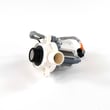
| Won’t drain or won’t spin with water left in tub | Drain system | GE washer drain pump assembly WH23X28418 |
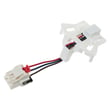
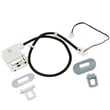
| Won’t start and lid won’t lock | Lid lock system | GE washer lid lock assembly WH08X37938 |
| Agitates but won’t spin well, or slips under load | Drive system | Washer drive belt WH01X27538 |
Why it matters
Resetting the control is a fast first step for GTW335ASN2WW troubleshooting; it can save time and prevent unnecessary part replacement when the issue is only a temporary electronic glitch.
Last updated: January 2026
How many years should a GE washing machine last?
We can’t give a model-specific “expected lifespan” for the GE GTW335ASN2WW from GE’s documentation because the GTW335ASN2WW owner’s manual focuses on safe use, care, troubleshooting, and warranty coverage rather than a guaranteed service-life number. In real-world home use, many washers run for years when they’re installed correctly and maintained.
What we can confirm for GTW335ASN2WW
The manual provides maintenance and operating guidance that directly impacts longevity.
- GE recommends replacing water supply hoses about every 5 years to reduce leak risk
- Leaving the lid open after washing helps moisture evaporate and reduces odor and residue
- Using High Efficiency (HE) detergent and measuring correctly helps prevent oversudsing and poor rinsing
- Redistributing out-of-balance loads helps the washer complete spin normally
What typically shortens washer life (any top-load washer)
These are common wear drivers on the drive system, suspension, and water-handling components.
- Overloading or packing clothes down
- Repeated out-of-balance spinning and heavy vibration
- Too much detergent (especially in soft water)
- Running frequent heavy cycles with bulky items incorrectly loaded
- Ignoring small leaks or slow draining
Repair vs. replace: a practical way to think about it
If your GTW335ASN2WW is otherwise in good shape, fixing a single failed component is often reasonable.
| Symptom | Common next step | Parts that may be involved |
|---|---|---|
| Won’t drain or drains slowly | Check for clogs, then test pump | GE washer drain pump assembly WH23X28418 |
| Loud banging or walking in spin | Level washer, rebalance load, inspect suspension | Washer suspension rod and spring assembly WH16X26911 |
| No spin or weak spin | Diagnose drive system | Drive belt, shifter, clutch (varies by failure) |
Why it matters
A “years” estimate is less useful than preventing the failures that end a washer’s life early. Good loading habits, correct detergent use, and hose replacement intervals can reduce breakdowns and water damage.
Last updated: January 2026
What is the most common problem with GE washers?
Across GE washers (including the GE GTW335ASN2WW), the most common service-type complaints tend to cluster around a few repeat issues: draining and spinning performance, out-of-balance vibration, and filling or water-level concerns. For model-specific operating notes and troubleshooting steps, use the GTW335ASN2WW owner’s manual.
Common problems customers report (and quick first checks)
These are the issues we most often help people troubleshoot on top-load washers like the GTW335ASN2WW:
- Won’t spin or clothes are too wet: redistribute the load, then run Drain & Spin.
- Washer won’t drain: check for a kinked drain hose and confirm the standpipe setup.
- Shaking or banging in spin: level the washer and reduce bulky, single-item loads.
- Not filling or slow fill: verify both faucets are fully open; clean inlet screens.
- Cycle won’t start or stops: close the lid firmly; some cycles pause if the lid is opened.
Model-specific notes for GTW335ASN2WW
The GTW335ASN2WW is designed to use less water than older washers; a “low” water level can be normal even when washing correctly. The manual also notes the washer may pause or limit operation if it detects an out-of-balance condition or if the lid is left open.
Setup checks that prevent repeat problems
| What to verify | Why it matters | Typical symptom if wrong |
|---|---|---|
| Drain hose height and insertion | Prevents siphoning and drain errors | Won’t drain, drains too soon |
| Washer level and stable footing | Reduces out-of-balance events | Banging, walking, wet loads |
| Correct detergent type and amount (HE) | Prevents oversudsing and poor draining | Long cycles, poor spin |
When it’s likely a part issue
If the basic checks above do not help, these parts commonly relate to “won’t spin,” “won’t drain,” or “lid won’t lock” symptoms:
- GE washer lid lock assembly WH08X37938 (lid must lock for certain spin portions)
- GE washer drain pump assembly WH23X28418 (moves water out so the washer can spin)
- Washer drive belt WH01X27538 (transfers motor power for agitation and spin)
Why it matters
Many GE washers will reduce or cancel spin if the tub is out of balance, the lid is not locking as expected, or water is not draining. Addressing the underlying cause helps prevent repeat wet loads and excessive vibration.
Last updated: January 2026


