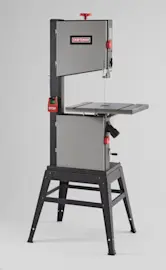
Owner’s manual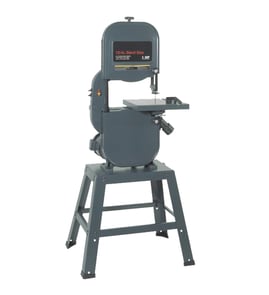



How to determine the size of a bandsaw?
Band saw “size” is usually defined by the wheel diameter and the saw’s cutting capacity (throat depth and resaw height). For your Craftsman 11324201 12-inch band saw, the “12-inch” class refers to the wheel size; use the capacity specs in the 11324201 owner's manual to match the saw to your projects.
Most shoppers and manufacturers use these specs together:
- Wheel diameter: often the headline size (for example, 12-inch band saw)
- Throat depth: distance from blade to frame; limits how wide a board you can cut
- Resaw height (max cut height): how tall a workpiece can be under the guides
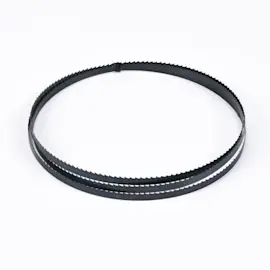
- Blade length: determined by the wheel size and spacing; affects what blades fit
- Blade width range: affects curve-cutting ability and stability
Use a tape measure and a square:
- Measure wheel diameter across the wheel (top or bottom) with the saw unplugged.
- Measure throat depth from the blade to the inside of the frame.
- Measure resaw height from the table to the highest practical guide position.
- Confirm the blade length by checking the blade you have installed or the spec listed in the manual.
| What people call it | What it usually refers to | Why it matters |
|---|---|---|
| 12-inch band saw | Wheel diameter | Blade length compatibility and overall capacity class |
| Cutting capacity | Throat depth and resaw height | Maximum workpiece width and height |
| Blade size | Blade length and width range | Curve radius, tracking, and cut quality |
Choosing by wheel size alone can be misleading. Throat depth and resaw height determine whether you can cut wider panels or resaw thicker stock, while blade width determines how tight a curve you can cut and how straight the saw tracks.
If you are matching blades, belts, or accessories to the Craftsman 11324201, we recommend confirming the exact blade length and supported blade widths in the 11324201 owner's manual. For additional parts lookups by model number, use Sears PartsDirect.
Last updated: February 2026
How to replace belt on Craftsman band saw?
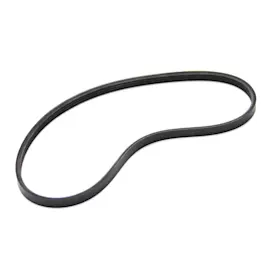
To replace the drive belt on your Craftsman 11324201 12-inch band saw, we route the belt through the two-piece belt guard, seat it on the motor pulley and band saw pulley, then set belt tension by pushing the motor down until the belt will not slip while running (then tighten the motor nuts). See the owner's manual for the exact guard and tensioning steps.
- Unplug the band saw.
- Remove the belt guard(s) to access the belt path.
- Keep track of small hardware (clips, screws, and the shaft key if you remove a pulley).
- Rotate the wheels by hand after installation to confirm nothing rubs.
- Remove the pulley (if needed for guard work): Loosen the pulley setscrew with a 5/32-inch setscrew wrench; do not lose the shaft key.
- Install/position belt guard supports and clips: The manual shows three spring clips spaced about 90 degrees apart on the guard.
- Feed the belt through the first guard: Insert the looped end fully into the guard so it sits below the motor pulley.
- Pull belt onto the motor pulley: Look down into the guard and pull the belt upward onto the motor pulley.
- Route belt to the band saw pulley: Feed the belt into the second guard and place the belt onto the band saw pulley by rotating the pulley by hand.
- Snap guards back in place and confirm the belt runs centered in the base opening.
Set tension so the belt does not slip while running. If you cannot get enough tension with the motor pushed all the way down, move the motor bolts to the lower set of holes (as described in the manual).
| Symptom | Likely belt issue | What we do |
|---|---|---|
| Saw slows down while cutting | Belt too loose | Increase belt tension |
| Belt tracks off-center in base opening | Motor position off | Shift motor sideways to center belt |
| Motor moves during use | Clamp screws loose | Tighten motor base clamp screws |
Correct belt routing and tension keeps the lower wheel driven consistently, prevents slipping under load, and helps the Craftsman 11324201 cut smoothly without bogging down.
We use the model number 11324201 to match the correct belt and hardware. If you are shopping by model, start with the parts list for this saw, or search by model on Sears PartsDirect.
Last updated: February 2026
What are the specs of the Craftsman 12 inch bandsaw 11324201?
The Craftsman 11324201 is a 12-inch band saw/sander. For power requirements, this model is set up for 110-120 volts, 60 Hz operation and is designed to use a 1725 RPM motor. For the full spec list (capacities, adjustments, and setup), use the 11324201 owner's manual.
- Tool type/class: 12-inch band saw/sander
- Electrical: 110-120V, 60 Hz
- Motor requirement: 1725 RPM motor (designed-for speed)
- Common adjustments included: blade tensioning, guide adjustments, and table tilt indication
These details are typically listed in the specification and setup sections of the manual:
- Throat depth and maximum cutting height (cutting capacity)
- Table size and table tilt range
- Blade length and recommended blade widths
- Dust collection or port details (if equipped)
- Stand or mounting requirements
| Spec category | What it affects | Best place to confirm |
|---|---|---|
| Cutting capacity | Max thickness and width you can cut | 11324201 owner's manual |
| Blade size range | Curve cutting vs. resaw performance | 11324201 owner's manual |
| Table size and tilt | Stability and bevel accuracy | 11324201 owner's manual |
| Electrical and motor RPM | Safe operation and performance | Nameplate and manual |
Matching the correct voltage, frequency, and motor RPM prevents weak performance, overheating, and premature wear. Capacity and blade specs determine whether the saw is a good fit for resawing, scroll work, or general shop cuts.
The manual also lists common accessories for this model (such as a rip fence, miter gauge, and blades/sanding belts). For replacement parts and diagrams by model number, start with the model parts list, or search by model on Sears PartsDirect.
Last updated: February 2026
What is the 3-tooth rule for bandsaws?
The 3-tooth rule means you choose a band saw blade tooth pitch (TPI) so at least three teeth are in the cut at all times. On a Craftsman 11324201 12-inch band saw, this helps prevent tooth snagging and stripping, improves chip clearance, and produces a smoother, more controllable cut.
- Measure the material thickness where the blade is cutting.
- Pick a TPI so that thickness spans 3 or more teeth.
A simple way to estimate:
- Teeth engaged ≈ material thickness (inches) × TPI
- Target: 3 to 24 teeth engaged (3 minimum; too many teeth can pack the gullets with sawdust or metal chips).
| Material thickness | Typical blade choice | Why it works |
|---|---|---|
| 1/8 inch | 18 to 24 TPI | Keeps 3+ teeth engaged on thin stock |
| 1/4 inch | 10 to 14 TPI | Balances control and chip clearance |
| 1/2 inch | 6 to 10 TPI | Clears chips without overloading gullets |
| 1 inch and thicker | 3 to 6 TPI | Fast cutting with good gullet capacity |
- Too few teeth in the cut (TPI too low): grabbing, chattering, broken or stripped teeth, rough edge.
- Too many teeth in the cut (TPI too high): slow cutting, heat buildup, burning (wood), premature dulling, wandering.
Even with the right blade, setup controls cut quality. We follow these basics from the owner's manual:
- Install the blade with teeth pointing downward toward the table.
- Set blade tension correctly; over-tension can contribute to blade breakage.
- Adjust blade guides and thrust bearings before cutting.
- Set the upper guide assembly to clear the workpiece by no more than 1/4 inch.
The 3-tooth rule is about control and blade life. Keeping enough teeth engaged spreads cutting forces across multiple teeth, reduces snagging, and helps the blade track straighter, especially when you are cutting curves or feeding thicker stock.
For replacement blades and other parts for model 11324201, start with the model parts list, or search by model number on Sears PartsDirect.
Last updated: February 2026