Owner’s manual

Is a 150 PSI air compressor good for car detailing?
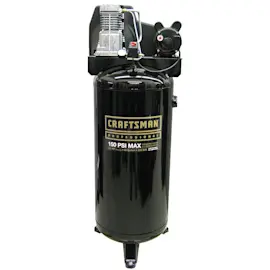
Yes. A 150 PSI air compressor is a solid choice for car detailing because it gives you enough maximum tank pressure, and you can regulate the outlet pressure down for your tools. On the Craftsman CMEC6150, the cut-out pressure is about 150 PSIG with a 6-gallon tank, so airflow (SCFM) becomes the main limiter for continuous use; see the owner's manual.
What matters more than 150 PSI for detailing
For most detailing tools, you set the regulator to the tool’s required pressure; the compressor’s job is to keep up with airflow demand.
- SCFM at your working pressure: CMEC6150 is rated 2.6 SCFM @ 90 PSIG (and 3.7 SCFM @ 40 PSIG).
- Tank size: CMEC6150 has a 6-gallon tank; it works best for short bursts, not long continuous blowing.
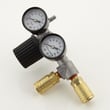
- Regulator use: Always set outlet pressure to the tool rating; never exceed it.
- Duty cycle: This model is designed for 5 minutes on, 5 minutes off.
- Hose and fittings: It uses a 1/4-inch industrial quick connect; restrictions can reduce tool performance.
Quick fit guide for common detailing tasks
| Detailing task | Typical air demand | How CMEC6150 (150 PSIG, 2.6 SCFM @ 90) performs |
|---|---|---|
| Blow out cracks/crevices with a blow gun | Low to moderate | Works well in bursts; expect cycling |
| Inflate tires | Low | Works well; regulate pressure and use a tire gauge |
| Tornador-style cleaning gun | Moderate to high | Runs, but may struggle for long continuous use |
| HVLP paint/spray work | High | Not a good match for sustained spraying |
Setup tips we recommend (safe and effective)
- Start with the regulator fully closed, then bring pressure up slowly to the tool requirement.
- Firmly hold the air hose when connecting or disconnecting to prevent hose whip.
- Check every tool’s maximum pressure rating; the regulator outlet pressure must stay at or below that rating.
- For tires, regulate pressure to the tire rating and verify often with a tire pressure gauge.
Why it matters
150 PSI is the maximum the tank builds to (cut-out). Detailing results depend on steady airflow at the pressure you actually use. With a 6-gallon tank and 2.6 SCFM @ 90 PSIG, CMEC6150 is best for intermittent detailing tasks, not continuous high-air-demand tools.
To find maintenance and repair help for common compressor issues, use the CMEC6150 parts list first, or search by model on Sears PartsDirect.
Last updated: February 2026
What is the average lifespan of an air compressor?
Most homeowner-grade portable air compressors like the Craftsman CMEC6150 typically last 5 to 10 years with normal DIY use and basic care; heavier-duty shop and industrial compressors commonly run 10 to 20 years. The air tank itself has a limited service life and must be removed from service by the year shown on the tank warning label (see the CMEC6150 owner's manual).
Typical lifespan ranges (what we see most often)
Lifespan depends mainly on duty cycle, heat, moisture, and how hard the compressor is worked.
- DIY/portable oil-free units: 5 to 10 years
- Prosumer/shop piston units: 8 to 15 years
- Industrial rotary screw units: 10 to 20 years
- Air receiver tank: limited life; follow the tank label end-of-service year
What matters most on the CMEC6150
Your CMEC6150 manual calls out operating limits that directly affect longevity.
- Maintain the recommended 50% duty cycle (about 5 minutes on, 5 minutes off)
- Keep the unit in a clean, dry, well-ventilated area with at least 12 inches of clearance for cooling
- Avoid running tools that exceed the compressor’s output (rated about 3.7 SCFM @ 40 psig and 2.6 SCFM @ 90 psig)
- Fix air leaks promptly so the pump does not run excessively
- Drain moisture regularly to reduce internal corrosion risk in the tank
Quick guide: usage vs. expected life
| How you use it | What happens | Typical outcome |
|---|---|---|
| Light DIY (brad nailer, inflator) | Cooler running, fewer cycles | Longer life |
| Frequent air tools (impact, DA sander) | Hotter running, more wear | Shorter life |
| High humidity, poor draining | More tank corrosion risk | Tank life reduced |
Why it matters
Air compressors do not “wear out” in just one way. The pump/motor can fail from heat and overuse, while the tank can become unsafe if moisture causes internal corrosion. Following the duty cycle and maintenance guidance protects both performance and safety.
Helpful DIY resources
For model-based parts lookup and diagrams, start with the CMEC6150 parts list, or search by model on Sears PartsDirect.
Last updated: February 2026
Are Craftsman air compressors good?
Yes. Craftsman air compressors such as the Craftsman CMEC6150 are a good choice for DIY and homeowner tasks because they deliver practical pressure and portability for inflation, brad nailing, and other light-duty air tool use. Use the setup and safety steps in the owner's manual to get consistent performance.
What “good” means in real use
A “good” air compressor reliably does the basics:
- Starts and cycles normally
- Builds and holds tank pressure
- Provides enough airflow (CFM) for your tools
- Adjusts output pressure smoothly at the regulator
- Runs safely when used and maintained correctly
Quick fit check: tasks vs. what to watch
| Task | What matters most | Best practice |
|---|---|---|
| Tire inflation | Controlled regulated pressure | Use a tire gauge; regulate to the tire rating |
| Brad/finish nailing | Recovery time | Keep fittings tight; drain tank moisture |
| Light spray work | Steady airflow, clean dry air | Use filtration; keep moisture out of the tank |
| General garage use | Safe cycling | Keep vents clean; store dry |
Maintenance and safety that affect “goodness”
These CMEC6150 habits make the biggest difference day to day:
- Drain water from the tank regularly to reduce corrosion risk.
- Blow dust out of air vents with clean, dry air at least weekly.
- Unplug the unit and bleed tank pressure before servicing.
- Never exceed the pressure rating of your air tools and accessories.
- Never use compressed air from the tank for breathing without proper in-line safety equipment.
Why it matters
Most “bad compressor” experiences come from tool demand exceeding compressor output, or from avoidable issues like moisture in the tank, leaks at fittings, and incorrect regulator settings. Correct setup and routine maintenance protect the air tank and improve consistency.
Helpful DIY resources and parts lookup
- Use air compressor common questions for setup tips and expectations.
- If it will not start, follow air compressor won't start.
- If it will not build pressure or you suspect leaks, use air compressor won't build tank pressure and air compressor air leaks.
- For model-based parts lookup, start with the CMEC6150 parts list; for broader searching by model number, use Sears PartsDirect.
Last updated: February 2026