Owner’s manual
 Error Codes



Is there a reset button on a Kenmore upright freezer?
Most Kenmore upright freezers, including model 11122152120, do not have a single dedicated “reset” button; resetting is typically done by power-cycling the freezer or using the temperature control panel (if equipped). For model-specific control steps and indicator meanings, use the 11122152120 owner’s manual.
How to reset (safe, common methods)
- Power reset: Unplug the freezer (or switch the breaker off), wait 5 minutes, then restore power.
- Control-panel reset (if your unit has Up/Down temp keys): Press and hold Up and Down together for about 5 seconds, then release.
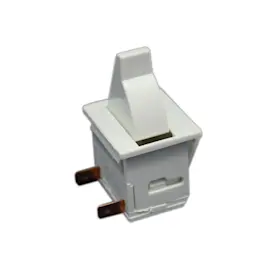
- Door switch check: Make sure the door fully closes and the door switch is not stuck.
- Clear a “stuck” control: After restoring power, wait 10 minutes for the control to reinitialize.
- After a reset: Allow 24 hours for temperatures to stabilize.
What a reset will and won’t fix
A reset helps when the control board is “hung,” after a power outage, or when the display is unresponsive. It will not correct airflow problems, sealed-system cooling issues, or a failed component like a fan motor.
| Symptom | Reset worth trying? | What to check next |
|---|---|---|
| Display/buttons not responding | Yes | Control lock, power supply, loose wiring |
| Freezer warm but running | Sometimes | Frost buildup, evaporator fan, condenser airflow |
| Clicking, won’t start | Sometimes | Start device/relay, compressor, outlet voltage |
| Alarm won’t stop | Yes | Door seal, door left ajar, temperature setpoint |
Why it matters
Resetting the control is a fast first step that can restore normal operation after electrical interruptions; it also helps you confirm whether you have a simple control issue or a cooling/airflow problem that needs deeper troubleshooting.
Last updated: January 2026
How long does a Kenmore upright freezer last?
A Kenmore upright freezer like model 11122152120 typically lasts 10 to 15 years. With steady temperatures, clean airflow, and good door-seal performance, it can reach the high end of that range before major sealed-system or control issues become more likely.
Typical lifespan and what affects it
- 10 to 15 years is the normal service-life range for an upright freezer.
- Frequent door openings and warm-room placement increase compressor run time.
- Poor airflow (blocked vents or dusty condenser area) raises operating stress.
- A weak door gasket causes frost buildup and longer run cycles.
- Power issues (surges, repeated outages) can shorten control and compressor life.
Quick checklist to help it last longer
- Keep the freezer level so the door closes consistently.
- Leave space around the cabinet for ventilation.
- Keep the interior not overpacked so cold air can circulate.
- Defrost and remove heavy frost if your model is not frost-free.
- Clean dust from the condenser area (where accessible) and keep the room reasonably cool.
What “end of life” usually looks like
| Symptom | Common cause | What to do first |
|---|---|---|
| Warm temps, compressor runs a lot | Dirty airflow path, weak gasket, low refrigerant | Check door seal and airflow; confirm settings |
| Heavy frost on walls/shelves | Door not sealing, defrost issue | Inspect gasket and door alignment |
| Clicking, then no cooling | Start device/control issue | Unplug 5 minutes; retry; then diagnose |
| Water on floor | Drain or defrost water issue | Check drain path and leveling |
Why it matters
A freezer that is running longer than normal uses more electricity and can struggle to hold safe food temperatures. Catching airflow and sealing problems early often prevents bigger failures later.
For model-specific operating and care details (including temperature settings and maintenance guidance), use the 11122152120 owner’s manual.
Last updated: January 2026
What causes an upright freezer to stop freezing?
An upright freezer like Kenmore model 11122152120 usually stops freezing because airflow or heat removal is blocked (overpacked shelves, dirty condenser area, door not sealing) or because a cooling component has failed (evaporator fan, defrost system, compressor start device). Use the 11122152120 owner's manual for model-specific checks and settings.
Most common causes (and what to check first)
- Temperature setting changed: confirm the control is set to a colder setting.
- Door not sealing: look for gaps, torn gasket, or frost around the door frame.
- Warm air leaks: frequent openings, loading unfrozen food, or a door left ajar.
- Poor airflow inside: packages blocking vents; keep space around air outlets.
- Dirty condenser area: dust reduces heat transfer and cooling performance.
- Defrost problem: heavy frost on the back wall can block airflow across the evaporator.
- Fan issue: if you do not hear the evaporator fan running when the door switch is pressed, cooling can stall.
Quick troubleshooting steps (10 to 20 minutes)
- Check the set temperature and wait 6 to 12 hours after any adjustment.
- Verify the door seal with the paper test: close the door on a sheet of paper; it should resist pulling out.
- Reduce crowding: leave air gaps; do not block interior vents.
- Clean the condenser area (unplug first): vacuum dust from the grille and nearby coils if accessible.
- Look for frost patterns: a solid ice blanket suggests a defrost or airflow problem.
What you may observe and what it usually means
| Symptom | Likely issue | Best next step |
|---|---|---|
| Runs constantly, still warm | Dirty condenser, warm air leak, low airflow | Clean, check gasket, declutter |
| Loud clicking, won’t start | Start device or compressor circuit issue | Unplug, wait 10 minutes, retry; then test electrically |
| Heavy frost on back wall | Defrost system or door leak | Defrost fully, then monitor for repeat |
| No fan sound inside | Evaporator fan or door switch | Check door switch action; test fan circuit |
Why it matters
A freezer that is not freezing can rise above safe food-storage temperatures quickly. Fixing airflow and sealing issues early also reduces compressor run time and helps prevent repeat icing.
If you need electrical testing, use a meter and follow safe practices; our how to use a multimeter to test electrical parts video is a good starting point.
Last updated: January 2026
How many cubic feet is a Kenmore model 11122152120 freezer?
The cubic-foot capacity for Kenmore upright freezer model 11122152120 is the published “total capacity” specification for that exact model. The most reliable way to confirm it is to check the specifications section in the 11122152120 manual and compare it to the model’s rating label inside the cabinet.
Where to find the exact capacity
Use these sources in this order:
- Specifications page in the manual (look for “Capacity” or “Total capacity”)
- Rating label inside the freezer compartment (often on a side wall near the front)
- Model/serial tag area (sometimes near the lower front or behind the toe grille)
- Original sales paperwork (may list capacity in cu. ft.)
Quick guide: what the number usually looks like
Most full-size Kenmore upright freezers are commonly sold in these capacity bands:
| Capacity range (cu. ft.) | Typical fit | What it usually holds |
|---|---|---|
| 13 to 16 | Small household | Overflow items, limited bulk storage |
| 17 to 21 | Medium household | Weekly shopping plus some bulk meat |
| 21+ | Large household | Bulk buying, long-term storage |
Why it matters
Capacity affects how you organize shelves and baskets, how much airflow space you need around packages, and how often the freezer runs to maintain about 0°F.
Tips to maximize usable space (any upright freezer)
- Keep air vents clear so cold air circulates
- Avoid packing items tight against the back wall
- Group foods in bins to reduce door-open time
- Label and rotate items to prevent “lost” food and frost-prone clutter
Last updated: January 2026