 Owner’s manual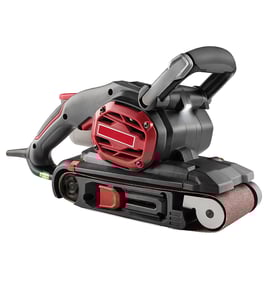

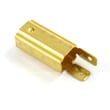
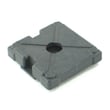
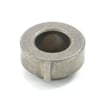
What are the parts of a sander?
A Craftsman sander like model 31511690 is built from a few core systems: the motor and drive parts that create motion, the sanding pad/platen that contacts the work, the housing and handles that let you control it, and the dust collection and electrical components that keep it running safely. For model-specific diagrams and naming, use the owner's manual.
Common sander parts (what they do)
- Motor: provides power to spin or oscillate the sanding surface
- Switch and power cord: turns the tool on and delivers power
- Bearings: support rotating shafts and reduce friction
- Fan/blower: helps cool the motor and can assist dust movement
- Drive parts (gears, belt, eccentric/cam): transfer motor motion to the pad (varies by sander type)
- Sanding pad/platen and backing: holds the sandpaper and contacts the surface
- Dust bag/port, hoses/tubes: captures and routes sanding dust
Quick breakdown by system
| System | Parts you typically see | Common symptom when it fails |
|---|---|---|
| Power and controls | cord, switch, brush leads (if brushed) | won’t start, cuts out |
| Motor and cooling | armature/field, brushes (some models), fan | weak power, overheating smell |
| Motion/drive | bearings, gears, belt, eccentric | loud grinding, heavy vibration |
| Sanding interface | pad/platen, pad brake (some), fasteners | poor sanding, pad won’t hold paper |
| Dust management | dust bag, port, tubes | dust leaks, clogging |
How to identify the exact parts on your Craftsman 31511690
- Match the model number 31511690 on the tool’s label.
- Use the exploded views and part names in the owner's manual.
- Compare what you see on the tool to the diagram (housing, pad, switch, cord, dust port).
- If the issue is electrical, test safely with a meter using the steps in how to use a multimeter to test electrical parts video.
Why it matters
Knowing the part group (motor, drive, pad, dust collection, or electrical) helps you troubleshoot faster, order the right replacement, and avoid replacing good components when the real problem is a worn bearing, damaged cord, or clogged dust path.
Last updated: February 2026
What is the best sander on the market?
There is no single “best” sander for everyone; the best choice depends on your project (finish sanding vs. heavy removal), how long you’ll run it, and how important dust collection and vibration control are. For a Craftsman sander like model 31511690, we recommend matching the tool type to the job and confirming pad size and paper style in the owner's manual.
Pick the “best” by the job you’re doing
- Finish sanding (most common): random orbital sander for swirl-free results on wood and paint prep
- Fast stock removal: belt sander for flattening and stripping (more aggressive, easier to gouge)
- Corners and edges: detail/palm sander for tight spots
- Large flat surfaces: 1/4-sheet or 1/2-sheet finishing sander for controlled, straight-line sanding
- Dust-sensitive work: prioritize strong dust collection and a good sealed bag/canister or vacuum port
What to compare when shopping
| What matters | What to look for | Why it helps |
|---|---|---|
| Vibration | Low-vibration design, balanced pad | Less hand fatigue, better control |
| Dust collection | Effective port/bag, tight pad shroud | Cleaner work area, better finish |
| Power | Higher amp (corded) or higher voltage (cordless) | Maintains speed under load |
| Speed control | Variable speed dial/trigger | Better results on different materials |
| Consumables | Common pad size and easy-to-find discs/sheets | Lower ongoing cost |
Quick recommendations by buyer type
- Premium, low-vibration finish work: Festool or Mirka random orbital sanders
- Cordless convenience with strong performance: Milwaukee or Makita (match your battery platform)
- Value corded random orbital: Bosch or DeWalt models with solid dust collection
Why it matters
Using the right sander type and grit progression prevents swirl marks, reduces rework, and protects the workpiece. It also helps you avoid overheating finishes and loading sandpaper too quickly.
Last updated: February 2026
What is the best wattage for a sander?
For a Craftsman sander like model 31511690, the “best” wattage depends on how aggressively you sand: most DIY sanding is comfortable in the 200 to 400 watt range, while heavier stock removal is typically better with 400 to 800 watts (or more) to reduce bogging under load. For model-specific electrical ratings and duty limits, use the 31511690 owner's manual.
How to choose the right wattage for your sanding jobs
- Finish sanding (light pressure): 200 to 300 W is typically plenty.
- General purpose sanding: 250 to 450 W gives good control and fewer stalls.
- Heavy sanding (hardwoods, paint removal): 400 to 800 W helps maintain pad speed.
- Long sessions: prioritize dust collection and ergonomics as much as watts.
- Corded vs cordless: cordless tools are often rated in volts and amp-hours, not watts.
Quick guide: wattage vs typical use
| Wattage range | Best for | What you’ll notice |
|---|---|---|
| 150 to 250 W | Light finish work | Can slow down if you press hard |
| 250 to 450 W | Most DIY sanding | Good balance of control and power |
| 450 to 800 W | Heavy sanding | Less bogging, faster material removal |
Why wattage is not the only “power” spec that matters
Wattage is a useful comparison, but sanding performance also depends on pad size, orbit size (random orbit), belt width (belt sanders), and how well the tool holds speed under pressure.
How to estimate watts from amps (corded sanders)
If your sander label lists amps, you can estimate watts:
- Watts = Volts × Amps
- Most U.S. corded sanders run on 120 V
Example: a 3-amp sander at 120 V is about 360 W (120 × 3).
Safety and power tips
- Use a properly rated extension cord (too small a gauge reduces power).
- Let the abrasive do the work; excess pressure overheats the motor and paper.
- If the tool surges, smells hot, or trips breakers, stop and inspect the cord and switch.
For electrical troubleshooting basics, we recommend how to use a multimeter to test electrical parts video.
Last updated: February 2026
What is the difference between a finishing sander and an orbital sander?
A finishing sander (often called a sheet or orbital finishing sander) moves the pad in a small, fixed orbit pattern, which is great for final smoothing and light material removal. A random-orbit sander spins and orbits at the same time, which removes stock faster and reduces swirl marks.
Quick comparison
| Feature | Finishing (orbital) sander | Random-orbit sander |
|---|---|---|
| Motion | Fixed orbit (no rotation) | Orbit + rotation |
| Best for | Final sanding, between coats | Faster sanding, general surface prep |
| Sandpaper style | Sheet (commonly 1/4, 1/3, or 1/2 sheet) | Hook-and-loop discs (commonly 5-inch or 6-inch) |
| Typical finish quality | Very smooth, slower | Smooth, faster, fewer visible patterns |
How to choose for your Craftsman 31511690 sander
Use these practical checks to match the tool to the job (and to the sanding media it accepts):
- If it uses rectangular sheet paper (clamped or hook-and-loop), it is typically a finishing/orbital sander.
- If it uses round discs and the pad both spins and orbits, it is typically a random-orbit sander.
- For paint prep and flattening uneven surfaces, random-orbit is usually the faster choice.
- For light touch-ups, edge work, and final passes before stain or clear coat, a finishing sander is usually easier to control.
- For best results on either type, use dust extraction (bag or vacuum port) and change paper before it loads up.
Why it matters
Choosing the right sander affects speed, scratch pattern, and rework. A finishing sander is ideal when you want controlled, consistent smoothing; a random-orbit sander is better when you need quicker removal without leaving obvious directional sanding marks.
Specs and sanding media details
For the exact pad size, paper type, and recommended sanding accessories for your Craftsman model 31511690, follow the sanding paper guidance and accessory notes in the owner's manual.
Last updated: February 2026