


How do I tell what model my GE washer is?
Your GE washer’s model number is printed on a rating label attached to the washer cabinet. On the GE GTW465ASN8WW platform, it’s most often found under the lid opening, on the back of the control panel, or on a cabinet side near the bottom edge.
Where to look on a GE top-load washer
Check these common label locations (in order):
- Under the lid: around the tub opening or underside of the lid frame
- Behind the control panel: on the rear of the console/control panel housing
- Cabinet side: near the bottom front edge or lower side panel
- Back panel: near the power cord entry or service access area
- Inside the lid area: along the rim where the lid closes
What to write down (so you get the right parts)
We recommend copying the full identification details exactly as shown.
- Model number (example: GTW465ASN8WW)
- Serial number (helps with production date and revisions)
- Brand (GE)
- Any suffix letters or extra digits (do not drop them)
- If the label is worn, take a clear photo before it fades further
Quick guide: model number vs. serial number
| Item | What it tells us | Used for |
|---|---|---|
| Model number | The exact washer design and parts fit | Ordering correct parts and diagrams |
| Serial number | Production run details | Matching revisions and service history |
Why it matters
GE often makes running changes during production. Using the exact model number (and ideally the serial number) prevents ordering a look-alike part that does not fit, such as a belt, lid lock, or drain pump.
Related parts customers commonly match by model
If you’re already troubleshooting, these are examples of parts that must match the model exactly:
- Washer drive belt WH01X27538
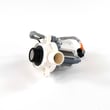
- GE washer drain pump assembly WH23X28418
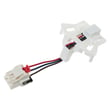
- GE washer lid lock assembly WH08X37938
Last updated: February 2026
How much does it cost to replace a gasket on a GE washing machine?
For a GE GTW465ASN8WW washer, gasket replacement cost is usually the price of the seal plus labor; most washer gaskets run about $20 to $50 for the part, and total installed cost commonly lands higher depending on access and teardown time.
What you typically pay (part vs. labor)
Gasket pricing depends on whether you mean a tub seal, door boot (front-load), or another leak seal. This GTW465ASN8WW is a top-load washer, so the “gasket” people mention is often a tub or shaft seal rather than a front-load door boot.
- Part only: commonly $20 to $50 for many washer seals
- Service call + labor: often the bigger cost because the tub and drive components may need to come apart
- DIY cost: mostly the part plus any one-time tools (spanner, puller, seal driver)
- If leaks are misdiagnosed: you can spend money on a seal and still have a hose, pump, or tub ring leak
Quick checks before you buy a gasket
We recommend confirming the leak source first so you do not replace the wrong part.
- Look for water trails under the drain pump area and hoses
- Check for splashing or overflow at the top of the tub (tub ring issues)
- Inspect fill hoses and inlet valve connections for drips
- Note when it leaks: fill, agitate, drain, or spin
- If the washer will not drain and overflows, the pump can be the root cause
Common leak-related parts for this model
| Symptom | More likely cause | Example part for GTW465ASN8WW |
|---|---|---|
| Water on floor during/after drain | Drain pump or drain hose | GE washer drain pump assembly WH23X28418 |
| Water splashing from top during agitation/spin | Tub ring not sealing/sitting right | Washer tub ring WH44X24150 |
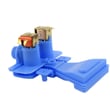
| Slow fill or dripping at valve area | Inlet valve or hose connection | Washer water inlet valve assembly WH13X26535 |
Why it matters
A leaking seal can lead to rust, bearing damage, belt slippage, and repeated out-of-balance problems. Catching the true leak source early helps avoid replacing major drive parts later.
Last updated: February 2026
Is it worth fixing a 7 year old washing machine?
Yes, a 7-year-old GE washer like model GTW465ASN8WW is usually worth fixing when the problem is a common wear item (belt, pump, lid lock, suspension) and the total repair cost stays well below the price of a comparable new washer. If the repair involves major drivetrain or control components, compare costs carefully.
Quick decision checklist
- Fix it if the washer has been reliable and this is the first major issue.
- Fix it if the symptom points to a wear part such as a washer drive belt WH01X27538 or GE washer drain pump assembly WH23X28418.
- Fix it if the tub is not banging due to suspension wear (often addressed with washer suspension rod and spring assembly WH16X26911).
- Consider replacing if you have repeated breakdowns in the last 12 months.
- Consider replacing if the repair quote is around half (or more) of a new washer’s cost.
- Consider replacing if the issue is a high-cost assembly such as the gear case or electronic control.
Typical repair cost vs. part type (rule-of-thumb)
| Problem area | Common symptom | Often a “worth fixing” repair? |
|---|---|---|
| Drain system | Won’t drain, water left in tub | Yes (pump or hose related) |
| Drive system | Won’t spin/agitate, squeal/burnt rubber smell | Yes (belt, pulley, clutch) |
| Suspension | Excessive shaking, out-of-balance often | Yes (rods/springs) |
| Controls/drivetrain | Dead unit, erratic operation, grinding | Sometimes (cost can be high) |
Why it matters
At 7 years old, your washer is typically in the middle of its service life. Replacing a targeted part can restore normal wash and spin performance for far less than the cost of a new machine, especially when the failure is mechanical rather than electronic.
Tips to avoid repeat failures after the repair
- Level the washer and keep all feet firmly on the floor.
- Avoid chronic overloading; it accelerates belt, clutch, and suspension wear.
- Use the correct cycle and water level for bulky loads.
- If you’re seeing an error code, use our GE gtw top load washer error codes guide to narrow the cause before buying parts.
Last updated: February 2026
What is the life expectancy of a GE washing machine?
A GE washing machine typically lasts 10 to 14 years. For your GE GTW465ASN8WW top-load washer, lifespan depends most on load size, installation level, and how quickly you address wear items such as the drive belt and suspension.
Typical lifespan ranges
Most washers fall into these real-world ranges when used normally (several loads per week):
| Washer type | Typical life expectancy | What shortens it fastest |
|---|---|---|
| Top-load (like GTW465ASN8WW) | 10 to 14 years | Overloading, out-of-balance spinning |
| Front-load | 8 to 12 years | Odor/mold issues, bearing wear |
What extends the life of a GE top-load washer
We see the biggest longevity gains from a few habits that reduce strain on the motor, gear case, and tub support.
- Keep loads balanced (mix large and small items)
- Avoid overfilling; bulky loads should move freely
- Use the right amount of HE detergent to prevent residue
- Run a periodic cleaning cycle (or hot wash with washer cleaner)
- Level the washer so it does not “walk” during spin
- Fix early symptoms (squeal, thumping, slow drain) before they cascade
Parts that commonly affect lifespan (and the symptoms)
If your washer is otherwise in good shape, replacing a worn part can restore normal operation and prevent secondary damage.
- Squealing, burning-rubber smell, weak spin: washer drive belt WH01X27538
- Loud banging, tub hitting cabinet, frequent out-of-balance stops: washer suspension rod and spring assembly WH16X26911
- Won’t drain, drains slowly, or leaves water in the tub: GE washer drain pump assembly WH23X28418
Why it matters
A washer that is kept level, not overloaded, and repaired when symptoms first appear typically reaches the upper end of its life range because the drive system (belt, clutch, gear case) and tub support components stay within normal stress.
Last updated: February 2026
What is the most common problem with GE washers?
The most common GE washer problem we see is a no-drain or no-spin complaint. On the GE GTW465ASN8WW top-load washer, this is usually tied to a draining restriction (hose or pump), a lid lock issue, or a drive system problem that prevents the basket from reaching spin speed.
Most common symptoms and what they usually point to
- Washer won’t drain: drain hose kinked, standpipe issue, or a failing pump such as the GE washer drain pump assembly WH23X28418.
- Washer won’t spin or spins weakly: worn belt such as the washer drive belt WH01X27538, out-of-balance suspension, or a shifting/drive issue.
- Lid won’t lock or cycle stops: lid lock problem (common on top-loaders).
- Loud banging or walking: weak suspension rods, especially if the tub bounces excessively.
- Intermittent stopping or odd behavior: control or sensing issues, sometimes tied to speed feedback.
Quick checks we recommend before replacing parts
- Confirm the load is balanced (one heavy item can stop spin on many top-load washers).
- Check the drain hose for kinks, clogs, or being shoved too far down the standpipe.
- Listen during drain: a humming pump with little water flow often indicates a restriction or failing pump.
- Run a rinse and spin with an empty tub to see if the problem is load-related.
- Look for error codes and match them to likely causes using GE gtw top load washer error codes.
Common “problem to part” match-up (GTW465ASN8WW)
| Problem you notice | Most likely area | Example part on this model |
|---|---|---|
| Won’t drain | Drain system | WH23X28418 drain pump assembly |
| Won’t spin / weak spin | Belt or drive | WH01X27538 drive belt |
| Excessive vibration | Suspension | WH16X26911 suspension rod and spring assembly |
| Stops and shows code | Sensing/control | Use error code guide |
Why it matters
Drain and spin problems can leave clothes soaking wet, strain the drive system, and cause repeated out-of-balance events that accelerate wear on suspension and drivetrain parts.
Last updated: February 2026
Why is my GE front-load washer leaking from the front?
A front leak is almost always caused by water escaping at the door opening (seal not sealing) or by oversudsing and splash-out. On a GE washer, start by cleaning and inspecting the door area, then run a quick rinse to confirm whether the leak happens during fill/tumble or during drain/spin.
Quick checks we recommend first
- Wipe the door opening and mating surface; remove hair, coins, and detergent residue.
- Check the load size; overloading can push items against the opening and wick water out.
- Reduce detergent; use HE detergent and measure carefully to prevent oversudsing.
- Level the washer; a forward tilt can encourage water to run toward the front.
- Note when it leaks: fill/tumble vs. drain/spin (this points to different parts).
If the leak happens during drain or spin
A leak that shows up late in the cycle often comes from the drain path rather than the door.
- Inspect the drain hose for splits, pinholes, or a loose connection at the tub/pump.
- Look for water trails under the pump area.
- If you hear grinding or the washer struggles to drain, the pump can be the source.
Part to consider for GTW465ASN8WW: GE washer drain pump assembly WH23X28418
If the leak happens during fill or wash
This usually points to splash-out, a fill issue, or water running down the cabinet front.
- Check inlet hoses at the wall valves for drips that can run forward.
- If water seems to enter too aggressively, the inlet valve can be sticking.
- If the tub bangs or walks, the suspension can let the load slam and splash.
Parts to consider for GTW465ASN8WW:
| Symptom you see | Most likely area | Part that often fixes it |
|---|---|---|
| Water under front during/after drain | Pump or drain hose | GE washer drain pump assembly WH23X28418 |
| Overfill, slow shutoff, odd fill behavior | Water inlet valve | Washer water inlet valve assembly WH13X26535 |
| Heavy shaking, splash-out, off-balance | Suspension | Washer suspension rod and spring assembly WH16X26911 |
Why it matters
Front leaks can damage flooring and can also lead to repeated out-of-balance errors and poor cleaning. Pinpointing when the leak starts is the fastest way to choose the right repair path.
For fault codes that may appear with draining or out-of-balance problems, use our GE top load washer error codes guide.
Last updated: February 2026


