


What size blade is a Craftsman 536796531 edger?
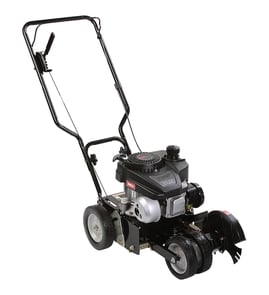
The Craftsman 536796531 (9" 3.5-hp edger/trimmer) uses a 9-inch edger blade. When you replace the blade, match the diameter (9 in.) and the center mounting pattern so it fits the blade hub and tightens securely.
- Measure the blade diameter edge-to-edge; it should be 9 inches.
- Check the center hole and any slots match your blade hub exactly.
- Inspect the blade hardware for wear; replace damaged fasteners so the blade stays tight.
- If the blade wobbles after installation, stop and re-check the mounting surfaces and hardware.
- Use the parts list for Craftsman 536796531 to match the correct blade and mounting parts.
If you are changing the blade, these related parts are commonly replaced at the same time when worn or missing:
- Washer blade 22265MA (helps clamp and support the blade)
- Lock nut 703251 (helps keep the blade fastener from loosening)
- Nut 46023MA (used in blade and/or guard mounting locations depending on configuration)
| What to match | Target for this model | Why it matters |
|---|---|---|
| Blade diameter | 9 in. | Sets cutting width and guard clearance |
| Center mounting | Must match existing hub | Prevents wobble and loosening |
| Hardware condition | Tight, undamaged | Reduces vibration and protects the crankshaft |
A blade that is the wrong diameter or has the wrong center mounting can rub the guard, vibrate excessively, and loosen during use. Keeping the correct 9-inch blade and solid mounting hardware helps your Craftsman edger cut cleanly and run smoother.
Last updated: February 2026
Does Craftsman make a battery-powered edger?
Yes. Craftsman makes battery-powered (cordless) edgers, including 20V MAX models. Your Craftsman 536796531 is a gas 9-inch 3.5-hp edger/trimmer, so a cordless Craftsman edger would be a separate tool purchase rather than a conversion.
A cordless edger is a good fit if you want easier starting and less routine engine maintenance. A gas edger like the 536796531 is often preferred for longer run times and tougher edging conditions.
- Cordless models run on rechargeable battery packs (no fuel mixing or carburetor issues)
- Runtime depends on battery capacity and edging conditions
- Gas models typically handle thicker turf lines and extended sessions better
- Cordless models are usually lighter and quieter
- You still need to maintain the blade and hardware on either type
| Feature | Gas edger (like 536796531) | Battery edger (cordless) |
|---|---|---|
| Starting | Pull start | Trigger start |
| Runtime | As long as you have fuel | Limited to battery charge |
| Maintenance | Fuel system, spark plug, air filter | Battery care, basic cleaning |
| Power feel | Strong for heavy edging | Strong for typical edging |
If your goal is to keep the Craftsman 536796531 running, common wear items include the drive belt and blade mounting hardware. For example, a worn belt can cause weak blade drive or slipping.
- Inspect the belt for glazing, cracking, or stretching
- Check pulleys for wobble or damage
- Replace missing or stripped fasteners
- Verify the blade hardware is tight and not deformed
Helpful parts we list for this model include the v-belt 32668MA and blade-related hardware like the washer blade 22265MA.
Choosing between repairing a gas edger and buying a cordless edger usually comes down to how much edging you do per session, how tough your soil and turf edge is, and whether you want to avoid fuel-system maintenance.
Last updated: February 2026
What engine is on a Craftsman edger?
For the Craftsman 536796531 9" 3.5-hp edger/trimmer, the engine is a small gas engine in the 3.5-hp class (commonly a 4-cycle design on edgers of this type). For the exact engine make and model used on your unit, match the engine ID numbers on the engine itself to the parts listing for your edger.
Look for an engine identification label or stamped numbers on the engine. Common locations include the recoil starter housing, valve cover area, or the blower shroud.
- Clean dirt and grass off the engine shroud so the numbers are readable
- Record the engine model, type, and code (or model and serial)
- Compare those numbers to the engine-related diagrams/parts list for model 536796531
- If the label is missing, use the edger’s chassis model number (536796531) to narrow the correct engine family
- Replace worn drive components that can mimic “engine problems” (for example, a slipping belt)
If the engine runs but the blade or drive does not respond correctly, check the drive system and hardware first.
| Symptom | Often not the engine | What to check next |
|---|---|---|
| Engine runs, blade does not spin | Belt/drive issue | V-belt 32668MA, pulleys, belt routing/tension |
| Squeal or burning rubber smell | Belt slipping | V-belt 32668MA, half pulley 305634MA |
| Vibration near blade area | Loose hardware | Lock nut 703251, washer blade 22265MA |
Using the correct engine identification prevents ordering the wrong tune-up or mounting parts and helps you troubleshoot correctly. Many “no cut” complaints trace back to the belt, pulley, or loose fasteners instead of the engine itself.
Last updated: February 2026
How do you start a Craftsman edger?
To start your Craftsman lawn edger model 536796531 (9" 3.5-hp edger/trimmer), set the controls for a cold start (choke on, throttle set), pull the starter rope until it fires, then move the choke toward run and squeeze the throttle to keep it running smoothly.
- Move the edger to a flat, stable spot; keep the blade area clear.
- Turn the engine switch to ON (if your handle has one).
- Set the choke to FULL/ON.
- Set the throttle to FAST (or squeeze/hold the throttle trigger if your handle uses a trigger).
- Pull the starter rope with short, firm pulls until the engine starts.
- As soon as it starts, move the choke toward RUN/OFF and keep the engine running with the throttle.
- Move the choke to HALF and try 2 to 3 more pulls.
- If the engine smells flooded, move choke to OFF/RUN, hold throttle open, and pull several times.
- Check fuel: fresh gas, correct oil level, and the fuel valve open (if equipped).
- Inspect the drive belt and blade area for binding; a jam can make starting harder.
| What you notice | Most common cause | What to do |
|---|---|---|
| Starts then dies when choke is opened | Cold engine or dirty carburetor passages | Warm up longer; try half-choke briefly |
| Rope is very hard to pull | Blade/shaft binding or engine issue | Check for debris; inspect rotating parts |
| Pulls normally but never fires | Fuel/spark problem | Refresh fuel; check spark plug and ignition |
Starting with the choke and throttle set correctly prevents flooding, reduces pull-start effort, and helps your 536796531 edger reach a stable idle before you begin edging.
If you are troubleshooting a belt-driven bind or slippage while starting, the v-belt 32668MA is a common wear item to inspect and replace when cracked, glazed, or stretched.
Last updated: February 2026
Is an edger blade reverse thread?
Some edgers use a reverse (left-hand) thread on the blade nut, and others use a standard (right-hand) thread; on the Craftsman 536796531, the safest approach is to confirm the thread direction on your unit before applying force so you do not damage the shaft or nut.
Use these checks on the blade hub and nut before you try to break it loose:
- Look for an "L", "LH", or an arrow stamped on the nut, hub, or guard (common left-hand thread markings)
- Clean the exposed threads with a brush; left-hand threads often have a visible marking nearby
- Try a small, controlled movement both directions with a correctly sized socket; stop if it binds hard
- Watch the blade rotation direction; some designs use left-hand threads so rotation helps keep the nut tight
- If the nut has a nylon insert or deformed top, it is a lock nut and will feel tight in either direction
Use this as your reference once you identify the thread type:
| Thread type on blade nut | To loosen | To tighten |
|---|---|---|
| Standard (right-hand) | Turn left (counterclockwise) | Turn right (clockwise) |
| Reverse (left-hand) | Turn right (clockwise) | Turn left (counterclockwise) |
- Disconnect the spark plug wire before working near the blade
- Block the blade from turning with a wood block; do not hold the cutting edge
- Use a snug-fitting 6-point socket to reduce rounding the nut
- Remove the nut, then keep the washer stack in order for reassembly
- Replace damaged hardware so the blade clamps evenly (for example, a worn washer blade 22265MA or a distorted lock nut 703251)
Turning the nut the wrong way can strip threads on the shaft, ruin the nut, and keep the blade from clamping flat, which leads to vibration and poor edging.
Last updated: February 2026