Installation guide
 Owner’s manual


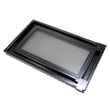
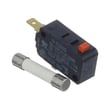
What is the average lifespan of a Frigidaire microwave?
Most Frigidaire microwaves, including the FGMO205KFB built-in microwave, typically last 7 to 10 years with normal household use. Heavy daily use, poor ventilation, and repeated door slams shorten life; regular cleaning and correct cookware help you reach the upper end of that range.
What affects lifespan the most
- Daily run time: multiple long heat cycles per day wear components faster.
- Door use and alignment: a misaligned door can stress latches and safety interlocks.
- Power quality: frequent outages or surges can damage the control board.
- Heat and airflow: blocked vents and grease buildup raise internal temperatures.
- Cooking habits: overheating empty containers or using improper materials increases failures.
Quick care checklist (best ROI)
- Wipe the cavity and door seals weekly; keep the turntable area clean.
- Use microwave-safe cookware; keep foil use within safe guidelines in the FGMO205KFB owner’s manual.
- Do not run the microwave empty.
- Open and close the door gently; avoid leaning on the door.
- Keep intake and exhaust areas clear so heat can dissipate.
Common “end-of-life” symptoms and likely areas
| Symptom | What it often points to | What we recommend |
|---|---|---|
| Runs but does not heat | High-voltage system (magnetron, capacitor, transformer) | Stop using and have it serviced |
| Dead display, no response | Fuse/thermal fuse, control board, power supply | Check power first; then service |
| Door won’t start cycle | Door latch or interlock switch issue | Inspect door action; service if inconsistent |
| Arcing/burn marks | Waveguide cover or interior damage | Stop using; inspect and repair |
Why it matters
Microwaves rely on door interlocks and high-voltage components to operate safely. When a unit is near the end of its service life, small issues (like inconsistent door closing or overheating) can turn into no-heat problems or repeated fuse failures.
Last updated: February 2026
Can I look up Frigidaire parts by model number?
Yes. Looking up parts by model number is the most accurate way to get compatible replacement parts for your Frigidaire built-in microwave model FGMO205KFB because it filters diagrams and parts lists to the exact version of your appliance.
How to find the model number on your microwave
Use the appliance data tag and write the model number exactly as shown (letters and numbers). For FGMO205KFB, common places to check include:
- Inside the microwave door opening (along the frame)
- On the oven cavity frame near the latch area
- On a side trim area behind the door (built-in units)
- In the FGMO205KFB owner’s manual where model and serial are recorded for reference
How model-number lookup helps you choose the right part
When you search by model number, you can match parts by fit and function, not just by appearance.
- Confirms the correct part for your exact microwave configuration
- Helps you avoid ordering a similar-looking but incompatible part
- Lets you cross-check part name, part number, and where it installs
- Makes it easier to troubleshoot by section (door, controls, heating, ventilation)
Quick example (common door-related parts)
| Symptom | Common part to check | Example part for FGMO205KFB |
|---|---|---|
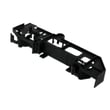
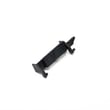
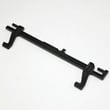
| Door won’t close or latch | Latch components | Latch hook 5304503439 |
| Door won’t open | Release mechanism | Lever 5304485407 |
| Microwave won’t run with door closed | Safety interlock | Microwave door interlock switch 5304493153 |
Why it matters
Microwaves use door interlock switches and latch parts as safety devices. Using the correct model number (FGMO205KFB) helps ensure you get the right Frigidaire parts so the door closes properly and the unit operates as designed.
Last updated: February 2026
Is it worth repairing a Frigidaire microwave?
Yes, it’s usually worth repairing a Frigidaire FGMO205KFB built-in microwave when the problem is a lower-cost, door-related, or power-interruption issue and the unit is otherwise in good condition. For major heating failures (high-voltage system or control), replacement often makes more sense because parts and labor add up quickly.
Quick decision checklist
- Repair is a good bet if the microwave still runs normally and the issue is intermittent (door won’t start, random shutoff, no response).
- Repair is less attractive if it runs but does not heat, or if multiple symptoms show up at once.
- Built-in units are often worth repairing more than countertop models because removal and trim fitment can add cost and hassle.
- If the door is damaged or not closing correctly, stop using it and address the door/latch issue first.
- Use the troubleshooting steps in the FGMO205KFB use and care manual before scheduling service.
Typical repair cost vs. replace (rule of thumb)
| Situation | Usually worth repairing? | Why |
|---|---|---|
| Door won’t latch or won’t start | Yes | Often a switch, latch, lever, or spring issue |
| Dead display or trips breaker | Maybe | Could be a fuse or interlock problem; could also be deeper electrical |
| Runs but does not heat | Often no | High-voltage parts and labor are expensive |
| Door is bent, hinges/latches loose, seal area damaged | No (until corrected) | Safety and proper door closure come first |
Model-specific parts that commonly drive the decision
These are common “repairable” items on the FGMO205KFB that can be more cost-effective than replacing the whole microwave:
- Microwave door interlock switch 5304493153 (no-start issues when the door is closed)
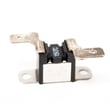
- Wall oven microwave thermal fuse, 20-amp 5304440780 (unit goes dead after a surge or overheat)
- Microwave glass turntable tray 5304529482 (turntable problems or broken tray)
Why it matters
Your manual emphasizes not operating a microwave with a damaged door or defeated safety interlocks, and it also recommends qualified service for internal repairs. That’s especially important on built-in models like FGMO205KFB because door alignment and interlock operation directly affect safe operation.
Last updated: February 2026
What are the internal parts of a microwave?
In a Frigidaire built-in microwave like model FGMO205KFB, the key internal parts include the high-voltage system that creates microwave energy, the waveguide area that directs that energy into the cavity, and the safety and control components that manage cooking and door operation. See the FGMO205KFB owner's manual for diagrams and safety notes.
Main internal components (what they do)
- Magnetron: generates microwave energy (you may hear it cycle on and off at lower power levels).
- High-voltage transformer and high-voltage capacitor: supply and store the high voltage the magnetron needs.
- Waveguide and waveguide cover: routes energy into the cooking cavity; the cover protects the waveguide opening (do not remove it).
- Thermal fuse and other safety cutoffs: shut the microwave down if it overheats.
- Door interlock system: switches and latches that prevent operation with the door open.
- Electronic control board and control panel: runs timing, power levels, and sensor cooking.
- Turntable system: tray and support that rotate food for more even heating.
Parts you may see listed for FGMO205KFB
These are common service parts that match the internal systems above:
| System | Example part on this model | What it affects |
|---|---|---|
| Door safety | Microwave door interlock switch 5304493153 | Microwave will not run, runs only with door pressure, or stops when door moves |
| Overheat protection | Wall oven microwave thermal fuse, 20-amp 5304440780 | Dead microwave, no display, intermittent power loss |
| Energy delivery | Cover 5304462314 | Arcing/burn marks risk if damaged or missing; protects waveguide area |
| Heating circuit | Microwave high-voltage capacitor 5304478954 | No heat or weak heat (high-voltage circuit issue) |
| Food rotation | Microwave glass turntable tray 5304529482 | Uneven cooking, tray not turning smoothly |
Why it matters
Knowing the internal parts helps you troubleshoot symptoms safely. For example, a “no heat” complaint often points to the high-voltage section (magnetron, capacitor, transformer), while a “won’t start” issue often points to the door interlock switches, latch, or control.
Safety notes before inspecting anything
- Unplug power before removing any panels.
- Never operate the microwave with damaged door seals, hinges, or latches.
- Do not remove the waveguide cover during unpacking or use.
- Keep ventilation openings clear; blocked airflow can trigger overheating.
Last updated: February 2026