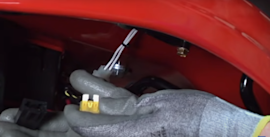
Installation guide
 Owner’s manual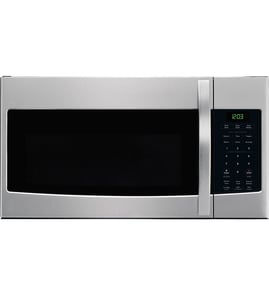


What is the spec of WMH32519FS0?
The Whirlpool WMH32519FS0 is an over-the-range microwave/hood combo designed to mount above a cooktop and vent either outside or back into the room (recirculating). For exact model-specific capacity, wattage, and feature specs, we use the product details in the WMH32519FS0 owner's manual.
Key specs customers usually mean
When someone asks for “specs” on a microwave/hood combo, it typically includes:
- Overall product dimensions (width, height, depth)
- Electrical requirements (voltage, amperage, dedicated circuit guidance)
- Venting configuration (roof/wall venting vs recirculating)
- Installation opening fit (cabinet width, mounting clearances)
- Cooking performance (microwave power output and capacity)
Installation-related specs we can confirm from the installation guide
The installation guide for WMH32519FS0 includes dedicated sections for Product dimensions, Electrical requirements, and Venting design specifications. Use the WMH32519FS0 installation guide to match your cabinet opening, confirm ducting direction, and verify the required tools and mounting steps.
Common fit detail: filler panels
If you are installing this microwave in a wider opening, the guide notes optional filler panel kits:
| Opening width | What’s typically needed | Notes |
|---|---|---|
| 30 in. | No filler panels | Standard over-the-range fit in many kitchens |
| 36 in. or 42 in. | Filler panels | Panels are used to close side gaps for a finished look |
Why it matters
Getting the correct specs prevents common problems like a microwave that does not align with the upper cabinet, a vent that cannot connect to your ductwork, or an installation that fails electrical requirements. It also helps you choose the right accessories and avoid rework.
Quick next steps
- Confirm your cabinet opening width and available clearance.
- Decide on venting: outside (roof/wall) or recirculating.
- Check the Product dimensions and Electrical requirements sections in the manual/guide.
- If you are replacing an existing unit, compare the old unit’s mounting plate and vent location to the WMH32519FS0 requirements.
Last updated: February 2026
What is the average lifespan of a whirlpool microwave?
A Whirlpool microwave, including an over-the-range microwave/hood combo like model WMH32519FS0, typically lasts 7 to 10 years with normal household use. Heavy daily use, poor ventilation, and skipped cleaning can shorten lifespan; good care and prompt repairs can keep it running longer.
Typical lifespan and what changes it
Most Whirlpool microwaves fall into the same real-world lifespan range; what matters most is heat, grease, and how hard the unit works.
- Light use (reheating, occasional cooking): often closer to 10 years
- Heavy use (multiple cook cycles daily): often closer to 5 to 7 years
- Poor airflow or greasy filters/vents: shortens life by overheating components
- Power issues (surges, loose outlet): can damage the control board or switches
- Slamming the door: wears door latches and interlock switches faster
For model-specific operating and care guidance, follow the maintenance and usage sections in the owner's manual.
“Repair or replace” guide by age and symptom
Use this quick chart to decide when a repair is usually worth it.
| Microwave age | Common symptoms | What we usually check first |
|---|---|---|
| 0 to 4 years | No heat, intermittent running | Door interlock system, airflow, basic electrical checks |
| 5 to 8 years | No heat, loud hum, burning smell | High-voltage components, cooling/venting, thermostat |
| 9 to 10+ years | Multiple issues, frequent shutdowns | Compare repair cost vs. overall condition |
Parts that commonly end a microwave’s “useful life”
When a microwave runs but does not heat, or it stops when the door moves, these parts are frequent culprits:
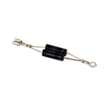
- High-voltage diode (example: diode W11256462)
- Magnetron (example: magnetron WPW10693025)
- High-voltage capacitor
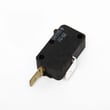
- Door interlock switches (examples: microwave door interlock switch W10269458, microwave door switch W10727360)
- Magnetron thermostat (example: microwave magnetron thermostat W10832024)
Why it matters
A microwave/hood combo like the Whirlpool WMH32519FS0 also has to manage cooking heat and venting grease. Keeping airflow clear and the venting set up correctly helps prevent overheating, which is one of the biggest drivers of early magnetron and control failures.
Last updated: February 2026
What are common problems with whirlpool microwaves?
Common problems with the Whirlpool WMH32519FS0 microwave/hood combo include not heating, not starting, turntable or fan noise, dim or failed lights, and door-latch related issues. Many symptoms trace to door interlock switches, the high-voltage heating circuit, or simple power and settings checks in the owner's manual.
Most common symptoms and what they usually mean
- Microwave runs but does not heat: often a high-voltage component issue (magnetron, capacitor, diode) or a safety interlock problem.
- No power or dead display: outlet, breaker, internal fuse, or control issue.
- Starts then stops when you close the door: door switch or interlock alignment problem.
- Loud humming or buzzing: magnetron or high-voltage section; stop using it until inspected.
- Turntable not rotating: turntable motor or coupler issue.
- Cooktop light not working: bulb or socket issue.
Quick checks we recommend before replacing parts
- Confirm proper power: this microwave is designed for a 120V, 60 Hz, 15- or 20-amp grounded circuit; a dedicated circuit and time-delay fuse/breaker are recommended.
- Avoid extension cords: plug directly into a properly grounded outlet.
- Check the door closes cleanly: no grease buildup or bent latch area.
- Test with a cup of water: short heat test helps confirm a true “no heat” condition.
- Listen for the fan and turntable: changes in normal sound can narrow the cause.
Parts that commonly fix these problems (for WMH32519FS0)
If troubleshooting points to a failed component, these model-matched parts are common fixes:
| Symptom | Common suspect part | Example part on this model page |
|---|---|---|
| Not heating | High-voltage diode | Diode W11256462 |
| Not heating | Magnetron | Magnetron WPW10693025 |
| Not heating | High-voltage capacitor | Capacitor W10850446 |
| Won’t start or door-related stopping | Door interlock switch | Microwave door interlock switch W10269458 |
| Cooktop light out | Light bulb | Microwave/hood light bulb 8206232A |
Why it matters
Microwaves use door interlocks and high-voltage components to heat safely. When a door switch is failing, the unit may not start or may stop unexpectedly. When a high-voltage part is failing, you can get “runs but no heat” symptoms and unusual noises.
Last updated: February 2026