Error Codes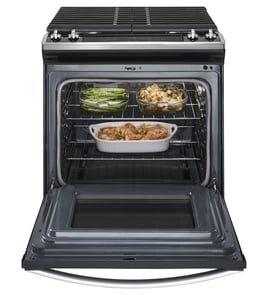


Is my stove gas or propane?
Your Hotpoint RGBS330DR1WW is a gas range, but it can be set up for natural gas or propane (LP) depending on how it was installed. The most reliable way to tell is to check your home’s fuel supply and look for LP conversion parts or labeling on the range.
Quick ways to identify natural gas vs propane
- Look at the fuel source: a utility gas line usually indicates natural gas; a tank (often outside) indicates propane.
- Check the regulator/cap position: many ranges have a convertible regulator that’s set for NG or LP.
- Check burner flame appearance: steady blue flames are normal; persistent tall yellow flames often point to an air/fuel mix issue or wrong setup.
- Check for an LP conversion label/tag: installers often leave a tag near the back, storage drawer area, or regulator.
- Check cooktop performance: wrong fuel setup can cause weak heat, soot, or delayed ignition.
What to inspect on the range (safe checks first)
- Turn off burners and let everything cool.
- Pull the range forward slightly (avoid stressing the gas connector).
- Locate the gas regulator at the back lower area; compare its setting to your fuel type.
- Look for signs of LP conversion such as changed orifices or a conversion tag.
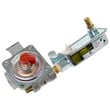
If you suspect the range is set for the wrong fuel, we recommend having a qualified technician confirm the regulator setting and orifice sizing. For this model, the gas control components are part of the range gas valve and regulator assembly WB21X38548.
Common symptoms by fuel mismatch
| What you notice | More likely cause | What to do |
|---|---|---|
| Soot on pans, orange/yellow flames | Wrong fuel setup or poor air mix | Stop using until checked; verify regulator/orifices |
| Weak heat, long boil times | Wrong orifice sizing or low supply pressure | Confirm fuel type and conversion |
| Clicking but slow ignition | Dirty burner, moisture, or ignition issue | Clean/dry burner parts; inspect igniters |
Why it matters
Natural gas and propane use different pressures and orifice sizes. Running the wrong setup can cause poor cooking performance and soot buildup, and it can stress ignition and gas control parts.
Last updated: January 2026
Can I still use a gas stove without electricity?
Yes. On the Hotpoint RGBS330DR1WW gas range, you can usually cook on the surface burners during a power outage by lighting the burner with a match or long lighter; the oven typically will not operate normally without electricity because it relies on an electric igniter.
What will work (and what usually will not)
- Surface burners: Typically work without power if you manually ignite them.
- Oven bake/broil: Typically will not heat without power because the hot-surface igniter needs electricity.
- Oven light and clock/timer: Will not work without power.
| Function | Needs electricity? | What you can do during an outage |
|---|---|---|
| Cooktop burners | Usually no (for flame), yes (for spark) | Light with a match/long lighter |
| Oven bake/broil | Yes | Wait for power or schedule service |
| Oven light | Yes | Use a flashlight |
How to light a surface burner safely
- Turn the burner knob to LITE (or the lowest flame setting that releases gas).
- Immediately hold a long lighter or lit match at the burner ports.
- Once the flame is steady, adjust to the desired heat.
Important safety checks
- If you smell gas, turn the knob OFF, ventilate the room, and wait several minutes before trying again.
- Never leave a manually lit burner unattended.
- Keep flammables (paper towels, curtains) away from the cooktop.
If the burner will not light even with a match
A weak or uneven flame can point to a clogged burner, an orifice issue, or a gas supply/regulator problem.
- Clean and dry the burner cap and ports.
- Confirm other gas appliances are working.
- If flames are abnormal on multiple burners, the regulator or valve can be involved.
Helpful parts to consider for this model:
- Range gas valve and regulator assembly WB21X38548: controls and regulates gas flow into the range.
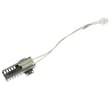
- Bake burner ignition WB13X40208: the electric igniter used for oven bake ignition.
Why it matters
Knowing what works without electricity helps you cook safely during outages and prevents repeated ignition attempts that can allow gas to build up.
Last updated: January 2026
What parts do you need to hook up a gas stove?
To hook up a Hotpoint gas range like model RGBS330DR1WW, you typically need a flexible gas connector kit that matches your gas type (natural gas or LP), a shutoff valve, and the correct pipe-thread sealant; then you must leak-test every connection before use.
What you typically need (basic hookup checklist)
- Flexible corrugated gas connector (correct length and diameter for your installation)
- Manual gas shutoff valve (if one is not already installed at the wall)
- Pipe-thread sealant rated for gas (yellow PTFE gas tape or pipe dope rated for gas)
- Two adjustable wrenches (or a wrench set)
- Leak test solution (commercial gas leak detector or a soap-and-water mix)
- Anti-tip bracket hardware (usually already installed in the home, but verify it is present)
Quick compatibility notes (what to match before you buy)
| Item | What to match | Why it matters |
|---|---|---|
| Gas connector | Length, diameter, and end fittings | Prevents strain, kinks, and leaks |
| Sealant | Must be rated for gas | Standard tape can fail on gas threads |
| Gas type | Natural gas vs LP (propane) | Wrong setup causes poor flame and unsafe operation |
Safety and setup steps we recommend
- Turn off gas at the shutoff valve before connecting anything.
- Keep the connector from twisting; hold the fitting with one wrench while tightening with the other.
- After turning gas back on, leak-test every joint; bubbles mean a leak that must be corrected.
- Confirm the range is level; use range leveling leg WB02K10182 if the unit rocks or the door swings.
- If you smell gas at any point, stop and have the installation checked by a qualified technician.
Why it matters
A correct connector, sealant, and leak test prevent gas leaks and help your Hotpoint RGBS330DR1WW heat consistently. Leveling also improves baking results and helps the oven door seal properly.
Last updated: January 2026