
How to get rid of an old table saw?
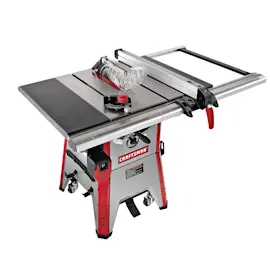
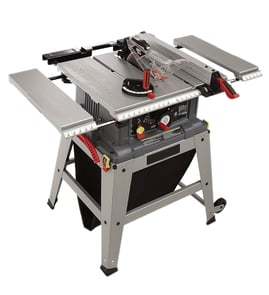
For a Craftsman table saw model 315221850, the best way to get rid of it is to sell or donate it if it still runs; if it is broken, recycle it as scrap metal or take it to a local transfer station that accepts power tools. Remove the blade and secure sharp edges before transport.
Best disposal options (from most to least value)
- Sell it (working or repairable): many buyers want older Craftsman tools for parts or restoration.
- Donate it (working and safe): local reuse stores, community workshops, or vocational programs often accept tools.
- Recycle it (not worth repairing): most table saws are largely steel and aluminum and can go to scrap metal recycling.
- Use a bulk pickup or haul-away service if you cannot transport it.
- Dispose at a transfer station as directed by your local rules (some classify power tools as e-waste).
Safety steps before you move or dispose of it
- Unplug the saw and remove any extension cord.
- Remove the blade and pack it separately (wrap in cardboard and tape it closed).
- Lower the blade height fully and lock the bevel if your saw has those adjustments.
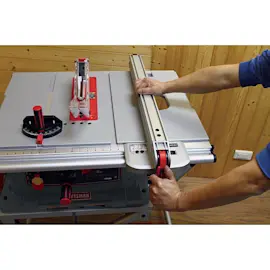
- Remove loose accessories (miter gauge, rip fence, throat plate) and bundle them.
- Secure moving parts with tape or a strap so nothing shifts in the vehicle.
Blade and accessory handling
Saw blades are sharp and can puncture trash bags; treat them like sharps.
| Item | What to do | Why it matters |
|---|---|---|
| Saw blade | Wrap in cardboard, tape securely, recycle as metal where accepted | Prevents cuts and punctures |
| Power cord | Keep with saw for resale, or recycle with e-waste if damaged | Reduces electrical hazards |
| Fence/miter gauge | Include for resale or donate as a set | Increases reuse value |
Why it matters
Table saws are heavy, mostly metal, and often reusable even when they are not cutting well. Proper disposal keeps sharp parts contained and helps divert metal from the landfill.
Helpful DIY resource
If you are deciding whether it is worth keeping the saw, our table saw common question guide can help you evaluate common issues and next steps.
Last updated: February 2026
Are all table saw arbor nuts the same size?
No. Table saw arbor nuts are not all the same size because arbor shaft diameter and thread direction vary by saw design. On a Craftsman 315221850 table saw, you need to match the nut to the saw’s arbor threads, not just the blade size.
What’s usually standardized (and what isn’t)
Most 10-inch table saw blades share a 5/8-inch arbor hole, but that does not mean the arbor nut is universal. The nut must match the arbor’s thread size and pitch.
Common differences you’ll see:
- Arbor diameter (often 5/8 inch on many 10-inch saws, but not always)
- Thread pitch (fine vs coarse threads)
- Thread direction (some saws use left-hand threads so the nut self-tightens)
- Nut style (hex nut, flange nut, washer-and-nut setup)
- Washer/flange thickness (affects how well the blade clamps)
How to identify the correct arbor nut for model 315221850
Use these checks before ordering or substituting a nut:
- Unplug the saw and remove the blade guard if equipped.
- Remove the blade and inspect the arbor threads for damage or flattening.
- Measure the arbor diameter with calipers (common sizes are 5/8 inch and 1 inch).
- Determine thread direction by hand-starting the nut: it should spin on smoothly for several turns.
- Confirm you have the correct outer flange/washer; a wrong flange can cause wobble even with the right nut.
Quick reference: blade hole vs arbor nut
| Item | What it must match | What it does not guarantee |
|---|---|---|
| Blade arbor hole (for a 10-inch blade) | Arbor diameter (often 5/8 inch) | Arbor nut thread size/pitch/direction |
| Arbor nut | Arbor threads exactly | Blade diameter (10-inch vs 12-inch) |
Why it matters
Using the wrong arbor nut (or forcing the threads) can prevent the blade from clamping flat, leading to vibration, bad cuts, and a higher chance of the nut loosening during operation.
Related DIY help
If you’re removing the blade to check the arbor hardware, follow safe blade-handling steps like those in how to replace a table saw blade.
Last updated: February 2026
Are craftsman table saws any good?
Yes; Craftsman table saws are a solid choice for many DIYers and hobbyists because they typically deliver good cutting power and durability for the price. For a model like Craftsman 315221850, overall results depend most on setup and alignment (fence, blade, and miter gauge), which directly affects cut accuracy.
What Craftsman table saws do well
- Good value for basic ripping and crosscutting
- Sturdy frames on many older and mid-era models
- Common, serviceable wear items (switches, brushes, belts on some designs)
- Plenty of aftermarket blade options (thin-kerf, combo, rip blades)
Where owners most often get frustrated
Most “mixed reviews” come from accuracy and adjustment, not raw power.
- Fence not staying parallel to the blade
- Miter gauge play causing inconsistent crosscuts
- Blade alignment drifting after transport or heavy use
- Vibration from a worn blade, arbor issues, or loose hardware
- Dust buildup affecting height or bevel mechanisms
Quick accuracy checklist (best ROI)
- Verify the blade is parallel to the miter slot.
- Set the fence parallel to the blade (or with a slight toe-out if your setup calls for it).
- Use a sharp, clean blade matched to the cut.
- Confirm the bevel stop returns to 90 degrees reliably.
- Check for play in the miter gauge bar.
Common “good vs better” expectations
| Use case | Craftsman table saw is usually a good fit | You may want upgrades |
|---|---|---|
| DIY projects, home repairs | Yes | Optional |
| Furniture-level precision | Sometimes | Often (fence, sled, tuning) |
| Daily jobsite production | Depends | Often |
Why it matters
A table saw can feel “great” or “terrible” based on alignment and blade condition. When the fence and blade are dialed in, a Craftsman saw like 315221850 can produce clean, repeatable cuts; when they are not, you will see burning, wandering cuts, and out-of-square results.
For cut-quality troubleshooting and tuning steps, use our DIY guide: table saw bad cuts.
Last updated: February 2026
How much is a Craftsman professional table saw 315221850?
A Craftsman table saw like model 315221850 typically sells for about $400 to $500 on the used market, depending on condition, included accessories (rip fence, miter gauge, blade guard), and whether the motor runs smoothly under load. For the most accurate current value, compare recent local listings and completed sales.
What changes the price the most
- Overall condition: rust on the table, worn elevation/tilt gears, cracked handwheels
- Safety and accessories included: blade guard, splitter/riving knife style parts, anti-kickback pawls
- Fence quality and alignment: a straight, locking fence adds value
- Motor health: no burning smell, no excessive sparking at brushes, no bogging in hardwood
- Stand and mobility: stable base, working wheels (if equipped)
Quick value checklist before you buy or sell
Use this as a fast inspection list for a Craftsman 315221850 table saw:
| Check | What “good” looks like | What lowers value |
|---|---|---|
| Blade height adjustment | Smooth travel, no binding | Won’t raise/lower, skips teeth |
| Bevel (tilt) adjustment | Holds angle, returns to 90 degrees | Slips, hard to lock |
| Cut quality | Straight rip, minimal burn | Wandering cuts, heavy vibration |
| Power | Reaches speed quickly | Slow spin-up, trips overload |
Why it matters
Price is closely tied to accuracy and safety. A table saw that cannot hold blade height, bevel angle, or fence alignment often needs parts and setup time; that pushes the real cost above the purchase price.
Helpful DIY resources for evaluating performance
- If the saw is cutting out of square, use table saw bad angle cuts to pinpoint alignment and bevel issues.
- If you need to confirm the arbor and blade are installed correctly, follow how to replace a table saw blade.
Last updated: February 2026