Owner’s manual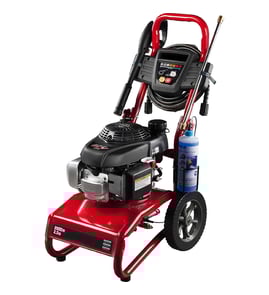





How do you know your gas pressure?
On a Craftsman gas pressure washer model 580752960, you “know” your gas pressure by checking the fuel supply and carburetor delivery (not a household gas line) and confirming the engine is getting steady fuel flow. Use the checks and specs in the 580752960 owner's manual to match your setup.
What “gas pressure” means on this model
Most pressure washer engines are gravity-fed from the fuel tank; there is no adjustable gas line pressure like a furnace. When people say “gas pressure” on a pressure washer, they usually mean one of these:
- Fuel cap venting is working (tank can breathe)
- Fuel flows freely through the fuel line and filter (if equipped)
- Carburetor bowl is filling and metering fuel correctly
- Engine is not starving under load (surging, dying, or losing power)
Quick checks we recommend (no special tools)
- Confirm fresh fuel: old fuel causes hard starting and surging.
- Open the fuel valve (if your engine has one) and verify fuel reaches the carburetor.
- Loosen the fuel cap briefly: if it runs better, the cap vent may be restricted.
- Check the choke position: running partially choked after warm-up points to a fuel restriction.
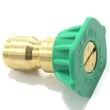
- Inspect the spray tip/nozzle: a clogged tip can load the pump and make the engine bog.
Symptoms and what they usually point to
| Symptom | Most common cause | What to do first |
|---|---|---|
| Starts then dies | Restricted fuel flow or cap vent | Check cap vent, fuel valve, fuel line |
| Surges at idle | Dirty carburetor or air leak | Drain fuel, clean carburetor, check gaskets |
| Loses power under spray | Nozzle restriction or unloader issue | Clean tip, verify unloader operation |
| Runs but low cleaning power | Pump/unloader/nozzle problem | Check nozzle set and unloader valve |
Why it matters
Fuel delivery problems can look like pump problems. Verifying steady fuel flow first prevents unnecessary pump or unloader valve replacement and helps you restore normal PSI and GPM performance faster.
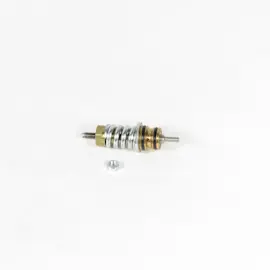
For pump-side pressure issues (sprays too hard, pressure spikes, or pressure won’t regulate), the unloader is a common culprit; our guide how to replace a pressure washer unloader valve walks through what to check and how replacement typically goes.
Last updated: January 2026
What is the standard gas delivery pressure?
Most residential natural gas systems deliver low pressure, typically 0.5 PSI (14 inches water column) or less, which is appropriate for common household gas appliances. For a Craftsman pressure washer like model 580752960, gas pressure is not a normal operating spec because this unit uses gasoline, not natural gas.
Quick clarification for Craftsman 580752960
This Craftsman 580752960 is a gasoline-powered pressure washer. If you are asking about “gas delivery pressure” because the engine is running poorly, the issue is usually fuel flow, carburetion, or ignition, not building gas line pressure. For model-specific operating and fuel guidance, use the Craftsman 580752960 owner's manual.
Typical gas pressures (for homes that use natural gas)
If you are working with a home natural gas line (for a furnace, water heater, range, etc.), these are the common reference points:
- Standard low-pressure service is usually around 0.25 to 0.5 PSI
- Many appliances regulate down to about 7 inches water column (in. W.C.) at the appliance
- LP (propane) systems commonly run around 11 in. W.C. at the appliance regulator
- Higher pressures (often 2 PSI and up) are typically used for some commercial setups, then regulated down near the appliance
Common “pressure” mix-ups on pressure washers
People often say “gas pressure” when they mean one of these:
- Water pressure at the pump inlet (garden hose supply)
- Spray pressure at the wand (PSI output)
- Fuel flow from the gas tank to the carburetor
- Pump bypass/unloader behavior (pressure spikes, surging)
Symptom-to-cause cheat sheet
| What you notice | Most common cause on a gas pressure washer | What to check first |
|---|---|---|
| Engine surges or bogs | Fuel restriction or carb issue | Fresh fuel, clean filter, choke setting |
| Low spray pressure | Nozzle worn/clogged or unloader issue | Tip cleaning, correct nozzle |
| Pulsing spray | Air leak on inlet or clogged inlet screen | Hose connections, inlet screen |
Why it matters
Using the wrong “pressure” reference can send you down the wrong repair path. Natural gas delivery pressure applies to household gas piping; pressure washer performance problems are usually tied to the pump, nozzle, unloader valve, or gasoline engine fuel system.
Last updated: January 2026
Is gas pressure measured in psi?
Yes. Gas pressure is commonly measured in PSI (pounds per square inch), which describes how much force the gas exerts on each square inch of surface. For your Craftsman pressure washer model 580752960, PSI is also the standard unit used to describe spray pressure output and test readings in service checks.
What PSI means (quick definition)
PSI is a pressure unit, not a flow unit. It applies to gases and liquids.
- Pounds: the amount of force
- Square inch: the area the force is applied to
- Pressure: force divided by area
How this relates to a gas pressure washer
On a gas pressure washer like the Craftsman 580752960, you will see PSI used in a few different ways:
- Pump outlet pressure (spray pressure): what the pump produces at the outlet
- System pressure under load: pressure changes with nozzle size, hose restrictions, and unloader operation
- Diagnostic readings: a pressure gauge reading at the pump outlet or at the hose connection
If you are checking performance, we recommend following the setup and operating guidance in the 580752960 owner’s manual.
PSI vs other common pressure units
| Unit | What it’s based on | Common use |
|---|---|---|
| PSI | pounds per square inch | pressure washers, tire pressure, regulators |
| kPa | kilopascals | engineering specs, some gauges |
| bar | metric pressure unit | industrial and some consumer gauges |
Why it matters
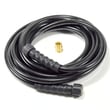
Using the right unit helps you match accessories and troubleshoot correctly. For example, a restriction in the high-pressure line can affect pressure at the wand; a damaged hose can also create leaks and unstable pressure. If your hose is leaking or blistered, replacing it with the correct high-pressure line such as the pressure washer hose 84006753 helps restore safe operation.
Tips when measuring pressure on a pressure washer
- Use a gauge rated above your washer’s maximum PSI
- Test with a known-good spray tip/nozzle
- Purge air from the hose before taking readings
- Avoid running in bypass (trigger off) for extended periods
- Check for leaks at quick-connects, O-rings, and the hose
For deeper troubleshooting steps, use our guide solving pressure washer problems.
Last updated: January 2026