Owner’s manual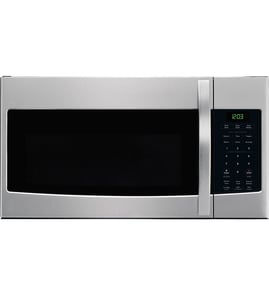

Is Vissani a reliable microwave brand?
Vissani microwaves, including the Vissani MCO160UW over-the-range microwave, are a solid choice for everyday reheating and basic cooking when they’re used and maintained correctly. Long-term reliability depends most on proper ventilation, safe cookware use, and avoiding common misuse that can damage internal components.
What “reliable” usually means for an over-the-range microwave
Reliability is typically about consistent heating, a door that seals and latches correctly, and a vent fan that protects the microwave from heat and grease. Your owner's manual also emphasizes safety interlocks and proper operation, which directly affects durability.
Good reliability habits
- Never run the microwave empty; it can damage internal parts.
- Keep the glass turntable installed and seated correctly.
- Use only microwave-safe cookware; avoid metallic trim and twist ties.
- Keep the door seals and sealing surfaces clean so the door closes properly.
- Stay nearby during cooking to prevent overcooking and smoke events.
Quick reliability checklist (what to watch for)
Use this table to decide whether you’re seeing normal behavior or a problem worth troubleshooting.
| Symptom | Often normal | Often a problem |
|---|---|---|
| Vent fan runs after cooking | Yes; it can run up to about an hour to cool internal parts | No, unless it never shuts off |
| Arcing or sparks | No | Yes; usually metal, twist ties, or running empty |
| Countdown runs but no heating | No | Yes; commonly a door not fully closed |
Why it matters
Over-the-range microwaves live in a harsher environment than countertop units (heat, steam, grease). Using the vent fan, keeping airflow clear, and following safe-use rules helps protect key components like the magnetron and door interlocks.
If you’re deciding whether to keep or replace it
- If it heats evenly, the door closes firmly, and the fan behaves normally, it’s meeting the “reliable for daily use” standard.
- If you see repeated arcing, weak heating, or door/latch issues, address those early; they tend to get worse with continued use.
Last updated: February 2026
What are the parts of a microwave?
A Vissani MCO160UW over-the-range microwave has cooking components (cavity, door, turntable system, controls) plus hood-vent parts (vent fan, cooktop light, grease filters). Inside, it also uses high-voltage components to generate microwave energy for heating food; see the owner's manual for your exact layout.
Main parts you can see and use
These are the everyday parts most owners interact with:
- Door handle and door latches (the door must latch for the oven to run)
- Window with metal shield (lets you view food while containing microwaves)
- Touch control panel and digital display
- Hood controls (vent fan high, low, off; light on, off)
- Turntable system (glass tray plus roller guide)
- Grease filters (metal filters under the microwave that capture grease)
- Cooktop light (illuminates the range surface)
Key internal components (what makes it heat)
Over-the-range microwaves typically include these internal systems:
- Magnetron (creates microwave energy)
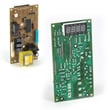
- High-voltage transformer and related high-voltage parts
- Waveguide (routes microwave energy into the cooking cavity)
- Cooling fan and airflow ducts (keeps internal parts from overheating)
- Safety interlock switches (confirm the door is closed before operation)
Hood-vent parts and what they do
The hood section is designed to move air and trap grease.
| Part/system | What it does | What you may notice |
|---|---|---|
| Grease filters | Collect grease from cooking vapors | Need monthly cleaning; reduced airflow when dirty |
| Exhaust fan | Pulls air through filters and vents it | May run automatically if the microwave gets too hot |
| Cooktop light | Lights the cooking surface | Lens can get greasy and needs cleaning |
Why it matters
Knowing which parts are “hood” versus “microwave” helps you troubleshoot correctly. For example, the fan can turn on automatically to protect internal components during heavy cooktop heat, and it may stay on for up to about an hour while things cool.
Last updated: February 2026
What does 160 mean?
On the Vissani MCO160UW over-the-range microwave, “160” is part of the model number, not a cooking setting or error code. In many microwave model names, that number is used as a series identifier and often aligns with the unit’s size class (commonly around 1.6 cu. ft.), but the exact meaning is defined by the model’s documentation in the MCO160UW owner's manual.
Where you’ll see “160” and what it affects
“160” typically shows up in places where the appliance is identified, not operated.
- The rating label (model/serial tag) inside the microwave
- Your purchase receipt or warranty paperwork
- Parts lookups and service documentation
- The cover page of the user documentation
- Model comparisons (capacity, features, trim style)
How to confirm what it means for your exact unit
Use these quick checks so you match the right specs and replacement parts for MCO160UW.
- Find the model/serial label (usually inside the door opening area).
- Confirm the full model number is MCO160UW (letters matter).
- Check the specifications section in the MCO160UW owner's manual for capacity and electrical ratings.
Common interpretations (what to expect)
| What “160” might refer to | How it’s used | What you should do |
|---|---|---|
| Series/family identifier | Groups similar designs/features | Use the full model number for parts |
| Approx. capacity class (often ~1.6 cu. ft.) | Helps describe size | Confirm capacity in the manual |
| Marketing shorthand | Differentiates finishes/options | Match the exact suffix letters (UW) |
Why it matters
Using the full model number MCO160UW prevents wrong-fit parts and avoids installation issues. Even small letter changes can mean different door switches, filters, control panels, or mounting hardware.
Last updated: February 2026