Owner’s manual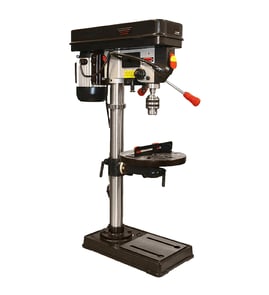


What is a good horsepower for a drill press?
A good horsepower depends on what you drill most often. For the Craftsman 113213853 15-inch drill press, the manual specifies a 1/2 HP motor, which is a solid choice for typical home shop drilling in wood and light to moderate metal when you use the correct speed and a sharp bit (see the 113213853 owner's manual).
Quick horsepower guide (what we recommend)
- 1/3 to 1/2 HP: General DIY use, wood, plastics, and light metal drilling
- 3/4 HP: Frequent metalwork, larger bits, and tougher materials
- 1 HP and up: Heavy-duty drilling, larger hole saw type work (when allowed), and production-style use
- More HP helps most when: You run larger diameter bits, drill thicker stock, or drill harder metals
- HP is not everything: Speed range, belt condition, and proper feed pressure matter just as much
Match horsepower to the work you do
| Your typical work | Good HP range | What to prioritize besides HP |
|---|---|---|
| Woodworking, small bits | 1/3 to 1/2 HP | Speed changes, table stability, sharp bits |
| Mixed wood and mild steel | 1/2 to 3/4 HP | Correct RPM, cutting oil, solid clamping |
| Larger holes, harder metals | 3/4 to 1 HP | Low-speed capability, rigid setup, quality bits |
Why speed control matters on this model
Your Craftsman 113213853 uses a belt-and-pulley system with multiple preset speeds. Using the recommended RPM helps prevent bit chatter, overheating, and stalling, which can feel like “not enough horsepower.” The 113213853 owner's manual also includes important accessory speed limits (for example, hole saws must not be run above a specified RPM).
Why it matters
Choosing the right horsepower helps you drill cleaner holes with less stalling and less heat buildup. Just as important, matching RPM to the bit and material reduces the chance of grabbing, workpiece spin, and premature bit wear.
Last updated: February 2026
What is the 4 inch rule for drill press?
The 4-inch rule means we keep our hands and fingers at least 4 inches away from the rotating drill bit, chuck, and spindle while operating the Craftsman 113213853 15-inch drill press. This reduces the chance of contact injuries and helps keep hands out of the point-of-operation zone.
How to apply the 4-inch rule safely
- Clamp the workpiece to the table when it is short or unstable; do not “hand-hold” small parts near the bit.
- Use a drill press vise fastened to the table for small or repeat drilling.
- Keep hands on the vise handle or clamp hardware, not on the workpiece.
- Turn the motor switch off and remove the switch key before adjustments, bit changes, or belt changes.
- Do not do layout, assembly, or setup work on the table while the cutting tool is rotating.
- Avoid loose clothing; tie back long hair and wear safety goggles.
Model-specific safety notes for Craftsman 113213853
The 113213853 manual emphasizes securing the work and using recommended speeds and accessories. It also warns against certain accessory uses and oversize/overlong drills.
| Safety item | What to do | Why it helps |
|---|---|---|
| Work support | Position backup material and the workpiece to contact the column when possible | Reduces spinning, binding, and thrown work |
| Clamping | Clamp to the table or use a fastened drill press vise | Keeps hands away from the bit |
| Accessory limits | Holesaws at 400 RPM max; drum sanders at 1800 RPM max | Helps prevent tool failure and kickout |
| Drill size/length | Do not use a drill over 7 inches long or extending 6 inches below the chuck jaws | Reduces bending and breakage risk |
Why it matters
Most drill press injuries happen when a workpiece shifts, spins, or a hand drifts into the rotating bit. The 4-inch rule pairs with proper clamping, correct speed selection, and safe setup habits to keep the cutting area clear.
For the full list of operating and safety instructions, use the 113213853 owner's manual.
Last updated: February 2026
What does the drill press do better than any machine in the shop?
A drill press like the Craftsman 113213853 does one job better than anything else in the shop: it drills straight, repeatable holes with controlled depth and consistent accuracy. The rigid column, adjustable table, and selectable speeds make clean, round holes much easier than with a handheld drill.
What a drill press excels at
- Drilling holes that stay square to the work surface (less wandering and oval holes)
- Repeating the same hole location and depth across multiple parts
- Holding a steady feed rate for cleaner holes and less bit chatter
- Running the right spindle speed for the material (this model has multiple belt-selected speeds)
- Keeping the work supported and clamped for safer, more controlled drilling
Accuracy and repeatability: what to set up first
For the best results on the 113213853, we set up the machine so the work cannot shift and the head and table cannot move.
- Lock the head and table adjustments before drilling.
- Clamp the workpiece to the table when it is short, narrow, or cannot brace against the column.
- Use a drill press vise that is fastened to the table for small parts.
Reference the safety and operation sections in the owner's manual for the recommended setup and operating practices for this model.
Speed control matters (and why it improves hole quality)
This Craftsman drill press uses belt and pulley positions to select speed. Matching speed to the bit and accessory helps prevent burning, grabbing, and rough holes.
| Task or accessory | Key limit to follow | Why it matters |
|---|---|---|
| Hole saw | 400 RPM max | Reduces grabbing and kickback risk |
| Drum sander | 1800 RPM max | Prevents overheating and loss of control |
| Long drill bits | Do not exceed 7 in. length or 6 in. below chuck jaws | Helps prevent bending or breakage |
Why it matters
When we need holes that line up, fit bolts cleanly, or match a pattern across multiple pieces, the drill press gives us controlled alignment and repeatable depth. That precision saves time on rework and improves the finished fit and strength of assemblies.
Last updated: February 2026
How to repair a drill press spindle?
On the Craftsman 113213853 15-inch drill press, spindle repair usually means correcting wobble or runout by cleaning and reseating the chuck, servicing the quill and spindle splines, or replacing worn spindle bearings. We follow the disassembly and adjustment steps in the owner's manual to keep the quill travel smooth and accurate.
Before you tear it down: confirm the symptom
Many “spindle problems” are actually chuck seating or setup issues.
- If the bit wobbles: clean the spindle nose and the chuck’s tapered hole, then reinstall the chuck
- If the quill sticks or feels gritty: clean and lubricate the quill rack and spindle splines
- If runout persists with a straight bit: plan on bearing service
- If the quill returns too fast or too slow: adjust the quill return spring tension
Quick fix for wobble: reseat the chuck (common)
The manual procedure is:
- Clean the chuck’s tapered hole and the spindle nose with a clean cloth.
- Apply a light film of oil to the spindle nose.
- Install the chuck and tighten the locking collar.
Why this matters
Even a small piece of dirt on the spindle nose or inside the chuck taper can prevent proper seating and cause wobble.
When it’s a true spindle repair: bearings, quill, and alignment
If you still have excessive runout after reseating the chuck, worn spindle bearings are the most common cause.
Typical repair workflow
| Task | What you’re addressing | What to watch for |
|---|---|---|
| Replace spindle bearings | Persistent wobble/runout | Press-fit parts, correct orientation, no contamination |
| Clean and lubricate splines/rack | Rough quill travel | Use light lubrication, avoid over-greasing |
| Adjust quill return spring | Quill return speed issues | Control spring cap carefully to prevent sudden release |
Safety and setup notes we follow
- Turn the switch OFF and unplug the drill press before servicing
- Clamp the workpiece and use back-up material during drilling to prevent binding
- Avoid over-tightening the spring cap nut; it can restrict quill movement
Helpful maintenance that prevents spindle wear
- Blow dust out of the motor area regularly
- Periodically lubricate the spindle splines and quill rack (bearings are factory-greased and do not need lubrication)
Last updated: February 2026
How much does a Craftsman 113213853 drill press weigh?
The Craftsman 113213853 is a 15-inch drill press; use the net weight listed in the specifications section of the 113213853 owner's manual for the exact number. For moving and mounting planning, most Craftsman 15-inch floor drill presses are typically in the 150 to 200 lb range.
Where the exact weight is listed
In the manual for model 113213853, check these spots first:
- Specifications (often lists net weight)
- Unpacking or carton contents (may list shipping weight)
- Assembly instructions (sometimes includes handling or lifting notes)
- Parts list and diagrams (helps confirm you are using the correct manual for 113213853)
Net weight vs shipping weight
| Weight type | What it means | Why you care |
|---|---|---|
| Net weight | Tool only (as configured) | Lifting, bench or floor loading, stability |
| Shipping weight | Tool plus packaging and inserts | Freight handling, delivery planning |
Practical handling and setup tips
- Unplug the drill press before moving it.
- Remove loose accessories (bits, chuck key, guards if removable) and pack separately.
- Lower the table and keep the head and column supported to reduce tipping risk.
- Use a dolly and straps; plan for two-person handling for most floor models.
- After placement, bolt the base down if your shop setup calls for it; it reduces vibration.
Why it matters
Knowing the correct weight helps you plan safe lifting, choose a stable location, and decide whether bolting the base down is needed for vibration control and accurate drilling.
Last updated: February 2026