Owner’s manual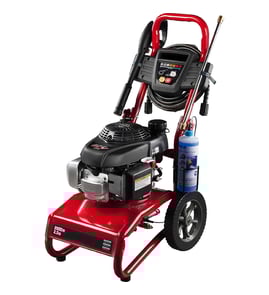




Is 1.2 gallons per minute good for a pressure washer?
For a gas pressure washer like Craftsman model 580752580, 1.2 GPM is low for most outdoor cleaning jobs; it will clean, but rinsing and covering large areas will be slow. This model’s manual calls for a water supply greater than 3.7 GPM to feed the pump properly (your washer’s output and your hose supply are different). See the 580752580 owner's manual.
What 1.2 GPM means in real use
- Best for small, light-duty tasks (patio furniture, small grills, spot cleaning)
- Slower rinsing; you spend more time waiting for soap and debris to flush away
- Less effective at pushing dirt out of porous surfaces (concrete, pavers)
- More sensitive to nozzle choice; a wider spray tip helps coverage
Quick comparison: 1.2 GPM vs typical gas pressure washer flow
| Flow rate (GPM) | Cleaning speed | Best use cases |
|---|---|---|
| 1.2 | Slow | Small areas, light grime |
| 2.0 to 2.5 | Moderate | Driveways (small), siding (small), decks |
| 2.8 to 4.0 | Fast | Larger driveways, fences, frequent heavy cleaning |
Important: match your water supply to the washer
Even if a pressure washer is rated at a certain GPM, it still needs enough incoming water to avoid pump damage.
- Use a garden hose and spigot that can supply strong, steady flow
- Turn water on fully and purge air by squeezing the trigger before starting
- Never run the pump without water connected and turned on
Why it matters
GPM is your “rinse power” and productivity; higher GPM usually means faster cleaning with less time on each section. For model 580752580, meeting the manual’s inlet water requirement helps protect the pump and keeps performance consistent.
Last updated: January 2026
What are the most common issues with 580752580?
The most common issues we see with the Craftsman 580752580 gas pressure washer are no-start or hard-start conditions, low or surging pressure, water leaks at fittings, and poor detergent pickup. Most problems trace back to fuel/ignition maintenance, clogged inlet screens or nozzles, worn seals, or a sticking unloader valve.
Common symptoms and what usually causes them
- Won’t start / starts then dies: old fuel, dirty carburetor, fouled spark plug, low oil shutdown (if equipped)
- Low pressure or pressure surges: clogged spray tip, restricted water supply, air in inlet hose, sticking unloader valve
- Leaks at hose connections: worn O-rings, loose couplers, damaged outlet fitting
- No chemical draw: wrong nozzle (needs low-pressure soap tip), clogged injector, air leak on suction line
- Engine loses power under load: restricted air filter, stale fuel, governor/carburetor issues
Quick checks we recommend first
- Confirm full water flow to the pump before starting the engine.
- Clean the spray tip and check the inlet screen for debris.
- Inspect hose ends and O-rings for cuts or flattening.
- Drain old fuel; refill with fresh fuel and verify the spark plug is clean and properly gapped.
- If pressure spikes or hunts, focus on the unloader valve and pump check valves.
Parts that commonly get involved
These are model-related parts you may see referenced during repairs:
| Area | What it affects | Example part on this model page |
|---|---|---|
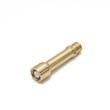
| Outlet connection | Leaks, poor pressure transfer | Troybilt pressure washer outlet kit 206375GS |
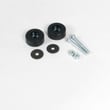
| Frame/wheels | Vibration, stability, rolling | Pressure washer hub cap 200517GS |
| Hardware/retainers | Loose components, rattles | Pressure washer retainer clip 703976 |
Why it matters
Running with restricted water flow, clogged tips, or air leaks makes the pump work harder and can quickly worsen pressure problems. Catching small leaks and maintenance issues early helps protect the pump and improves cleaning performance.
Best next step for your exact setup
Use the Craftsman 580752580 owner’s manual for the correct startup procedure, maintenance intervals, and troubleshooting steps specific to this pressure washer.
Last updated: March 2026
What kind of gas does my pressure washer take?
Your Craftsman pressure washer model 580752580 uses clean, fresh unleaded gasoline with a minimum 87 octane (87 AKI, 91 RON). Gasoline with up to 10% ethanol (gasohol) or up to 15% MTBE is acceptable; do not use E85 and do not mix oil into the gas (see the 580752580 owner's manual).
Fuel requirements for model 580752580
- Use unleaded gasoline only.
- Use 87 octane minimum (87 AKI).
- Ethanol blend: up to 10%.
- MTBE blend: up to 15%.
- Add a fuel stabilizer if you plan to store fuel in the tank.
What to avoid (prevents hard starting and fuel system damage)
- E85 or other unapproved fuels
- Oil mixed into gasoline (this is a 4-cycle engine setup)
- Modifying the engine to run alternate fuels
- Old or contaminated gas (varnish and gum can clog carburetor passages)
Quick reference table
| Item | What to use | What to avoid |
|---|---|---|
| Gas type | Unleaded gasoline | E85, “alternate fuels” |
| Octane | 87 AKI minimum | Lower than 87 |
| Ethanol/MTBE | Up to 10% ethanol or 15% MTBE | Higher blends |
| Oil in fuel | None | Any oil-gas mix |
Why it matters
Using the correct fuel helps your 580752580 start easier, run smoothly under load, and reduces carburetor and fuel-system issues that can shorten engine life.
Last updated: January 2026