


Does downdraft cooktop ventilation work?
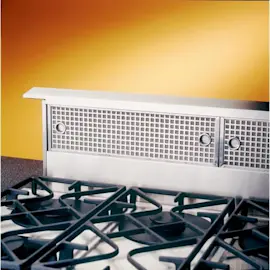
Yes, downdraft cooktop ventilation works well for everyday cooking when it is installed correctly and the filters and ducting are kept clean. On the KitchenAid KIRD801HSS1 downdraft ventilation system, performance depends most on capturing smoke at the cooktop surface and moving it through a clean grease filter and an unrestricted vent path.
- Helps in kitchens where an overhead hood is not practical (island layouts, sightline concerns)
- Captures light to moderate steam, odors, and smoke close to the cooking surface
- Keeps a low-profile look when the vent is not in use
- Works best with front burners and lower-profile cookware
Downdraft systems pull air sideways and down, so they can struggle more than overhead hoods with tall pots, high-heat searing, and heavy smoke.
- Tall cookware blocks airflow: use the downdraft with shorter pans when possible
- High-heat smoke rises fast: start the vent before cooking and use a higher speed early
- Restricted ducting reduces CFM: keep the duct run as short and straight as possible
- Dirty filters cut performance: clean or replace the grease filter on schedule
| Check | What “good” looks like | What to do if it’s not |
|---|---|---|
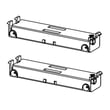
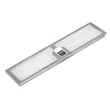
| Grease filter condition | Clean, not greasy or clogged | Clean it or replace with grease filter WPW10396091 |
| Air path | No obstructions at intake | Remove debris, wipe down intake area |
| Venting | Strong airflow at exterior termination | Inspect for crushed duct, stuck damper, heavy buildup |
| Controls | Fan responds to switch changes | Inspect switch area and wiring connections |
A downdraft vent is only as effective as its airflow. Keeping the grease filter clean and the vent path unrestricted helps the blower move air efficiently, which improves odor control and reduces grease buildup around the cooktop.
Last updated: January 2026
Do downdraft vents need to be vented outside?
No. A KitchenAid downdraft ventilation system like model KIRD801HSS1 can be installed to vent air outside (ducted) or set up to recirculate air back into the kitchen (ductless), depending on your ducting options and the accessories used. Ducted venting typically removes smoke and odors more effectively.
- Best overall performance for smoke, heat, and cooking odors
- Helps reduce moisture and grease buildup in the kitchen
- Requires a duct run to an exterior wall or roof cap
- Performance depends heavily on duct size, length, and number of elbows
- Used when running ductwork outside is not practical (common in some island or condo setups)
- Filters grease and some odors, then returns air to the room
- Requires regular filter cleaning and any required odor filtration components
- Usually not as effective as venting outside for heavy cooking
- Whether you have a clear path to an exterior wall or roof for ducting
- How long the duct run would be and how many turns it needs
- Local building code requirements for kitchen ventilation
- Your cooking style (high-heat searing and frying benefits most from ducted venting)
- Filter condition and maintenance schedule
A downdraft that seems weak is often dealing with restricted airflow from grease buildup. Keeping the grease filters clean helps both ducted and ductless setups move air properly.
| Item | What it does | When to service |
|---|---|---|
| Grease filter WPW10396091 | Captures grease before it reaches the blower and ducting | Clean regularly; replace if damaged or won’t come clean |
| Grease filter WPW10381779 | Alternate grease filter used on some configurations | Clean regularly; replace if damaged or won’t come clean |
Choosing ducted vs. ductless affects real-world capture of smoke and odors, noise level, and how often you will need to clean the vent system. For most kitchens, venting outside gives the strongest, most consistent results.
Last updated: January 2026
Where do you vent a downdraft cooktop?
For the KitchenAid KIRD801HSS1 downdraft ventilation system, we vent the airflow through ductwork that runs down and then exits the home through an outside wall or through the floor to an exterior termination. Some installations use a duct-free recirculating setup, but that requires the correct accessory for your configuration.
- Down through the cabinet base, then into the basement or crawlspace, then out through a rim joist
- Down and out the back wall (when the vent path can turn and exit an exterior wall)
- Down, then between joists, then out through an exterior wall (longer runs need careful planning)
- Recirculating (duct-free) only when the unit is configured with the proper recirculation kit and filtration
- Confirm you have a clear path that avoids plumbing, gas lines, and electrical wiring
- Keep the duct run as short and straight as possible (fewer elbows improves airflow)
- Use the correct duct size and rigid ducting where possible for better performance
- Make sure the exterior termination has a damper and is not blocked by snow, lint, or debris
- Plan access so you can remove and clean the grease filters regularly
A downdraft that seems weak is often a maintenance issue. Start with the filters:
| Symptom | Most common cause | What to do |
|---|---|---|
| Poor smoke capture | Grease filter clogged | Clean or replace the filter |
| Loud airflow or vibration | Restriction in duct run | Reduce elbows, check damper, clear blockage |
| Fan runs but airflow is low | Dirty filter plus long duct | Service filter, then evaluate duct layout |
If your filter is damaged or won’t come clean, match it to your setup using a model-correct part such as the grease filter WPW10396091 or grease filter WPW10381779.
Downdraft systems rely on smooth airflow to pull smoke and steam downward. Venting to the outside removes heat, moisture, and odors from the kitchen; a restricted duct run or clogged grease filter reduces capture and can make the blower noisier.
Last updated: January 2026
What is built-in downdraft ventilation?
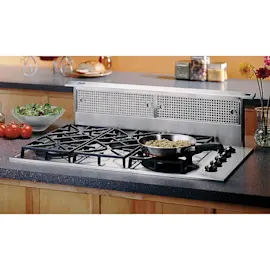
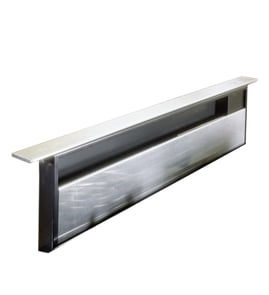
Built-in downdraft ventilation is a vent system that’s built into the cooktop or countertop and pulls smoke, steam, and cooking odors downward into a duct (or filter path) instead of up into an overhead hood. On KitchenAid model KIRD801HSS1, the downdraft intake rises at the cooking surface and captures air close to the pans.
A downdraft vent uses a blower to create suction at the intake opening near the cooktop. Air is pulled through a grease filter, then routed through ductwork (or a recirculating setup, depending on installation).
Common airflow path:
| Step | What happens | What you maintain |
|---|---|---|
| 1 | Intake pulls air down at the cooking surface | Keep the intake area clear |
| 2 | Grease is trapped before it reaches the blower | Clean or replace the grease filter |
| 3 | Air moves through the vent housing and ducting | Check for restrictions and buildup |
Downdraft systems are popular when an overhead hood is not practical.
- Kitchen islands where a ceiling hood is undesirable
- Open sightlines where you want a cleaner look
- Some cooktop layouts where a rear intake can capture steam well
- Remodels where adding overhead ducting is difficult
Downdraft capture depends heavily on airflow and cleanliness.
- Clean the grease filter regularly; a clogged filter reduces suction
- Use the vent before you start cooking (pre-venting helps)
- Match fan speed to the cooking method (high heat needs higher speed)
- Keep tall cookware centered so it doesn’t block the intake
- Inspect ducting for kinks, crushed sections, or heavy grease buildup
If you need a replacement filter for KIRD801HSS1, match the part exactly to your vent configuration, such as the grease filter WPW10396091 or grease filter WPW10381779.
Downdraft ventilation improves comfort and helps protect cabinets and surfaces by removing grease and moisture at the source. Keeping the filter and airflow path clean also helps protect the blower and electrical components.
Last updated: January 2026