Owner’s manual
 Error Codes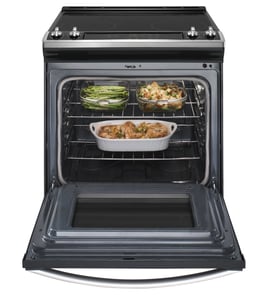


How to identify a Whirlpool stove model?
For a Whirlpool electric range like model WFE535S0LS2, the model number is printed on the model/serial/rating plate. On this style of range, that plate is typically on the frame behind a top corner of the oven door or on either side of the storage drawer opening; match that exact model number when ordering parts.
Where to look on model WFE535S0LS2
Check these common locations in this order:
- Open the oven door; look on the frame behind a top corner of the door opening
- Pull out and remove the storage drawer; look on either side of the drawer opening
- If your range has a warming drawer or premium storage drawer, check the frame area around that drawer opening
- Write down the model number and serial number exactly as shown
What to record (and why)
You will usually see several identifiers on the plate. Use this quick guide:
| What you see | Example format | What we use it for |
|---|---|---|
| Model number | WFE535S0LS2 | Ensures the part fits your exact Whirlpool range |
| Serial number | Letters and numbers | Helps confirm production details when needed |
| Electrical rating | 120/240 V, amps, kW | Helps confirm correct power cord and wiring setup |
Tips to avoid ordering the wrong part
- Use the full model number, including the last digits (for example, WFE535S0LS2, not just WFE535)
- If a label is hard to read, take a clear photo and zoom in
- If you are replacing an electrical connection component, confirm the range rating information on the plate before buying parts
Why it matters
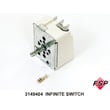
Whirlpool ranges often share similar styling across multiple model numbers, but internal components (like the control switch, terminal block, or oven sensor) can vary by revision. Using the exact model number from the rating plate keeps your parts match accurate and prevents returns.
For diagrams and additional identification notes specific to this range, use the WFE535S0LS2 owner's manual.
Last updated: February 2026
What are the symptoms of a bad oven control board Whirlpool?
On a Whirlpool WFE535S0LS2 electric range, a failing oven control board (electronic control) typically shows up as a dead or erratic display, buttons that do not respond, or oven functions that start, stop, or change temperature on their own. Confirm basic power and error-code clues before replacing parts.
Common symptoms you can expect
- Display is blank, flickering, or shows random characters
- Keypad does not beep or accept settings (Bake, Broil, Timer, Clock)
- Oven will not heat, or heats inconsistently even after preheat
- Self-clean will not start, stops early, or the door stays locked after the cycle
- Error codes appear repeatedly after clearing power
- Cooling fan or relays click on and off unexpectedly
Quick checks before you replace anything
- Power reset: Turn the range breaker OFF for 1 minute, then ON.
- Confirm the outlet/breaker: A weak or dropped leg of 240V power can mimic control failure.
- Look for heat-related lock behavior: During Self-Clean, the door can remain locked until the oven cools; forcing it can damage the lock system (see WFE535S0LS2 owner’s manual).
- Rule out a sensor issue: If the oven temperature is wildly off or you see temperature-related faults, the sensor is a common cause.
Parts that commonly get blamed on the control (but fail first)
| Symptom | More likely cause | When the control board is more likely |
|---|---|---|
| Oven temp inaccurate | Oven temperature sensor | Sensor tests good but temp still swings |
| Oven will not heat | Bake or broil element | Elements test good but no voltage is sent |
| Self-clean door issues | Door lock assembly | Lock tests good but control never drives it |
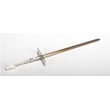
If you are chasing temperature problems, we often start with the range oven temperature sensor WPW10181986 before assuming the control board.
Why it matters
The control board is the “traffic director” for bake, broil, self-clean, and the display. Misdiagnosing it can lead to unnecessary cost, while a correct diagnosis restores safe, predictable heating and prevents door-lock damage during self-clean.
Last updated: February 2026
What is the life expectancy of a Whirlpool electric range?
A Whirlpool electric range like model WFE535S0LS2 typically lasts 10 to 15 years with normal household use. Consistent cleaning, correct electrical hookup, and addressing heating or control issues early are the biggest factors that help you reach the high end of that range.
What affects lifespan the most
- Heat stress and spills: Boilovers and baked-on residue shorten element and control life.
- Electrical quality: A properly sized circuit and secure connections reduce failures.
- Door use and slamming: Impacts hinges, door glass, and door alignment.
- Self-clean frequency: High-heat cycles add wear; use only as directed in the WFE535S0LS2 owner's manual.
- Early symptom fixes: A small temperature drift can become a bigger repair if ignored.
Quick maintenance checklist (high impact)
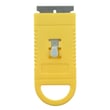
- Keep the cooktop clean; use a scraper designed for glass tops such as the cooktop scraper WA906B when needed.
- Avoid dragging cookware; lift pans to prevent scratching and stress on radiant elements.
- Verify the range stays level after moving; re-check anti-tip engagement per the manual.
- If baking seems inconsistent, test with an oven thermometer and compare results over several cycles.
- Stop using the oven if you smell burning wiring or see arcing; have the power disconnected and inspected.
Common “end-of-life” symptoms and likely fixes
| Symptom | What it often points to | Example part for this model |
|---|---|---|
| Oven temperature swings or error codes | Sensor or control issue | Range oven temperature sensor (WPW10181986) |
| Oven will not heat | Failed bake circuit or element | Range bake element (WP9755770) |
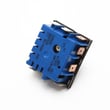
| Surface element not heating correctly | Element or switch problem | Range dual surface element control switch (WPW10434452) |
Why it matters
Knowing the 10 to 15 year lifespan helps you decide whether to repair or replace. If your WFE535S0LS2 is under 10 years old, repairs like a sensor, bake element, or surface switch are often practical and can extend service life significantly.
Last updated: February 2026