 Owner’s manual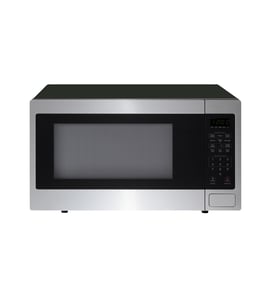

What is the average life of a countertop microwave?
Most countertop microwaves last 7 to 10 years with normal household use. For a Sharp R-530ES, lifespan depends most on how often it runs, how well the door is treated, and whether you avoid common misuse such as running the oven empty.
What affects microwave lifespan the most
We see these factors make the biggest difference in how long a countertop microwave holds up:
- Running it empty (no food to absorb energy) can stress internal components
- Door abuse (leaning on it, slamming it, or a loose latch) can cause safety and performance issues
- Blocked vents can lead to overheating
- Frequent heavy use (multiple long cook cycles daily) shortens life compared to light reheating
- Poor cleaning habits (grease and food buildup) can contribute to arcing and odors
For model-specific operating and safety guidance, follow the R-530ES owner's manual.
Typical lifespan by usage pattern
| Usage pattern | Typical life expectancy | What usually fails first |
|---|---|---|
| Light (reheating, short cycles) | 9 to 12 years | Door switches, turntable drive parts |
| Normal (daily cooking and reheating) | 7 to 10 years | Door switches, control issues |
| Heavy (many long cycles daily) | 4 to 7 years | High-voltage components, door system |
Signs it is near end of life (or needs service)
If you notice any of the following, stop using the microwave until it is checked:
- Not heating or heating inconsistently
- Sparking or arcing inside the cavity
- Burning smell that persists after cleaning
- Door not closing firmly or the unit runs only when the door is pressed
- Unusual loud buzzing beyond normal cycling sounds
If the symptom is “runs but won’t heat,” use our troubleshooting steps in why is my microwave not heating.
Why it matters
A microwave’s door, seals, and interlock system are critical for safe operation. Keeping vents clear, using proper cookware, and avoiding empty operation helps protect key components like the magnetron and reduces premature failure.
If you need replacement parts for your Sharp R-530ES, start with the model parts list, or search by model number on Sears PartsDirect.
Last updated: February 2026
Is the microwave over range outdated?
Over-the-range microwaves are not “outdated”; they are still a common, practical choice when you need to save counter space and combine cooking with basic ventilation. That said, many newer kitchen designs favor a dedicated range hood plus a countertop, built-in, or drawer microwave for better capture and easier access.
How to decide what’s best for your kitchen
We recommend choosing based on ventilation performance, ergonomics, and how you cook (not just trends).
- Choose an OTR microwave if you need to save space and want a single appliance over the range.
- Choose a dedicated range hood if you do a lot of high-heat cooking (searing, frying) and want stronger ventilation.
- Choose a microwave drawer or under-counter placement if you want easier access and a cleaner sightline.
- Choose a built-in microwave if you want a “built-in” look without using counter space.
- Keep what you have if it works well; replacement is usually driven by performance, fit, or features.
Quick comparison
| Option | Best for | Common drawback |
|---|---|---|
| Over-the-range microwave | Saving space; simple install in many kitchens | Venting can be weaker than a good hood; can be high to reach |
| Range hood + separate microwave | Better smoke and grease capture | Uses more space; typically higher total cost |
| Microwave drawer | Easy loading; modern layout | Cabinet modifications; higher purchase cost |
| Built-in microwave | Clean look; frees counter | Requires correct cabinet cutout and trim kit planning |
Why it matters
Ventilation affects indoor air quality and how much grease and odor stays in your kitchen. Placement affects safety and convenience, especially when lifting hot liquids or tall dishes.
Model note (Sharp R-530ES)
Your Sharp R-530ES is a countertop microwave model, not an over-the-range unit. For safe operation details (power, grounding, and general use), follow the R-530ES owner's manual. If you need replacement parts for this model, start with the model parts list and search by model number on Sears PartsDirect.
Last updated: February 2026
Can over-the-range microwaves be used on countertops?
Over-the-range (OTR) microwaves are built to be mounted to cabinetry and vented as designed; they are not intended for countertop placement. For safe countertop use, stick with a true countertop model like Sharp R-530ES and follow the placement and electrical guidance in the R-530ES owner's manual.
Why OTR microwaves are a poor countertop choice
OTR units rely on their mounting bracket and cabinet support for stability and safe clearances. On a counter, they commonly end up with blocked vents, unstable positioning, and awkward cord routing.
- They are heavier and deeper than most countertop microwaves.
- Airflow can be restricted if the back and side vents are too close to walls.
- The cord can drape across the counter edge, creating a pull or trip hazard.
- The door swing and control height are inconvenient on a counter.
- Venting and grease filtration features are designed for above-range installation, not open-counter use.
What we recommend instead (countertop setup basics)
For a countertop microwave such as the Sharp R-530ES, we recommend these basics:
- Use a properly grounded 3-prong outlet.
- Keep the power cord routed so it cannot be pulled by children.
- Do not block the rear vents; leave breathing room behind the cabinet.
- Never run the microwave empty; always have food or liquid inside when operating.
- Use microwave-safe cookware (glass, microwave-safe plastics, and approved ceramics).
Quick comparison: OTR vs countertop microwaves
| Feature | Over-the-range microwave | Countertop microwave (like R-530ES) |
|---|---|---|
| Intended location | Mounted above a range | Sits on a counter or shelf |
| Venting design | Integrated exhaust and filters | Cabinet vents for cooling |
| Stability | Depends on bracket and cabinet support | Depends on flat, stable surface |
| Best use case | Saves counter space | Flexible placement and portability |
Why it matters
Microwaves need correct airflow, stable support, and safe electrical connection. Using the right style for the right location helps prevent overheating, nuisance shutdowns, and avoidable damage.
If you need to look up parts by model or shop other microwave parts, we recommend starting with the model-based parts listings and searching on Sears PartsDirect.
Last updated: February 2026


