 Owner’s manual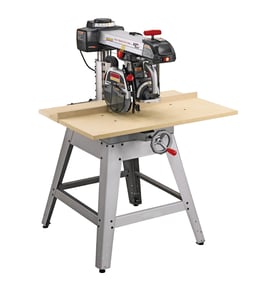

Are radial arm saws worth anything?
Yes. A Craftsman radial arm saw like model 11323100 is worth something when it is complete, runs smoothly, and can be aligned accurately; these saws still excel at repeatable crosscuts, dados, and wide stock work when set up and used correctly (see the 11323100 owner's manual).
What drives value for a Craftsman 11323100 radial arm saw
Condition and completeness matter more than age. Buyers pay for a saw that is safe, accurate, and ready to work.
- Motor health: starts quickly, reaches speed without excessive sparking, and does not bog down
- Carriage travel: rolls smoothly on the arm without play or binding
- Locks and indexing: arm latch, yoke clamp, and carriage lock hold firmly for accurate cuts
- Guarding and anti-kickback parts: present and adjustable for ripping operations
- Table and fence condition: flat, solid, and easy to square to the blade
Practical “worth it” uses (and what to avoid)
The manual emphasizes that setup and correct mode selection are critical for safety.
Best uses
- Square crosscuts and repeat cuts with a stop block
- Miter and bevel crosscuts (with the correct indexing and locks engaged)
- Dado work (when equipped and set up properly)
Uses to be cautious with
- Ripping: only rip with the correct configuration and guarding; feed force must be applied between the blade and fence, and a push stick is required for narrow stock
- Never rip in the crosscut position; the manual specifically warns against this
Quick checklist before you buy or sell
Use this as a fast inspection list for a used 10-inch radial saw.
| Check | What “good” looks like | Why it matters |
|---|---|---|
| Carriage lock | Locks tight before lowering into a cut | Prevents the tool from grabbing and moving unexpectedly |
| Arm latch | Indexes and locks securely at common angles | Keeps cuts accurate and repeatable |
| Yoke clamp | Holds the yoke firmly at 0° and 90° positions | Prevents drift during crosscuts or ripping setup |
| Anti-kickback | Teeth sharp, assembly present and set correctly | Reduces kickback risk when ripping |
Why it matters
Radial arm saws can be extremely capable, but they demand correct alignment and disciplined operation. When the locks, indexing, fence, and guarding are right, a Craftsman 11323100 can be a reliable shop saw for crosscut-focused work.
If you need to look up diagrams or search for replacement items by model number, we recommend starting with the parts list for 11323100 and using Sears PartsDirect to search.
Last updated: February 2026
What is the best brand of radial arm saw?
For most homeowners and hobby woodworkers, Craftsman radial arm saws like model 11323100 are a strong, practical choice because parts support and documentation are straightforward. For heavy daily production work, the “best” brand is the one built for industrial duty, with tight indexing and long-term serviceability.
How we recommend choosing the “best” brand
Radial arm saws vary a lot by era and build style (cast iron vs. lighter assemblies). We recommend choosing based on how you will use it:
- Occasional DIY and home shop: a well-maintained Craftsman, DeWalt, or Delta/Rockwell style saw is typically the best value.
- Precision crosscutting and repeatability: prioritize a saw with solid arm indexing, a tight yoke, and a fence system you can keep square.
- Production and commercial use: choose an industrial-grade saw designed for continuous duty and easy alignment.
- Parts and service needs: pick a brand and model where you can still identify the model number and source common wear items.
- Space and workflow: radial arm saws need room behind the fence for the arm travel and safe operation.
What matters most on a radial arm saw (more than the logo)
Even a top brand performs poorly if it will not hold settings. On the Craftsman 11323100, accurate cuts depend on using the indexing and latching correctly; the manual recommends moving slightly past an index position, then returning carefully and latching firmly for consistent seating. See the 11323100 owner's manual.
Quick comparison: what “best” usually means
| Priority | Best fit for | What to look for |
|---|---|---|
| Value | Home shop | Smooth carriage travel, solid fence, easy alignment |
| Accuracy | Fine trim, repeat cuts | Positive indexing, minimal play in arm/yoke, stable table |
| Durability | Daily use | Heavy-duty motor, robust bearings, serviceable design |
Why it matters
A radial arm saw is only “best” if it stays square and repeatable. A slightly loose arm latch, worn bearings, or a damaged table can turn any brand into a frustrating saw, while a properly adjusted saw can cut accurately for years.
Ordering and identifying the right parts
When you need repair parts for the Craftsman 11323100, use the model number from the plate on the left-hand side of the base and match parts by description and diagram in the manual. You can also search by model number on Sears PartsDirect.
Last updated: February 2026
Can I use a dado blade on a radial arm saw?
Yes. You can use a dado head on the Craftsman 11323100 10-inch radial saw as long as you follow the manual’s accessory and guarding requirements and keep the dado width within the arbor limit (up to 13/16 inch). See the 11323100 owner's manual for the exact setup and safety steps.
Key requirements for safe dadoing
- Use only recommended accessories listed for the saw.
- Never operate with a dado head or molding head unless the correct guard is installed (the manual notes a specific exception for “top-side” dadoing where the standard blade guard is used).
- Keep the dado head width 13/16 inch or less; take multiple passes for wider dadoes.
- Install the inside “loose collar” first when mounting the dado head.
- Do not install the outside loose collar with the dado head.
- Lock the carriage before lowering a revolving cutting tool into the table or workpiece; release only after you have a firm grip on the yoke handle.
Quick setup checklist (what we verify before cutting)
| Item to check | What “good” looks like | Why it matters |
|---|---|---|
| Dado width | 13/16 in. max on the arbor | Prevents improper thread engagement and loss of control |
| Guarding | Correct guard installed for the operation | Reduces exposure and helps control kickback risk |
| Carriage lock | Locked before lowering into the cut | Helps prevent the tool from grabbing and surging forward |
| Work support | Work held firmly against table and fence | Prevents twisting, binding, and chatter |
Operating tips that reduce grab and kickback
- Use a firm, controlled feed; do not force the cut.
- Support the workpiece so it cannot rotate or twist during the cut.
- Avoid “gang” cutting (stacking or lining up multiple pieces) because the cutter can grab a piece and bind.
- Keep the cutting tool from extending beyond the table edges during the operation.
Why it matters
A radial arm saw can self-feed toward you if the cutter grabs. Dado heads remove more material than a standard blade, so correct guarding, collar installation, and carriage control are the difference between a clean dado and a dangerous surge.
If you need replacement parts for your Craftsman 11323100, start with the parts list for this model; you can also search by model number on Sears PartsDirect.
Last updated: February 2026
When did Craftsman stop making radial arm saws?
Craftsman radial arm saws were phased out of regular new-tool retail over time; for the Craftsman model 11323100, the most reliable way to date your saw is by using the identification information and documentation that came with it, starting with the 11323100 owner's manual.
How to date a Craftsman radial arm saw (practical steps)
We use the same approach technicians use for older power tools: identify the exact model and then narrow the era using the saw’s tags and manual.
- Confirm the model number on the ID plate is 11323100 (not a similar 113.xxxxxx number).
- Look for a serial number and any date code on the motor tag or frame plate.
- Check the manual’s parts list and diagrams; revisions sometimes indicate a production era.
- Compare your saw’s guard, yoke, and table style to the illustrations in the manual.
- If you are ordering parts, match by model number and diagram callouts, not by appearance alone.
What we can say for model 11323100
Your Craftsman 11323100 is a 10-inch radial saw with detailed safety, operation, and maintenance guidance in the manual (including guarding, anti-kickback setup, and alignment practices).
| What you need | Where to find it on the saw | Why it helps |
|---|---|---|
| Model number | ID plate on the saw | Confirms the correct parts breakdown |
| Serial or date code | Motor tag or frame plate | Helps estimate the manufacturing era |
| Guard and table configuration | Visual comparison | Helps match the correct diagrams and accessories |
Why it matters
Knowing the approximate era helps you maintain and operate the saw safely. Radial arm saw performance depends on correct indexing, locking, and guarding adjustments; the manual’s setup steps reduce kickback risk and improve cut accuracy.
Parts lookup tip
Start with the diagrams and part listings for 11323100. If you need to broaden your search by model number or category, use Sears PartsDirect.
Last updated: February 2026