Owner’s manual
 Error Codes



What part number is the Samsung RF24R7201SR water filter?
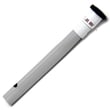
For the Samsung RF24R7201SR bottom-mount refrigerator, the replacement water filter is HAF-QIN (also shown as HAF-QIN/EXP). This is the filter that fits the housing and is used when you replace the cartridge and reset the filter indicator.
Confirming the correct filter for your model
We match filters by model fit, not just by how the cartridge looks. For RF24R7201SR, use:
- Water filter part number: HAF-QIN (HAF-QIN/EXP)
- Replace when the filter reset indicator turns red (commonly about every 6 months, depending on use and water quality)
- Shut off the water supply before removing the cartridge
For the exact replacement steps and reset guidance, follow the owner's manual.
Quick replacement checklist
- Shut off the water supply line
- Turn the filter cartridge knob counterclockwise 1/4 turn (90 degrees) to unlock
- Pull the cartridge straight out
- Install the new cartridge fully, then lock it in place
- Run water to flush the new filter (discard the first several cups of water)
- Reset the filter indicator on the dispenser/control panel
Part number vs. “replacement” numbers
Some listings show alternate or packaging numbers. Here is the practical way to compare:
| What you see | What it means | What to use for RF24R7201SR |
|---|---|---|
| HAF-QIN | Filter model identifier | Correct |
| HAF-QIN/EXP | Same filter, different suffix/packaging | Correct |
| Other “replacement for” numbers | Cross-references from third parties | Match by fit to RF24R7201SR, not by appearance |
Why it matters
Using the correct, approved filter helps maintain water flow, reduces leak risk, and keeps the dispenser and ice maker performing normally. If water flow drops, the filter is one of the first items we check.
If you need the exact replacement item, use the Samsung refrigerator water filter HAF-QIN.
Last updated: February 2026
What are the dimensions of the Samsung RF24R7201SR AA?
For the Samsung RF24R7201SR bottom-mount refrigerator, the factory-spec dimensions are approximately 35 6/8 in. wide, 70 in. overall height, and 31 in. deep. For the most accurate fit (including door swing and clearances), we recommend confirming the measurement diagram in the owner's manual.
Factory-spec dimensions (from the manual)
These are the core cabinet dimensions shown for the RF22*/RF24* platform in the manual.
| Measurement | Dimension |
|---|---|
| Width (B) | 35 6/8" (908 mm) |
| Cabinet height (C) | 68 7/8" (1749 mm) |
| Overall height (D) | 70" (1777 mm) |
| Depth (E) | 31" (788 mm) |
| Depth “A” (platform reference) | 28 5/8" (726 mm) |
Installation clearances to plan for
Even if the refrigerator fits the opening, you also need room for airflow, water line routing (if equipped with an ice maker), and door swing.
- Leave extra space at the rear for the water line connection (ice maker models).
- If installed next to a fixed wall, allow at least 3 3/4" clearance so the door can swing open.
- Measure doorways, thresholds, ceilings, and stairways along the delivery path.
- Plan for the door swing arc; tight alcoves can limit drawer and door access.
- Level flooring matters; uneven floors can affect door alignment and sealing.
Why it matters
Correct dimensions and clearances prevent common headaches like doors that cannot open fully, drawers that hit adjacent walls, pinched water lines, and poor cooling from restricted airflow.
Quick fit check (what to measure at home)
| What you measure | What to compare against |
|---|---|
| Opening width | Refrigerator width plus side clearance |
| Opening height | Overall height (D) plus top clearance |
| Opening depth | Depth (E) plus room for door swing |
Last updated: February 2026
Why is my Samsung fridge not making ice in the bottom freezer?
If your Samsung RF24R7201SR bottom-mount refrigerator is not making ice, the most common causes are the ice maker being turned off, the freezer temperature being set too warm, the dispenser panel Lock being enabled, or the water supply not delivering enough water. Use the RF24R7201SR owner's manual troubleshooting steps to confirm settings and restore ice production.
Quick checks that fix most “no ice” problems
- Wait at least 12 hours after installation or after turning the ice maker back on.
- Set the freezer temperature below 0°F (-18°C) (or -4°F (-20°C) in warm ambient conditions).
- Make sure dispenser panel Lock is off.
- Confirm the ice maker is on (not disabled in settings).
- Verify the water line stop cock is open and the supply line is connected correctly.
- Check household water pressure; most systems need 20 to 120 psi for normal flow.
Water supply and filter issues (very common)
A restricted water supply can stop ice production even when the ice maker is on.
| What you notice | Likely cause | What to do |
|---|---|---|
| Weak water flow | Low water pressure or supply restriction | Confirm 20 to 120 psi and fully open shutoff valve |
| Ice maker buzzes | Ice maker on but no water connected | Connect water supply and recheck |
| Slow ice production | Filter restriction or warm freezer | Replace filter and lower freezer temp |
If you are due for a filter change, replace the Samsung refrigerator water filter HAF-QIN. After replacing it, dispense water for a few minutes (if equipped) to purge air from the line.
If the ice maker still will not make ice
These checks help narrow it down to a failed component versus a settings or airflow issue:
- Make sure the ice bucket is seated correctly and not overfilled.
- Avoid blocking freezer vents with food packages; poor airflow can keep the ice maker area too warm.
- If the ice maker cycles but never fills, suspect a water delivery problem first (valve, frozen line, filter restriction).
- If the ice maker does not cycle at all, the ice maker assembly can be the issue.
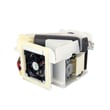
Model-matched replacement parts commonly used for this symptom include the refrigerator ice maker assembly DA97-18859A.
Why it matters
When the freezer runs above the target temperature or the water supply is restricted, the ice maker cannot fill and freeze properly. Correcting temperature, Lock settings, and water flow prevents repeat “no ice” complaints and reduces ice jams.
Last updated: February 2026