Owner’s manual
 Error Codes




How to tell year of water heater by serial number?
To tell the year your Kenmore gas water heater model 153339561 was made, we use the serial number on the rating plate and decode it using the manufacturer’s format (the format varies by maker). Your owner's manual shows where to find the model/serial label; once you have the serial, match its pattern to the correct brand family.
Look on the model rating plate on the front of the water heater.
- Turn a flashlight on the front jacket panel
- Look for a label that lists model number and serial number
- Copy the serial exactly (include letters and dashes)
- Take a photo before cleaning the label
- If the label is dirty, wipe gently so characters stay readable
Serial formats are not universal; Kenmore-branded water heaters are often built by major tank manufacturers, so the decoding method depends on who made the tank.
- Numeric date codes: the first 2 or 4 digits often indicate year or month/year
- Week-based codes: some use YYWW (year, then week of the year)
- Letter-based codes: some use letters for month and year (the year code can repeat on a cycle)
- Mixed formats: letters plus numbers where only certain positions are the date
| What the serial starts with | Typical meaning | Example of what you can read from it |
|---|---|---|
4 digits like MMYY |
Month and year | 0821 = Aug 2021 |
4 digits like YYWW |
Year and production week | 2315 = 2023, week 15 |
| 1 to 2 letters then numbers | Letter-coded month/year | Use the maker’s letter chart |
Knowing the manufacture year helps you plan maintenance (like flushing sediment) and decide when to replace wear items that affect performance and safety, such as the anode rod or the temperature and pressure relief valve.
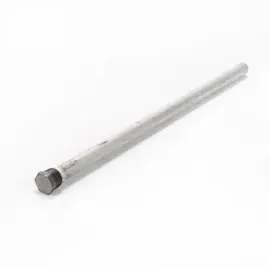
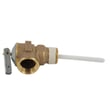
If you are ordering parts, we use your model number and serial number to match the correct gas type and components. Common parts for this model include the anode rod 100108660 and relief valve 100108279.
Last updated: February 2026
What is the average labor cost to install a 50 gallon gas water heater?
For a typical 50-gallon gas water heater installation, labor commonly runs about $400 to $1,000. For Kenmore model 153339561, labor goes up when the job requires venting changes, gas piping updates, a sediment trap, or added safety items specified in the owner's manual.
Labor pricing is mostly about how much work is required beyond swapping the tank.
- Venting work (new vent pipe, draft hood alignment, chimney connection)
- Gas piping changes (new shutoff, resizing, leak testing)
- Adding a sediment trap on the gas line (often required by code)
- Water piping modifications (new connectors, shutoff valve, expansion tank)
- Drain pan and drain routing (especially in finished spaces)
- Permits and inspections (varies by city and state)
| Installation scenario | What is included | Typical labor range |
|---|---|---|
| Like-for-like replacement | Disconnect old unit, reconnect existing vent and lines, start-up checks | $400 to $700 |
| Moderate updates | Minor vent or piping changes, new shutoff or connectors | $700 to $1,000 |
| Complex install | Significant venting changes, gas line reroute, code upgrades, tight access | $1,000+ |
Your Kenmore 153339561 manual calls out key installation areas that can add time if they are missing or need correction.
- Venting setup and clearances
- Gas piping requirements and leak checks
- Sediment trap installation on the gas supply line
- Temperature and pressure relief valve discharge piping
If the temperature and pressure relief valve is leaking or corroded, replacing it during install is common; the relief valve 100108279 is a listed replacement part for this model.
Gas water heater installs are safety-critical. Paying for the right venting, correct gas piping, and proper relief valve discharge routing helps prevent nuisance shutdowns, poor combustion, and water damage.
Last updated: February 2026
What is the life expectancy of a Kenmore water heater?
A Kenmore gas water heater like model 153339561 typically lasts 8 to 12 years. Regular maintenance (especially controlling sediment and keeping the anode rod in good shape) helps the tank last longer and keeps heating performance more consistent; see the owner's manual.
- Water quality and conductivity: high conductivity can consume the anode rod faster.
- Anode rod condition: replacing a depleted anode can extend tank life.
- Sediment buildup: reduces efficiency and can overheat the tank bottom.
- Ventilation and combustion air: restricted air intake can cause poor combustion and premature failure.
- Operating conditions: heavy daily demand and higher temperature settings increase wear.
The manual calls out two big longevity items: checking the anode rod and draining sediment.
- Check the anode rod at least annually after the warranty period.
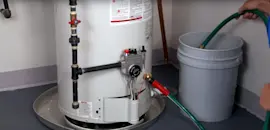
- Drain and flush the tank periodically to remove sediment.
- Keep the burner area and air intake openings clear.
- If the heater is shut down in freezing conditions, drain the tank.
If you need the replacement part, the anode rod 100108660 is a common wear item for this model.
| Water heater age | What we typically see | What to do next |
|---|---|---|
| 0 to 5 years | Normal operation with basic upkeep | Flush sediment; monitor performance |
| 6 to 10 years | More scale, more wear on gas components | Inspect anode; consider proactive part replacement |
| 11+ years | Higher leak risk and reliability issues | Plan for replacement; watch closely for leaks |
A water heater usually fails in one of two ways: loss of heating (burner, pilot, gas control issues) or tank leakage. Maintenance focuses on preventing corrosion and sediment damage so you get the full expected service life.
Last updated: February 2026
What is the most common problem with gas water heaters?
The most common gas water heater problem is the pilot going out or the burner not staying lit, which leads to no hot water. On Kenmore model 153339561, this is often tied to condensation dripping onto the burner, restricted combustion air, venting issues, or ignition and gas control components.
- Pilot will not light or will not stay lit
- Burner lights briefly, then shuts off
- “Sizzling” or “frying” noise during operation (condensation on hot surfaces)
- Not enough hot water or water temperature swings
- Occasional smoke odor at initial start-up (brief burn-off)
- Confirm the tank is completely full before any relight attempt. Water must flow steadily from a hot faucet before gas is turned on.
- Look for condensation vs. a true leak. After a big hot-water draw, cold refill water can cause heavy condensation; once the tank warms (about 1 to 2 hours), it typically stops.
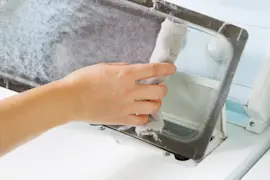
- Check combustion air and intake screening. A dirty or clogged air intake screen or blocked flame arrestor openings can cause poor combustion and shutdowns.
- Check venting and draft. Poor draft or vent problems can cause condensation at the draft hood and unstable burner operation.
| What you notice | Most likely cause | What to do next |
|---|---|---|
| Pilot goes out after burner runs | Condensation dripping onto burner or pilot | Follow condensation guidance in the owner's manual and verify venting and air supply |
| Pilot will not stay lit | Thermocouple/TCO issue or gas control issue | Inspect pilot flame contact and wiring; replace failed ignition parts as needed |
| Rumbling or popping | Sediment or calcium in tank bottom | Flush tank per maintenance guidance; consider anode condition |
| Water at fittings/valves | Loose connection or valve seepage | Tighten carefully; replace leaking valve if needed |
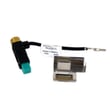
- If ignition is weak or intermittent: water heater igniter 100109221
- If the pilot assembly is failing: water heater pilot assembly 100109295
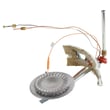
- If the burner is damaged or not burning correctly: water heater burner assembly 100109201
- If the T&P valve is dripping or leaking: relief valve 100108279
Pilot outages, poor combustion, and venting problems can stop hot water fast and can also create condensation that looks like a tank leak. Correct diagnosis prevents unnecessary part replacement and helps keep the burner and venting system operating safely and efficiently.
Last updated: February 2026