




How to tell furnace model number?
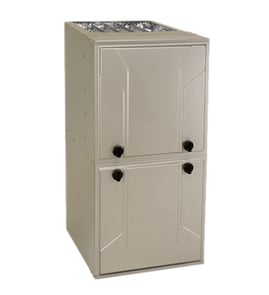
For an Icp gas furnace like model GDE075B12A1, the model number is typically printed on the furnace rating plate (data tag) attached to the cabinet. We recommend copying the full model number exactly as shown so you get the right furnace parts and wiring-compatible replacements.
Where to look on an Icp furnace cabinet
Most furnaces place the rating plate in one of these spots:
- Inside the front access panel (burner compartment door)
- Inside the blower compartment door
- On a side wall of the cabinet near the blower housing
- Near the gas valve or burner assembly area (on the inner cabinet wall)
- Occasionally on the outside of the cabinet near the electrical junction box
Safe steps to find it
Gas furnaces combine electricity, gas, and hot surfaces. Use this quick process:
- Set the thermostat to OFF
- Turn off power to the furnace at the switch or breaker
- Remove the front access panel(s) and look for a white or silver rating plate
- Write down the entire model number and any serial number
- Reinstall panels before restoring power (many furnaces will not run with the door switch open)
What to copy from the rating plate
Use the exact characters, including dashes or suffixes.
| Label item | What it’s used for | Example for this furnace |
|---|---|---|
| Model number | Correct part fit | GDE075B12A1 |
| Serial number | Age and production run | Varies |
| Input (BTU/hr) | Sizing and troubleshooting | Varies |
| Electrical | Motor/control matching | Varies |
Why it matters
We use the model number to match the correct ignition, blower, and safety controls. For example, ignition and flame-sensing parts can look similar but differ in mounting, wiring, or calibration.
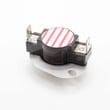
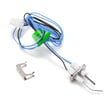
If you’re troubleshooting a no-heat issue while identifying the unit, common related parts for this model include the furnace pilot igniter and sensor 1009524 and the limit switch 1013102.
Last updated: February 2026
What are the most common furnace repairs?
For the Icp gas furnace model GDE075B12A1, the most common repairs are no-heat or short-cycling problems caused by ignition and flame-sensing issues, airflow restrictions (dirty filter or blower problems), and safety limit trips. Many fixes start with basic checks, but gas and control repairs should be handled carefully.
Most common repairs we see (and what they look like)
- Ignition or flame-sensing problems: furnace tries to light, then shuts down; repeated clicking or retries (often involves the furnace pilot igniter and sensor 1009524).
- Pilot/ignition burner issues: delayed ignition, weak or unstable flame (often tied to the furnace pilot burner 1149856).
- Blower and airflow problems: weak airflow, overheating, or rumbling; can involve the blower wheel, motor, or full assembly.
- Limit switch trips: furnace starts then stops, or runs briefly and shuts off to protect itself (commonly related to the limit switch 1013102 or other limit devices).
- Fan timing/control issues: blower runs at the wrong time, runs continuously, or does not start when it should (often tied to the cont fan tmr 1170063).
Quick checks before replacing parts
Turn off power to the furnace before opening panels.
- Replace or clean the air filter (a clogged filter is a top cause of overheating and limit trips).
- Make sure supply registers and return grilles are open and not blocked.
- Check the thermostat settings (heat mode, setpoint above room temp, fresh batteries if applicable).
- Look for a tripped breaker or blown fuse on the furnace circuit.
- If the blower is noisy, inspect for a loose wheel or debris (the furnace blower fan wheel 600587 is a common wear item).
Symptom-to-repair guide
| Symptom | Common cause | Typical repair direction |
|---|---|---|
| No heat, retries to light | Igniter/sensor dirty or failing | Clean flame-sensing surface; replace igniter/sensor if needed |
| Starts then shuts off quickly | Overheating, limit open | Replace filter; check airflow; test limit switch |
| Blower will not run | Motor/capacitor/control | Test capacitor; verify control output; replace motor/control as needed |
| Blower runs nonstop | Fan timer/control stuck | Diagnose fan control relay/timer |
Why it matters
These repairs affect safe ignition, proper combustion, and heat exchanger protection. Fixing airflow and ignition problems early helps prevent repeated shutdowns, nuisance lockouts, and overheating damage.
Last updated: February 2026
What is the cost to replace a furnace part?
For the Icp gas furnace model GDE075B12A1, the total cost to replace a furnace part is usually the part price plus labor, and it varies most by which component failed (ignition, blower, controls, or gas valve) and whether a technician is required for safe setup.
Typical cost ranges (part vs. installed)
Below are common ranges we see for gas furnace repairs. Your exact total depends on diagnosis time, access, and local labor rates.
- Small electrical/safety parts (switches, sensors): often lower parts cost; labor is usually the bigger share.
- Ignition parts (pilot igniter/sensor): mid-range parts cost; careful setup and testing required.
- Blower-related parts (motor, wheel, assembly): higher parts cost; more labor due to disassembly.
- Controls (fan timer/relay): mid-range to higher parts cost; wiring verification needed.
- Gas valve: typically the highest parts cost; professional installation strongly recommended.
| Repair type (examples) | Typical parts cost | Typical installed cost (parts + labor) |
|---|---|---|
| Sensor or limit switch | $20 to $150 | $150 to $400 |
| Ignition component | $100 to $300 | $250 to $600 |
| Blower motor or wheel | $150 to $500 | $400 to $1,000 |
| Control board/relay | $150 to $400 | $350 to $900 |
| Gas valve | $300 to $900+ | $600 to $1,500+ |
Model-specific examples for GDE075B12A1
These are examples of parts available for this model that can influence your total cost:
- Furnace pilot igniter and sensor 1009524
- Furnace blower assembly 1013833
- Motor 1012514
- Furnace fan control relay 1170063
- Valve-nat 1170430
What changes the price the most
- Diagnosis time (intermittent failures take longer)
- After-hours or emergency service
- Multiple parts replaced together (for example, motor plus capacitor)
- Safety checks after repair (combustion, draft, and gas leak testing)
- Age/condition of wiring, burners, and venting
Why it matters
Furnace parts are tied to safe ignition and airflow. Paying for correct diagnosis and proper testing helps prevent repeat breakdowns, nuisance lockouts, and overheating trips from limit switches.
Last updated: February 2026
What is the most common part to fail on a furnace?
The most common “failure” we see on furnaces is actually a maintenance item: a dirty air filter that restricts airflow and trips the high-limit safety. On the Icp gas furnace model GDE075B12A1, the next most common no-heat culprits are ignition and flame-sensing parts like the furnace pilot igniter and sensor 1009524.
Quick checks before replacing parts
- Set the thermostat to HEAT and raise the setpoint 3 to 5 degrees.
- Replace the air filter (a clogged filter can cause overheating and shutdown).
- Confirm the furnace switch is ON and the circuit breaker is not tripped.
- If the blower runs but there is no heat, suspect ignition or flame-sensing.
- If the furnace starts then shuts off quickly, suspect flame-sensing or airflow.
Most common furnace “failures” and what they look like
| Symptom | Common cause | What to do next |
|---|---|---|
| No heat, no response | Power issue, thermostat issue | Check switch, breaker, thermostat batteries/settings |
| Tries to light, then stops | Ignition/flame-sensing problem | Inspect/clean sensor area; consider replacing igniter/sensor |
| Runs briefly, then shuts down | Overheating from restricted airflow | Replace filter; check supply/return vents |
| Blower issues (noise, weak airflow) | Blower wheel/motor problem | Inspect wheel and motor condition |
Parts that commonly need attention on GDE075B12A1
These are frequent repair targets when basic checks do not restore heat:
- Furnace pilot igniter and sensor 1009524 (ignition and flame proving)
- Limit switch 1013102 (opens if the furnace overheats)
- Furnace blower fan wheel 600587 (airflow problems, vibration, noise)
- Motor 1012514 (blower not moving enough air or not running)
- Valve-nat 1170430 (gas flow control; diagnosis should be done carefully)
Why it matters
Most furnace shutdowns are safety-related. A clogged filter or a weak flame-sensing/ignition component can make the furnace stop heating to prevent overheating or unsafe burner operation. Fixing the root cause helps protect the heat exchanger, blower, and control components.
Last updated: February 2026
What is the most expensive part to fix on a furnace?
On an Icp gas furnace like model GDE075B12A1, the most expensive repair is typically replacing the heat exchanger because it is labor-intensive and safety-critical. After that, the next highest-cost repairs are usually the blower motor and the control board, depending on access and diagnosis time.
Typical “big-ticket” furnace repairs (parts + labor)
Costs vary by region and furnace layout, but these are the repairs that most often drive the highest totals:
- Heat exchanger replacement: often $1,000 to $3,000+
- Blower motor replacement: often $400 to $2,000+
- Control board replacement: often $300 to $1,500+
- Gas valve replacement: often $400 to $1,200+
- Inducer/combustion blower replacement: often $400 to $1,200+
How this relates to GDE075B12A1 parts
Some high-value components for this model are available as replacement parts. Examples include:
Quick comparison
| Repair type | Why it gets expensive | What usually drives the total |
|---|---|---|
| Heat exchanger | Major disassembly, long labor time | Labor hours, venting/fit-up, testing |
| Blower motor | Electrical diagnosis plus motor swap | Motor cost, access, setup time |
| Control board | Diagnosis time is key | Correct part match, wiring checks |
| Gas valve | Gas-safe setup and verification | Part cost, leak checks, adjustments |
Why it matters
If you are deciding whether to repair or replace, identifying whether the problem is a major component (heat exchanger, blower motor, control board, gas valve) versus a smaller ignition or airflow issue can change the total cost dramatically.
What we recommend before buying an expensive part
- Confirm the symptom (no heat, short cycling, blower won’t run, burners won’t stay lit).
- Check the basics first: filter condition, thermostat settings, and power switch/breaker.
- Use safe electrical testing practices; a meter test often prevents buying the wrong part.
- If you suspect an ignition issue, inspect the igniter/sensor and pilot components.
- Match parts by model number GDE075B12A1 to avoid fit and wiring mismatches.
Last updated: February 2026