Owner’s manual
How do I know which garage door opener is compatible?
For a Chamberlain 3850P garage door opener, compatibility is determined by the opener’s radio system and programming method (rolling-code Security+ vs. older fixed-code/DIP switch). We match remotes, keypads, and controls by confirming the opener model and using the Learn/Program button steps in the owner's manual.
Quick compatibility checklist (what to verify first)
- Confirm the opener model number on the motor unit label: 3850P
- Identify whether your system uses a Learn/Program button (rolling code) or DIP switches (fixed code)
- Check that your replacement remote/keypad supports the same frequency and security format (commonly 315 MHz Security+ on many Chamberlain units of this era)
- Verify the opener can store additional devices (the 3850P supports multiple remotes and a keyless entry)
- If the door will not close, confirm the safety reversing sensors are installed and aligned (a misaligned sensor can look like a “remote problem”)
How to confirm you have a rolling-code Security+ opener
Your 3850P is a Security+ rolling-code opener; it changes the code each time you use it and can be programmed using the Learn/Program process.
Basic programming test (proves compatibility fast)
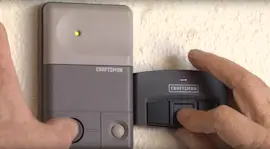
- Press and release the Learn button on the motor unit (learn light stays on briefly).
- Within 30 seconds, press and hold the button on the remote you want to use.
- When the opener lights blink (or you hear clicks), the remote is learned.
If the remote will not learn using this process, it is the wrong type for the opener or the remote is defective.
Common compatibility outcomes
| What you have | Usually compatible with 3850P? | What to do |
|---|---|---|
| Chamberlain/LiftMaster rolling-code remote | Yes | Program with Learn button steps |
| Universal remote that supports Security+ rolling code | Often | Follow the universal remote’s brand setup, then Learn |
| Older DIP-switch remote | No | Replace with a rolling-code compatible remote |
Why it matters
Using the correct rolling-code remote type keeps normal security features working and prevents wasted time troubleshooting a “no response” issue that is really a compatibility mismatch.
For troubleshooting blinking lights or sensor-related symptoms that affect operation, use Chamberlain error codes.
Last updated: February 2026
What's the average cost to have a garage door opener installed?
For a Chamberlain 3850P garage door opener, the average installed cost is typically $300 to $800+ (opener plus labor). Basic replacements usually land on the lower end, while new installs, electrical work, or upgrades (belt drive, smart features) push the total higher.
Typical installed cost ranges
Costs vary most by opener type, whether you are replacing an existing unit, and local labor rates.
| Scenario | Typical total cost (parts + labor) | Notes |
|---|---|---|
| Replace an existing opener | $300 to $650 | Uses existing wiring and mounting points when compatible |
| New opener install (no existing opener) | $400 to $900+ | More setup time; may need added framing/support |
| Premium/smart opener install | $500 to $1,200+ | Higher equipment cost; more setup and programming |
What usually affects the price most
- Opener type (chain vs. belt drive, battery backup, smart connectivity)
- Door condition (a poorly balanced door increases labor and can cause performance issues)
- Electrical needs (adding a proper grounded outlet or permanent wiring)
- Mounting/support needs (some garages need extra bracing or a support bracket)
- Safety sensor setup (alignment and wiring time)
Installation details that can add labor time
Our Chamberlain 3850P owner's manual calls out several requirements that commonly impact install time and cost:
- Opener should be installed 7 ft (2.1 m) or more above the floor
- Emergency release handle should be 6 ft (1.8 m) above the floor
- Safety reversing sensor placement matters; the gap between the floor and bottom of the door must not exceed 1/4 in (6 mm)
- If an outlet is not compatible, a qualified electrician may be needed to add the correct grounded outlet or permanent wiring
Why it matters
A correct install is not just convenience; it directly affects safe reversing, smooth travel, and long-term reliability. If your opener is flashing codes after installation, we use the Chamberlain error codes guide to match the light pattern to the fix.
Last updated: February 2026
What are common problems with LiftMaster openers?
Common problems with LiftMaster openers include safety sensor misalignment or blockage (the door will not close), remote or wall control issues (lock mode, dead batteries, lost programming), and travel or force settings that make the door reverse. These same issues apply to Chamberlain model 3850P because the systems and troubleshooting steps are very similar; see the 3850P owner's manual for the diagnostic chart and control-panel messages.
Most common symptoms and what they usually mean
- Door will not close; opener lights blink: Protector System safety sensors are blocked, misaligned, or not connected.
- Remote does nothing: battery is weak, remote needs reprogramming, or the wall control is in Lock Mode.
- Motor hums but door does not move: door hardware is binding, the trolley is jammed, or internal drive components are worn.
- Door reverses or stops short: travel limits or force settings need adjustment.
- Intermittent operation: wiring at sensors/wall control is loose, or there is electrical noise/interference.
Quick checks we recommend first (safe, no disassembly)
- Confirm the opener has power and the light comes on.
- Check the safety sensors: lenses clean, brackets tight, and both sensors aimed at each other.
- Try the wall control; if it works but remotes do not, focus on remote battery/programming and Lock Mode.
- Pull the emergency release to disconnect the trolley, then manually move the door. If it binds or feels heavy, the door hardware needs service.
- Re-run the safety reverse test and correct force/limit settings as needed.
Troubleshooting guide: symptom-to-fix overview
| Symptom | Most likely cause | What to do next |
|---|---|---|
| Won’t close; lights blink | Safety sensors not aligned/blocked | Align sensors; clear obstruction; verify wiring |
| Remotes won’t work | Battery, Lock Mode, programming | Replace battery; turn off Lock Mode; reprogram |
| Reverses while closing | Limits/force out of adjustment | Adjust travel/force; repeat safety reverse test |
| Door hard to lift by hand | Door springs/rollers issue | Stop using opener; have door system serviced |
Why it matters
Most “opener problems” are actually safety sensor alignment, control settings (like Lock Mode), or a garage door that is binding. Fixing the root cause prevents repeated reversals, nuisance blinking lights, and premature wear on the motor and drive.
For model-specific diagnostics (LED flash counts, Smart Control Panel messages, and the maintenance schedule), use the 3850P owner's manual.
Last updated: February 2026
Is it cheaper to repair or replace a garage door opener?
Repairing a Chamberlain 3850P garage door opener is usually cheaper when the problem is isolated (photo eyes, wall control, remote programming, force or travel settings). Replacing the opener makes more sense when the unit is older, has repeated failures, or needs a major drive or motor repair.
Quick cost rule we use
In most homes, repair is the better value when the fix is straightforward and the opener has been reliable; replacement is the better value when the repair cost approaches about half the price of a comparable new opener.
Typical decision guide
- Repair when the door will not close due to safety sensor alignment, a wall control issue, or force/travel limits needing adjustment.
- Repair when the opener runs but the door behavior points to setup or safety reversal testing.
- Replace when the opener has intermittent power issues, repeated board failures, or major mechanical wear.
- Replace when you want newer features (quieter operation, updated security, battery backup options).
- Replace when the door itself is out of balance; fix the door first, then decide on the opener.
Repair vs replace: what to check first
The 3850P manual emphasizes safety and proper door condition. Before spending money, we check these items:
- Door is properly balanced and not binding (a binding door can prevent safe reversing).
- Safety reversal system is tested (it must reverse on a 1-1/2 inch object).
- Photo eyes are installed, aligned, and unobstructed (misalignment commonly prevents closing).
- Force and travel settings are correct (changing one can require adjusting the other).
- Power is disconnected before removing covers or servicing.
| Symptom | Most common path | Why |
|---|---|---|
| Door will not close; lights blink | Repair | Often a safety sensor beam interruption or misalignment |
| Door reverses or will not pass the 2x4 test | Repair (adjust/test) | Safety reversal needs correct force/travel and a balanced door |
| Opener is noisy, inconsistent, and has repeated breakdowns | Replace | Multiple failures usually cost more over time |
| Major mechanical failure (motor/drive) | Often replace | Labor and parts can approach replacement cost |
Why it matters
A garage door opener is a safety device. The manual calls out that an unbalanced or binding door may not reverse when required, and safety reversal testing should be done monthly. Spending on the right fix protects people, vehicles, and the door system.
For model-specific setup, safety tests, and adjustment steps, use the owner's manual. For troubleshooting patterns and blink codes, use Chamberlain error codes.
Last updated: February 2026
What is the average lifespan of a LiftMaster garage door opener?
A LiftMaster garage door opener typically lasts 10 to 15 years in normal residential use. With consistent maintenance and a properly balanced door, many units reach the upper end of that range; heavy daily cycling, heat, and vibration shorten lifespan. For model 3850P, follow the inspection and safety checks in the owner's manual.
Typical lifespan and what changes it
Most openers wear based on cycles (opens and closes) and the condition of the garage door hardware.
- 10 to 15 years is the typical average for a quality opener
- High daily use (multiple cars, frequent entries) reduces life
- Unbalanced or binding door increases strain on the motor, belt/chain, and gears
- Power issues (surges, outages) can stress the logic board and lighting
- Poor sensor alignment can cause repeated reversals and extra cycling
Signs it is nearing end of life
If you see these symptoms repeatedly, plan for repair or replacement of the failing component.
- Door starts, stops, or reverses without an obstruction
- Motor runs but the door barely moves (drive or gear wear)
- Excessive vibration, squealing, or grinding noises
- Remotes or wall control become intermittent after basic checks
- Safety sensor issues persist even after cleaning and alignment
Maintenance that extends lifespan (what we recommend)
Use this as a simple annual routine.
| Task | How often | Why it matters |
|---|---|---|
| Test door balance (manual lift) | 2x per year | Reduces load on the opener |
| Check safety reversing sensors alignment | 2x per year | Prevents nuisance reversals and improves safety |
| Tighten visible mounting hardware | 1x per year | Limits vibration that loosens components |
| Clean photo-eye lenses | As needed | Helps the door close reliably |
For model 3850P, the manual also calls out periodic checks to ensure safe operation; use the owner's manual as your checklist.
Error codes can speed up diagnosis
If your LiftMaster or Chamberlain opener is flashing lights or showing a diagnostic pattern, match the code first; it often points directly to sensors, travel limits, or control issues. Use Chamberlain error codes for code meanings and next steps.
Why it matters
A garage door opener can last longer when the door system is healthy. Keeping the door balanced and the safety sensors aligned prevents extra cycling and overload, which are the two biggest drivers of early opener failure.
Last updated: February 2026