 Owner’s manual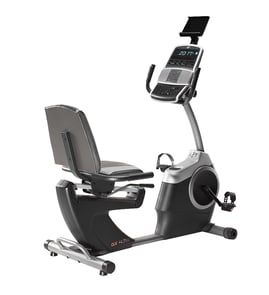

Is 30 minutes a day on a stationary bike enough?
Yes. For most people, 30 minutes a day on a stationary bike is enough to build cardiovascular fitness and support weight management, especially when you ride at a steady, moderate effort. For the Schwinn 140 cycle, the owner's manual even recommends exercising 3 times a week for 30 minutes.
What “enough” means (and how to make 30 minutes count)
A 30-minute ride is “enough” when it matches your goal and you can repeat it consistently.
- General fitness: steady pace, light to moderate resistance
- Endurance: keep cadence consistent; gradually increase resistance over weeks
- Weight loss: add intervals (short hard efforts with easy recovery)
- Heart health: aim for a pace where you can talk in short sentences
- Beginner routine: start with 10 to 20 minutes and build up to 30
A simple 30-minute workout template
| Segment | Time | Effort | Notes |
|---|---|---|---|
| Warm-up | 5 min | Easy | Light resistance, smooth pedaling |
| Main set | 20 min | Moderate | Steady pace or intervals |
| Cool-down | 5 min | Easy | Gradually reduce resistance |
Comfort and safety checks for better results
Proper setup helps you ride longer and reduces knee and hip strain.
- Wear rubber-soled athletic shoes
- Adjust the seat so your knee is slightly bent with the pedal forward
- Step off the bike before adjusting the seat
- Make sure the bike is level and stable using the rear levelers
- Stop exercising if you feel chest pain, severe shortness of breath, or faintness
Why it matters
Thirty minutes is long enough to create a training effect, but only if your bike fit is right and your effort is consistent. A stable, properly adjusted Schwinn 140 cycle makes it easier to stick with the routine and progress safely.
Last updated: February 2026
Is riding a stationary bike for 30 minutes the same as walking for 30 minutes?
No. On a Schwinn 140 stationary bike, 30 minutes of riding and 30 minutes of walking are both solid cardio, but they are not the same workout: cycling is non-weight-bearing and usually lets you work at a higher intensity, while walking is weight-bearing and better supports bone-loading and everyday functional movement.
What’s different between biking and walking?
Both activities can improve heart health, but they stress your body differently.
- Impact and joints: Stationary biking is low-impact; walking has repetitive impact.
- Muscles emphasized: Biking loads quads, glutes, and calves more continuously; walking spreads load across legs and stabilizers.
- Weight-bearing: Walking is weight-bearing; biking is not.
- Intensity control: Biking makes it easier to dial up resistance and cadence for intervals.
- Calorie burn: At the same “easy” effort, they can be similar; at moderate-to-hard effort, biking often goes higher because you can sustain more work.
A practical way to compare 30 minutes
Instead of matching time, match effort.
| If your goal is... | Stationary bike (30 min) | Walking (30 min) |
|---|---|---|
| Low-impact cardio | Excellent | Good (more impact) |
| Bone-loading | Limited | Stronger benefit |
| Higher-intensity intervals | Easier to do | Harder to do |
| Daily movement habit | Good | Excellent |
How to make your Schwinn 140 ride “count”
Comfort and setup affect how hard you can safely work.
- Set the seat so your knee is slightly bent at the bottom of the pedal stroke.
- Keep the bike level and stable before you ride.
- Aim for a steady pace most days; the manual’s general guideline is 3 times per week for 30 minutes.
- Stop if you feel chest pain, unusual shortness of breath, or faintness.
For seat adjustment and leveling steps, follow the owner's manual.
Why it matters
If you choose the activity that matches your goal (low-impact conditioning vs. weight-bearing fitness), you get better results with less frustration and fewer overuse aches.
Last updated: February 2026
What are the most common issues with 140?
The most common issues we see with the Schwinn 140 exercise cycle involve the console and power, inconsistent resistance, noisy or loose drive components, and sensor or heart-rate reading problems. Many of these are caused by loose connections, worn moving parts, or basic setup and leveling.
Common problems and what they usually point to
- Console won’t power on or resets: weak batteries (if equipped), loose power jack, damaged adapter, or a loose console wire harness
- Resistance won’t change or feels stuck: resistance motor/servo issue, loose resistance cable (if applicable), or a control board/console signal problem
- Pedals slip, wobble, or feel rough: loose crank hardware, worn pedal threads, or bearing wear
- Squeaking, clicking, or rubbing noise: loose stabilizers, misalignment, dry pivot points, or a worn belt/flywheel contact point
- Speed/RPM not reading correctly: misaligned reed switch/speed sensor, dirty magnet area, or pinched sensor wiring
- Heart-rate grips read erratically: dry hands, dirty contacts, or a loose grip-wire connection
Quick checks we recommend first
- Stabilize the frame: level the cycle and tighten stabilizer bolts.
- Re-seat connectors: unplug power, then re-seat console and sensor connectors.
- Inspect wiring: look for pinched, rubbed, or partially unplugged harnesses.
- Check moving hardware: tighten pedals, crank arms, and any visible fasteners.
- Clean contact points: wipe heart-rate grips and nearby sensor areas.
Symptom-to-fix guide
| Symptom | Most likely cause | Best first action |
|---|---|---|
| No power | Power supply/battery/loose connector | Verify power source; re-seat console plug |
| Resistance stuck | Servo/cable/console signal | Run resistance up/down; check connections |
| Clicking while pedaling | Loose crank/pedal | Tighten pedal and crank hardware |
| No RPM/speed | Sensor alignment | Align sensor and magnet; check wiring |
Why it matters
Catching looseness, misalignment, or wiring damage early prevents bigger failures like stripped crank threads, damaged harnesses, or repeated console resets.
For model-specific adjustment points, wiring routing, and tightening sequences, follow the Schwinn 140 owner’s manual.
Last updated: March 2026
