 Installation guide
 Owner’s manual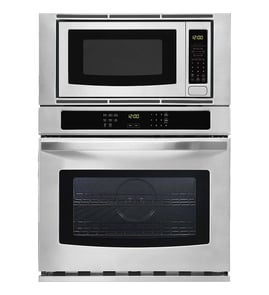



Do all over-the-range microwaves have the same dimensions?
No. Over-the-range microwaves are built around common cabinet standards, but dimensions are not identical across brands and models. For your GE PT7800SH4SS wall oven/microwave combo, the microwave is part of a built-in cutout system, so the cabinet opening dimensions in the installation guide matter more than “standard OTR” sizing.
What’s typically “standard” for OTR microwaves
Most OTR microwaves are designed to fit a 30-inch-wide space above a range, but height and depth vary by design and capacity.
- Width: usually about 30 inches (some compact models are narrower)
- Height: commonly around 16 to 18 inches (low-profile models are shorter)
- Depth: often about 15 to 18 inches (deeper units may need more clearance)
- Mounting: many use a wall bracket plus upper cabinet bolts
- Venting: recirculating or ducted options can change clearance needs
How PT7800SH4SS is different from a typical OTR microwave
PT7800SH4SS is a wall oven/microwave combo, so you size the installation by the cabinet cutout, not by “OTR microwave dimensions.” The installation specs call out a 30-inch cabinet width and a minimum cutout width of 28 1/2 inches, with a minimum cutout depth of 23 inches.
Quick comparison
| Feature | Typical OTR microwave | GE PT7800SH4SS combo install |
|---|---|---|
| Where it mounts | Wall plus upper cabinet | Wall cabinet cutout |
| Key sizing spec | Overall microwave width | Cutout width, height, depth |
| Common width | About 30 inches | 30-inch cabinet; 28 1/2-inch min cutout width |
Why it matters
If you shop by “standard OTR size” instead of the required cutout dimensions, the unit may not fit the cabinet opening, may not align with trim, or may not meet required clearances for the door swing and junction box location.
What we recommend before you buy or replace anything
- Measure the cabinet opening width, height, and depth (not just the appliance face)
- Confirm door clearance to adjacent corners and drawers
- Verify junction box location and clearance requirements
- Match the model number exactly when ordering parts
- Use the parts list for PT7800SH4SS first; for broader model searches, use Sears PartsDirect
Last updated: February 2026
What are common problems with GE Profile microwaves?
Common problems we see with the microwave portion of the GE PT7800SH4SS wall oven/microwave combo include arcing (sparking), the unit running but not heating, a dead display or no power, and door-related issues that prevent operation. Start with safe-use checks and the door interlock system before replacing parts; see the PT7800SH4SS owner's manual for model-specific safety guidance.
Most common symptoms and what they usually point to
- Runs but doesn’t heat: often a high-voltage component issue (diagnosis and repair should be handled by a qualified technician)
- No power or goes dead: power supply problem, internal fuse, or a safety device opening
- Starts then stops when you close the door: door switch or latch alignment problem
- Arcing (sparks) inside: metal or foil contact, twist ties, gold-rimmed dishes, or foil edges acting like antennas
- Turntable or light not working: tray not seated, door switch issue, or a failed light
Quick checks you can do safely
- Remove metal sources: no foil touching walls, no metal cookware (unless specifically allowed), no twist ties.
- Use the glass tray correctly: place food and containers on the glass tray as directed.
- Inspect the door area: confirm the door closes fully and the seals are clean.
- Stop immediately if damaged: do not operate if the door, hinges, latches, or seals are bent, loose, or damaged.
Parts that commonly relate to “won’t start” or door issues
Door interlock problems are a frequent cause of no-start symptoms because the microwave will not run unless the switches prove the door is closed.
| Symptom | Likely area | Example part for this model |
|---|---|---|
| Won’t start, intermittent start | Door interlock circuit | Microwave door interlock switch WB24X10047 |
| Won’t start, door feels loose | Door/latch alignment | Latch assembly WB10X28391 |
| Door won’t seal well, heat/steam leaks | Door sealing surfaces | Wall oven door seal WB35X32825 |
Why it matters
Microwaves use multiple safety interlocks to prevent operation with an open or misaligned door. Keeping the door, hinges, latches, and sealing surfaces in good condition helps prevent nuisance shutdowns and reduces the risk of exposure to excessive microwave energy.
For error messages that involve the combo unit’s microwave or oven controls, use our GE combination wall oven and microwave error codes reference to narrow the failure to a specific circuit.
Last updated: February 2026
Is GE Profile considered high end?
Yes. GE Profile is generally considered GE’s higher-end mainstream line, with more premium features and finishes than basic GE models. For your GE PT7800SH4SS wall oven/microwave combo, “high end” typically means upgraded controls, cooking features, and design compared to entry-level units.
What “high end” means in practical terms
GE Profile appliances are usually positioned as a step up in:
- Feature set (more cooking modes, sensors, and convenience options)
- Design and materials (more premium finishes and styling)
- Controls and electronics (more advanced boards, displays, and diagnostics)
- Price tier (typically higher than base GE models)
- Serviceability (more components that can be tested and replaced)
How this relates to your PT7800SH4SS combo unit
Because the PT7800SH4SS combines a wall oven and microwave, it uses multiple control and safety systems. When performance issues come up, repairs often involve components such as:
- Temperature feedback for the oven (for example, a sensor)
- Cooling and airflow management
- Microwave door safety interlocks
- Electronic control boards
If you are troubleshooting an error or performance problem, we use the model’s diagnostics and error-code guidance first; see GE combination wall oven and microwave error codes.
Common “premium” components you may see on this model
Here are examples of higher-value parts that are typical in feature-rich units like this:
| System | Example part on this model | What it affects |
|---|---|---|
| Oven temperature sensing | Wall oven temperature sensor WB21X10165 | Baking accuracy, overheating errors |
| Cooling/airflow | Wall oven cooling fan assembly WB26X24020 | Cabinet cooling, shutdown prevention |
| Microwave safety | Microwave door interlock switch WB24X25397 | Door safety, no-heat conditions |
| Controls | Machine control WB27X33487 | Modes, display behavior, overall operation |
Why it matters
“High end” usually brings better performance and features, but it also means more electronics and sensors. When something is off (temperature swings, fan running constantly, microwave not starting), the fastest path is matching symptoms or error codes to the correct part and test procedure.
For feature descriptions, operating modes, and care guidance specific to GE PT7800SH4SS, use the owner's manual. If you need to confirm fit, clearances, or mounting details for a kitchen remodel, use the installation guide.
You can order replacement parts for GE PT7800SH4SS from the parts list for this model, or search by model number on Sears PartsDirect.
Last updated: February 2026
What is the life expectancy of a GE Profile oven?
A GE Profile oven typically lasts 12 to 15 years. For the GE PT7800SH4SS wall oven/microwave combo, steady cleaning, using self-clean sparingly, and correcting heating or control problems early are the biggest factors in reaching that lifespan.
Typical lifespan and what changes it
Most built-in electric wall ovens fall in the same range; how you cook and how hot the unit runs day to day makes the difference.
- Light to moderate use: 12 to 15 years
- Heavy daily use: shorter life due to higher heat stress on electronics
- Frequent self-clean cycles: faster wear on door locks, sensors, and control boards
- Good airflow and correct installation: reduces overheating and extends component life
- Prompt repairs: prevents small issues from damaging larger assemblies
Parts that commonly affect “end of life” decisions
When an oven seems “worn out,” it is usually one or two replaceable parts causing the trouble.
| Symptom | Common cause | Example part for PT7800SH4SS |
|---|---|---|
| Oven temperature is inaccurate | Temperature sensor drifting | Wall oven temperature sensor WB21X10165 |
| Fan runs loud or oven overheats | Cooling fan failing | Wall oven cooling fan assembly WB26X24020 |
| Door does not seal well, heat escapes | Door gasket worn | Wall oven door seal WB35X32825 |
| Self-clean will not lock or unlock | Latch/lock issue | Latch assembly WB10X28391 |
Maintenance habits that extend life
These habits reduce stress on the heating system, door hardware, and electronic controls.
- Wipe spills after the oven cools; avoid baked-on residue that triggers harsher cleaning
- Use self-clean sparingly; choose shorter cycles when possible
- Keep racks and rack supports clean so the door closes fully and evenly
- Keep cooling vents clear; avoid foil or liners that restrict airflow
- If an error code appears, match it to the troubleshooting section in the PT7800SH4SS owner’s manual
Why it matters
A wall oven/microwave combo like the GE PT7800SH4SS uses multiple heating systems and control boards; preventing overheating and catching sensor or fan problems early helps avoid repeat failures and keeps cooking performance consistent.
If you decide to repair, you can order model-matched replacement parts from the parts list for PT7800SH4SS, or search by model on Sears PartsDirect.
Last updated: February 2026