Owner’s manual
 View engine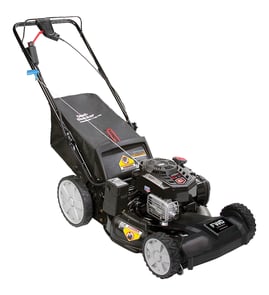


Are gas lawn mowers being phased out?
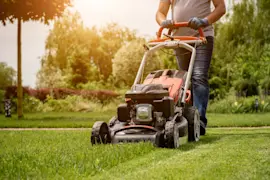
Gas walk-behind mowers like the Craftsman 9179998B are not being phased out everywhere at once; the shift is happening gradually as some states and cities restrict new sales of certain gas-powered outdoor equipment, while many homeowners move to electric for lower noise and simpler maintenance. For operation and fuel guidance, follow the 9179998B owner's manual.
What “phased out” usually means
Most changes target new equipment sales, not the mower you already own.
- Existing gas mowers can typically be used and maintained normally.
- Restrictions vary by state, county, and city.
- Retail availability may change as stores stock more battery models.
- Parts support often continues for years; routine items like blades, wheels, and hardware remain common.
What to do if you plan to keep your 9179998B running
Good maintenance matters more than the market trend.
- Use fresh fuel; the manual allows gasoline with up to 10% ethanol (E10).
- Keep the blade sharp and replace bent or damaged blades.
- Clean grass buildup under the deck; avoid spraying water into the engine area.
- Disconnect the spark plug wire before service.
- Use OEM-style replacement parts when servicing wear items.
Common wear parts customers replace
| Part | What it affects | Example for this model |
|---|---|---|
| Blade | Cut quality, vibration | Lawn mower 21-in deck mulching blade 532406706 |
| Blade adapter | Blade fit, wobble | Lawn mower blade adapter 581547901 |
| Wheel | Tracking, height consistency | Lawn mower wheel, 12 x 1-3/4-in 532433099 |
Why it matters
If your area tightens rules on new gas mower sales, keeping your Craftsman 9179998B maintained helps you avoid downtime and protects cut quality. A sharp blade and clean deck reduce strain on the engine and improve mulching and bagging performance.
Last updated: January 2026
How to find Craftsman model number?
On the Craftsman walk-behind mower model 9179998B, we find the model number and serial number on a decal on the rear of the mower housing (back of the deck). Use that decal to record both numbers for parts lookup and service. See the 9179998B owner's manual.
Where to look on the mower
Check these common spots on a Craftsman walk-behind mower deck:
- Rear of the mower housing (most common on 9179998B)
- Back of the deck, near the lower handle mounts
- Near the discharge opening or rear door area (if equipped)
- Under heavy grass buildup; wipe the area clean to read the decal
What to write down (and why)
Record both identifiers exactly as shown on the decal:
- Model number (example format: 917.9998B or 9179998B)
- Serial number
- Date of purchase (helpful for maintenance history)
Why it matters
The model number narrows your Craftsman walk-behind mower to the correct parts diagrams; the serial number helps match production changes so you get the right blade, blade adapter, hardware, and deck parts.
Quick reference table
| Item | What it’s used for | Example for this mower |
|---|---|---|
| Model number | Finds correct parts list and diagrams | 9179998B |
| Serial number | Confirms exact build/version | Printed on the same rear decal |
| Date of purchase | Maintenance and ownership records | Your receipt date |
Tip for parts matching
If you’re replacing cutting components, match parts to the exact model number first. For example, this model’s parts list includes items like the lawn mower 21-in deck mulching blade 532406706 and the lawn mower blade adapter 581547901.
Last updated: January 2026
Should I use 87 or 91 gas for lawn mower?
For the Craftsman 9179998B gas walk-behind mower, we recommend using regular 87-octane gasoline; higher octane (like 91) does not improve performance in small mower engines. Use fresh fuel and keep ethanol content at E10 (10%) or less, as noted in the 9179998B owner's manual.
Fuel choice that works best
- Use 87 octane for normal mowing and seasonal use.
- Avoid “premium” as a fix for hard starting, surging, or rough running; those issues are usually stale fuel, a dirty air filter, or ignition maintenance.
- Use E10 or less; fuel above 10% ethanol can create running problems and is not recommended for this mower.
- Buy fresh gas in small quantities so it does not sit for long periods.
Quick troubleshooting if you think “bad gas” is the problem
If the mower is hard to start or runs poorly, check these common fuel-related causes first:
- Stale fuel in the tank or can
- Water contamination in fuel
- Dirty air filter restricting airflow
- Spark plug wire loose or spark plug worn
- Loose blade or a worn blade adapter (can affect starting and vibration)
87 vs 91: what changes and what does not
| Fuel choice | What you gain | What you risk |
|---|---|---|
| 87 octane (regular) | Correct fuel for typical mower engines | Very low risk when fresh and clean |
| 91 octane (premium) | No meaningful benefit for mowing power | Wasted cost; does not solve stale-fuel issues |
Why it matters
Using the right fuel helps the engine start easier, run cooler, and avoid carburetor problems caused by stale or contaminated gasoline. Just as important, keeping ethanol at E10 or less protects fuel system components and supports reliable seasonal operation.
Last updated: January 2026