Owner’s manual
 View engine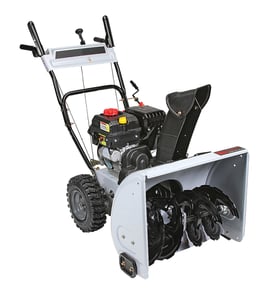



What is the typical lifespan of a gas snowblower?
A gas snowblower typically lasts 10 to 15 years with normal residential use and consistent maintenance. For the Craftsman 247886912, the operator’s manual also notes an average useful life of 7 years or 60 hours of operation, which is a safety and wear guideline rather than a hard “end of life” date (see the 247886912 operator's manual).
What to expect for Craftsman 247886912
The manual’s “average useful life” statement is best used as a reminder to inspect the machine annually as it ages, especially wear items like belts, skid shoes, and shear pins.
Common real-world lifespan drivers
- Total hours used each winter (heavy snowfall areas wear parts faster)
- Storage habits (dry storage reduces rust and fuel-system issues)
- Maintenance consistency (oil changes, lubrication, fastener checks)
- Impacts and jams (hitting ice chunks, gravel, or hidden objects)
- Replacing wear parts before they damage other components
Maintenance that most extends life
We recommend following the maintenance schedule in the manual and staying ahead of fuel and belt issues.
- Change engine oil after the first 5 hours, then about every season or 50 hours
- Use fresh fuel and avoid storing untreated fuel in the tank
- Check and service the spark plug seasonally
- Lubricate the drive hex shaft, wheels, and auger shaft at least once per season
- Inspect belts for glazing, cracking, or stretching
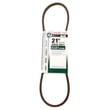
If your auger stops turning or slips under load, a worn belt is a common cause; the compatible replacement for this model is the snowblower auger drive belt 256963.
Quick guide: “average useful life” vs typical ownership life
| Term | What it means | What you should do |
|---|---|---|
| Average useful life (7 years / 60 hours) | Safety-focused benchmark for wear and inspection | Inspect annually; replace worn parts promptly |
| Typical lifespan (10 to 15 years) | Common ownership life with good care | Maintain, store properly, and repair as needed |
Why it matters
Knowing both numbers helps you plan: the machine can often run well beyond the “useful life” benchmark, but preventive inspection and replacing wear parts is what keeps performance strong and operation safe.
Last updated: January 2026
Can I use 5W30 instead of SAE 30 in my snowblower?
Yes; for Craftsman model 247886912, we recommend SAE 5W-30 engine oil (the operator manual lists SAE 5W-30 as the engine oil type). Using 5W-30 is a good choice for cold-weather starting and normal snowblower operation; follow the oil level and change intervals in the 247886912 operator's manual.
What the manual specifies for model 247886912
From the model-specific specs in the manual:
- Engine oil type: SAE 5W-30
- Engine oil capacity: 20 oz (600 ml)
- Oil classification: Use a 4-stroke, high-detergent oil meeting SF/SG (or better)
If you were planning to switch from straight SAE 30 to 5W-30, this model is already set up for 5W-30 as the recommended viscosity.
Quick comparison: 5W-30 vs SAE 30
| Oil type | Cold starts | Typical snowblower use | When it can be a problem |
|---|---|---|---|
| 5W-30 | Easier starting in cold temps | Great all-around choice for winter | Not an issue when it meets the required 4-stroke rating |
| SAE 30 | Harder starting in cold temps | Better suited to warmer temps | Can crank slowly and lubricate poorly at very low temps |
How to avoid oil-related starting and engine issues
- Check oil on a level surface with the engine off
- Do not overfill; overfilling can cause smoking, hard starting, or spark plug fouling
- Change oil after the first 5 hours, then once per season or every 50 hours
- Use clean fuel (stale fuel can mimic “oil problems” with rough running)
- Wipe snow and moisture off controls after use to reduce freeze-up issues
Why it matters
Snowblowers run in cold air, and oil that flows well at low temperatures helps the engine lubricate quickly during startup. For model 247886912, using the specified SAE 5W-30 helps protect the engine and supports easier winter starting.
Last updated: January 2026
Where is the model number on a Craftsman snowblower?
On the Craftsman snow thrower model 247886912, the model number is printed on the product identification label; it’s commonly found on the rear of the unit near the wheel area (between or just above the wheels). For the exact label location callouts, use the 247886912 operator's manual.
Where to look first (fast checks)
- Stand behind the snowblower in the operating position.
- Check the rear frame panel between the wheels.
- Look just above the axle area and around the lower handle mounting points.
- Inspect the back of the auger housing if you do not see it at the rear.
- Wipe off packed snow, salt residue, and dirt; labels can be hard to read when coated.
What the label typically includes
The identification label usually lists both a model number and a serial number. On this Craftsman unit, you want the model number 247886912 when ordering parts or matching diagrams.
| Item on label | What it’s used for | When you need it |
|---|---|---|
| Model number | Identifies the exact machine configuration | Always, before buying parts or looking up diagrams |
| Serial number | Identifies production run details | Helpful for service questions and verifying exact build |
If the label is missing or unreadable
If the label is damaged, painted over, or peeled off, use these practical options:
- Check for a secondary decal on the handle panel area.
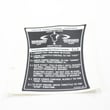
- Look for an instruction decal that may still be legible, such as the mtd snowblower auger and drive control instructions decal 777I22340.
- Compare your controls and features (chute control style, drive control, auger control) to the diagrams and parts list in the manual.
Why it matters
Using the correct model number prevents ordering the wrong belt, decal, or hardware; even small design changes between similar Craftsman snowblower models can affect fit and function.
Last updated: January 2026