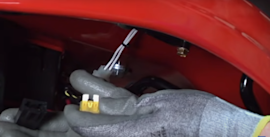
Installation guide
 Owner’s manual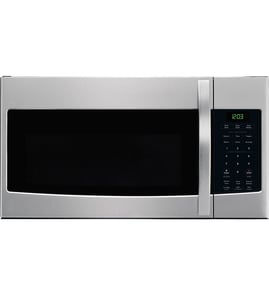



How big is a Kenmore microwave model 40185052310 in inches?
Kenmore microwave/hood combo model 40185052310 is a standard 30-inch over-the-range size class; it installs in a 30-inch-wide space between cabinets and over a range up to 30 inches wide. For exact exterior width, height, and depth, measure your unit or confirm the spec page in the 40185052310 installation guide.
These are the key size-related requirements called out for model family 401.8505*.
- Space between cabinets must be 30 inches wide and unobstructed
- Designed to install over ranges up to 30 inches wide
- Bottom of the cabinet must be 30 inches or more above the cooking surface
- Unit must be installed level (cabinet trim and overhang can affect mounting)
- Venting options: recirculating, outside top exhaust, or outside back exhaust
Because exterior dimensions can vary by revision and door style, the most reliable approach is to verify with the installation templates and your own measurements.
- Measure overall width across the front (left edge to right edge)
- Measure overall height from the top of the case to the bottom edge
- Measure overall depth from the wall to the front of the door (include handle if present)
- Compare your measurements to the cabinet and mounting requirements in the 40185052310 installation guide
| What you are measuring | What it tells you | Number to plan around |
|---|---|---|
| Cabinet span | Whether it fits between cabinets | 30 in between cabinets |
| Range width | Whether it matches the cooktop below | Up to 30 in |
| Mounting height | Safe clearance above cooking surface | 30 in or more |
Using the verified 30-inch installation requirements prevents cabinet interference, keeps the microwave level, and helps the venting path line up correctly, especially when switching between recirculating and ducted exhaust.
Last updated: February 2026
Is a hood vent better than a microwave vent?
A dedicated range hood vent is better than a microwave/hood combo vent when you want stronger smoke, grease, and odor removal; it typically moves more air and captures more cooking fumes. A Kenmore 40185052310 microwave vent is a smart space-saver for light to moderate cooking, especially when installed and ducted correctly per the installation guide.
| Feature | Microwave/hood combo vent (OTR) | Dedicated range hood |
|---|---|---|
| Vent power (typical) | Moderate | Higher |
| Capture area | Smaller (often misses front burners) | Larger canopy coverage |
| Best for | Small kitchens, basic ventilation | Frequent cooking, high heat, lots of smoke |
| Common venting setup | Recirculating or ducted | Usually ducted (best performance) |
Even with an over-the-range microwave, ventilation quality depends heavily on the venting path and installation details.
- Ducting to the outside performs better than recirculating through filters.
- Use the most direct duct route with as few elbows as possible.
- For outside venting, use a hood exhaust duct; do not use less than a 6-inch diameter round duct.
- Keep total duct length within the guide’s limit (up to 140 equivalent feet for 3-1/4 inch x 10 inch rectangular or 6-inch round duct).
- Choose the correct installation type: recirculating (ductless), outside top exhaust, or outside back exhaust.
A microwave vent like the Kenmore 40185052310 is the better choice when space and convenience matter more than maximum airflow.
- You need a two-in-one appliance to save cabinet space.
- You do mostly simmering, reheating, and low-smoke cooking.
- Your kitchen layout makes a large hood hard to fit.
- You can run a short, straight duct to the outside (best-case scenario for an OTR microwave).
Better ventilation helps keep grease off cabinets, reduces lingering odors, and improves comfort while cooking. If you cook often on high heat, a dedicated hood usually delivers noticeably cleaner air; if you cook lightly, a properly installed microwave vent is often enough.
Last updated: February 2026
Is there a reset on a Kenmore microwave?
Yes. On many Kenmore microwaves (including over-the-range models like 40185052310), you can reset the control by cycling power at the breaker for about 1 minute, then restoring power and re-setting the clock. For model-specific control settings, follow the steps in the owner's manual.
- Power reset (most common): Turn the circuit breaker off for 60 seconds, then turn it back on.
- Unplug reset (if accessible): Unplug for 60 seconds, then plug back into a dedicated outlet.
- After reset: Set the clock and test a simple 30-second heat cycle with a cup of water.
A “reset” will not fix a door-safety problem. Check these common causes first:
- Door not fully closed or misaligned
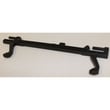
- Sticking door latches
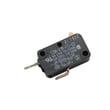
- Failed door interlock switch (a common no-start cause)
- Blown internal fuse (often after a surge)
- Control lock or demo mode enabled (varies by model)
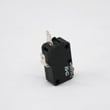
If you suspect a door-switch issue, the microwave door interlock switch 3405-001034 is a common replacement part used when the unit has power but will not start.
If the microwave runs but does not heat, do not keep testing it repeatedly. No-heat problems often involve high-voltage components that require advanced electrical troubleshooting.
| Symptom | What a reset can fix | What it usually will not fix |
|---|---|---|
| Blank display | Control glitch, power interruption | No power supply to outlet, wiring issue |
| Frozen keypad | Software lockup | Failed control board or keypad membrane |
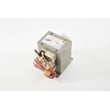
| Runs, no heat | Rare control glitch | Magnetron, diode, capacitor, transformer |
For no-heat troubleshooting steps, use our guide: why is my microwave not heating.
A proper reset clears temporary control errors after a power outage, but it also helps you separate a simple control issue from a door-safety, fuse, or heating-circuit failure so you replace the right part the first time.
Last updated: February 2026