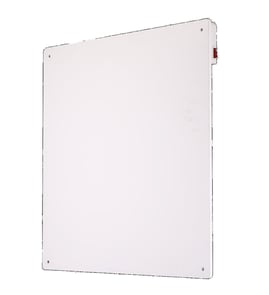

Are direct vent heaters efficient?
Yes. Direct vent heaters like the Empire DV-215-7SG are typically efficient because they pull combustion air from outdoors and vent exhaust outdoors through a sealed system; that reduces drafts and helps keep indoor air more stable while delivering steady, zone-style heat.
What “efficient” means for a direct vent wall furnace
Direct vent designs are built to control where air comes from and where exhaust goes. That usually improves comfort and reduces wasted heat compared with older, non-sealed venting setups.
Common efficiency advantages include:
- Sealed combustion helps reduce cold-air infiltration into the room
- More consistent room temperature (good for spot heating)
- Less heat loss from relying on indoor air for combustion
- Reliable operation in many locations when properly vented
Factors that most affect real-world efficiency
Even a high-performing heater can waste energy if installation or maintenance is off. For the DV-215-7SG, these are the biggest drivers:
- Venting condition and correct termination outdoors
- Burner cleanliness and correct flame pattern
- Proper gas pressure and regulator performance
- Thermostat placement and settings
- Room insulation and air sealing (especially around doors and windows)
Quick comparison: direct vent vs. other common venting styles
| Heater type | Combustion air source | Exhaust path | Typical comfort/efficiency impact |
|---|---|---|---|
| Direct vent wall furnace | Outdoors | Outdoors (sealed) | Strong comfort and efficiency potential |
| Natural draft (older style) | Indoors | Chimney/flue | More drafts; more room air used |
| Vent-free (unvented) | Indoors | None | High heat-in-room, but requires strict room and safety considerations |
Why it matters
Higher efficiency usually means lower fuel use for the same comfort level. With a direct vent wall furnace, the sealed venting approach often translates into fewer drafts, steadier heat, and better performance in spaces like basements, garages, cabins, and additions.
Parts and repair help
If your heater is running but not heating well, we recommend checking the parts list for the Empire DV-215-7SG on this model page first. For broader parts lookup by model number, use Sears PartsDirect.
Last updated: February 2026
How to size a gas wall heater?
To size a gas wall heater for a space, we match the heater’s BTU output to the room’s square footage and heat loss. For most homes, a practical starting point is about 20 BTU per square foot, then adjust up for colder climates, poor insulation, or high ceilings.
Quick sizing method (BTU estimate)
- Measure the room length and width.
- Multiply to get square feet.
- Multiply square feet by a BTU factor.
- Mild climate, good insulation: 15 to 20 BTU/ft²
- Average conditions: 20 to 25 BTU/ft²
- Cold climate, older home, or lots of glass: 25 to 35 BTU/ft²
Example
- 200 ft² room × 20 BTU/ft² = 4,000 BTU (starting point)
Adjustments that change the BTU you need
Use these common “bump up” checks when sizing a direct vent wall furnace like the Empire DV-215-7SG:
- Ceiling height over 8 ft: increase BTU estimate (more air volume)
- Poor insulation or drafts: increase BTU estimate
- Many windows or exterior walls: increase BTU estimate
- Room opens to other areas: size for the combined space if air freely mixes
- You want faster warm-up: modestly higher BTU can help (within safe installation limits)
Sizing cheat sheet
| Room size (ft²) | Typical BTU range |
|---|---|
| 100 | 1,500 to 3,500 |
| 200 | 3,000 to 7,000 |
| 300 | 4,500 to 10,500 |
| 500 | 7,500 to 17,500 |
Why it matters
Correct sizing helps your heater run more steadily, improves comfort, and avoids short cycling from oversizing or inadequate heat from undersizing.
Parts and support for your model
For Empire DV-215-7SG repair parts and diagrams, start with the parts list for your model; if you are searching beyond what’s shown, use Sears PartsDirect to look up parts by model number.
Last updated: February 2026
Why does gas furnace efficiency jump from 80% to 90%?
That “jump” happens because 90%+ AFUE furnaces are condensing designs that pull additional heat out of the flue gases (including latent heat from water vapor), while ~80% furnaces are non-condensing and vent hotter exhaust. The Empire DV-215-7SG direct vent wall furnace is a non-condensing style heater, so it is not in the 80% to 90% condensing category.
What changes between ~80% and ~90% AFUE
The efficiency increase is mainly a design change, not a tune-up change.
- Secondary heat exchanger captures more heat from exhaust
- Condensate management is added (drain/collector because water is produced)
- Cooler exhaust allows different venting materials and routing
- Corrosion-resistant components are used where condensation occurs
- Tighter combustion control is common (sealed combustion, better airflow control)
Quick comparison
| AFUE range | Furnace type | Key feature | What you will see in the system |
|---|---|---|---|
| ~80% | Non-condensing | Single primary heat exchanger | Hotter flue pipe, no condensate drain |
| ~90% to 98% | Condensing | Primary + secondary heat exchanger | Condensate drain, cooler venting, more complex exhaust/intake |
Why this matters for an Empire DV-215-7SG wall heater
DV-215-7SG is a direct vent wall furnace; it uses a sealed combustion path and vents combustion gases outdoors, but it does not use condensing technology. That means:
- You will not have a condensate drain system to maintain like a 90%+ furnace
- Venting and combustion air restrictions still matter, but symptoms differ from condensing units
- Efficiency improvements typically come from proper installation, clean burner/air passages, and correct venting, not from adding a secondary heat exchanger
Practical takeaway when shopping or comparing
When you compare heaters, treat “80% vs 90%” as a condensing vs non-condensing decision. For DV-215-7SG parts and model-specific diagrams, start with the model number, then use Sears PartsDirect to search and compare similar Empire wall heaters by model.
Last updated: February 2026
What is the most energy efficient type of furnace?
For whole-home heating, the most energy efficient furnace type is a high-efficiency condensing gas furnace (typically 90 to 98+ AFUE). Your Empire DV-215-7SG is a direct vent wall furnace used for zone heating; it is a different design than a condensing central furnace, so efficiency comparisons should be made by the unit’s rating and how you use it.
Most efficient furnace types (and where they fit)
- Condensing gas furnace (central): highest AFUE; best for whole-home ducted systems.
- Non-condensing gas furnace (central): lower AFUE; simpler venting.
- Electric resistance heat: near-100% at the appliance, but often higher operating cost.
- Heat pump: very efficient in moderate climates; efficiency drops as outdoor temps fall.
Quick comparison (typical efficiency metrics)
| Heating type | Typical efficiency metric | Typical range | Common use |
|---|---|---|---|
| Condensing gas furnace | AFUE | 90 to 98+ | Whole-home, ducted |
| Non-condensing gas furnace | AFUE | 80 to 89 | Whole-home, ducted |
| Direct vent wall furnace (like DV-215-7SG) | AFUE (varies by model) | Commonly lower than condensing furnaces | Zone heating, single area |
| Heat pump | HSPF2/SEER2 | Varies by climate | Whole-home or supplemental |
How to get the best efficiency from an Empire DV-215-7SG wall furnace
- Keep the outside vent termination clear of snow, leaves, and debris.
- Vacuum dust from the front grille and louvers to maintain airflow.
- Use it for zone heating (heat the rooms you use most, lower the rest).
- Keep doors to the heated area closed to reduce heat loss.
- Have combustion issues corrected promptly (soot, unusual odors, delayed ignition).
Why it matters
“Most efficient” depends on the job. Condensing furnaces lead for whole-home AFUE, while a direct vent wall furnace can be cost-effective when used to heat a specific zone efficiently and safely.
For model-based parts lookup and diagrams, start with the DV-215-7SG parts list, or search by model on Sears PartsDirect.
Last updated: February 2026