


How many square feet is a 120000 BTU furnace?
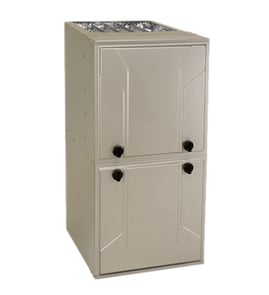
A 120,000 BTU furnace can typically heat about 2,800 to 3,500 square feet, but the real coverage depends on your climate, insulation, ductwork, and ceiling height. For a York upflow natural gas furnace like P3URD20N13001A, correct sizing is based on a home heat-loss calculation, not BTU alone.
Use this as a starting point, then confirm with a load calculation.
- Warm climates / efficient homes: often closer to 3,200 to 3,800 sq ft
- Mixed climates / average insulation: often around 2,800 to 3,500 sq ft
- Cold climates / older or leaky homes: often around 2,200 to 3,000 sq ft
- High ceilings, lots of glass, or poor insulation: reduces coverage
- Tight, well-insulated homes: increases coverage
A furnace that is “right” in one house can be oversized or undersized in another.
- Climate zone and design temperature (how cold it gets where you live)
- Insulation and air sealing (attic, walls, rim joists, windows, doors)
- Duct condition (leaks, crushed runs, poor returns)
- Ceiling height and open floor plans (more air volume to heat)
- Basement vs. slab (heat loss differences)
Correct furnace sizing improves comfort and protects key parts like the inducer motor, igniter, flame sensor, and blower.
| If the furnace is… | What you may notice | Common downside |
|---|---|---|
| Oversized | Short cycles, temperature swings | More wear, noisier operation, less even heat |
| Undersized | Runs constantly in cold weather | Can struggle to maintain set temperature |
- Ask for a Manual J heat-loss calculation (most accurate)
- Compare the result to your furnace’s output BTU (input BTU is higher than what reaches the home)
- Confirm your duct sizing and airflow are appropriate for the furnace
- If comfort is uneven, address insulation and duct leaks before upsizing
Square-foot estimates are useful, but a heat-loss calculation prevents comfort issues, high fuel use, and premature cycling problems. It also helps ensure your York P3URD20N13001A is matched to your home and duct system.
Related DIY help: are diy appliance repairs safe
Last updated: January 2026
How to reset furnace ignitor?
For the York P3URD20N13001A upflow natural gas furnace, “resetting the ignitor” usually means resetting the furnace control by power-cycling the unit. Turn the furnace power switch off (or the breaker off) for about 60 seconds, then restore power and call for heat; this clears many ignition lockouts.
- Set the thermostat to OFF.
- Turn OFF power to the furnace at the service switch or circuit breaker.
- Wait 60 seconds (this lets the control board fully reset).
- Turn power ON.
- Set the thermostat to HEAT and raise the setpoint 3 to 5 degrees.
- Watch for a normal sequence: inducer starts, ignitor heats, gas valve opens, burners light.
A reset helps temporary lockouts; repeated failures point to a part or airflow issue that needs troubleshooting.
Common causes to check:
- Dirty or misaligned flame sensor (can cause short cycling after ignition)
- Weak hot surface ignitor (glows dim or not at all)
- Pressure switch not closing (venting or condensate drain issue)
- Clogged air filter or blocked return air (overheating trips limits)
- Loose wiring at the ignitor, gas valve, or control board
| What you see | What it often means | What to do next |
|---|---|---|
| No glow from ignitor | No power to ignitor or failed ignitor | Check connections; test with a meter |
| Ignitor glows, no flame | Gas not opening or safety not proven | Verify gas supply; check pressure switch |
| Flame lights then shuts off | Flame not being sensed | Clean flame sensor; check grounding |
Use a multimeter to confirm whether the ignitor is being energized during the ignition sequence and whether safety switches are opening.
- Verify 120 VAC supply to the furnace (typical)
- Check for voltage to the ignitor during the heat call
- Inspect for burnt spade terminals or damaged harnesses
For step-by-step meter basics, use how to use a multimeter to test electrical parts video.
Repeated ignition lockouts can lead to no-heat calls, nuisance shutdowns, and extra wear on the ignitor, control board, and inducer. A clean flame-sensing path and proper airflow prevent many “reset needed” situations.
Last updated: January 2026
What are the 4 types of furnaces?
The four main furnace types used in homes are natural gas, electric, oil, and propane (LP). Your York P3URD20N13001A is an upflow natural gas furnace, which means it burns natural gas and uses a blower to push heated air through your ductwork.
- Natural gas furnace: Most common where gas service is available; typically lower operating cost than electric.
- Electric furnace: Uses electric heating elements; simpler venting, but often higher operating cost.
- Oil furnace: Uses heating oil and a burner; common in areas without natural gas.
- Propane (LP) furnace: Similar to natural gas but uses propane from a tank; common in rural locations.
| Furnace type | Fuel source | Typical best fit | Key maintenance focus |
|---|---|---|---|
| Natural gas | Utility gas line | Most suburban/urban homes | Burner, flame sensor, venting |
| Electric | Electricity | Mild climates, no gas/oil | Heating elements, breakers |
| Oil | Heating oil tank | Regions with oil delivery | Nozzle, filter, soot cleanup |
| Propane (LP) | Propane tank | Rural homes | Gas pressure, combustion setup |
Fuel type drives the parts and safety checks that matter most. For example, gas and propane furnaces rely on combustion components (like the igniter, flame sensor, and gas valve), while electric furnaces rely on heating elements and high-amperage electrical circuits.
If you are diagnosing a no-heat issue and need to verify power safely, use a meter and follow a proven process like how to use a multimeter to test electrical parts video.
Last updated: January 2026