Installation guide
 Owner’s manual
 Error Codes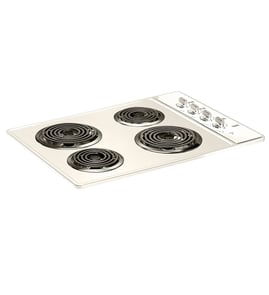


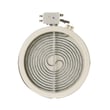

Can you replace a gas cooktop with an electric?
Yes, you can replace a gas cooktop with an electric cooktop, but it is a remodel-level change: the gas supply must be safely capped and the cabinet cutout and electrical circuit must match the new unit’s requirements. For a GE electric cooktop like model JP5036DJ2BB, proper grounding and a dedicated 208/240 VAC circuit are required (see the installation guide).
What has to change when switching from gas to electric
- Gas line: The existing gas supply must be shut off and capped according to local code.
- Electrical supply: Electric cooktops typically need a dedicated 208/240 VAC, 60 Hz branch circuit and proper grounding.
- Wiring type: The cooktop conduit is intended for copper connections; aluminum house wiring requires approved connectors.
- Countertop cutout: The opening may need to be resized; solid-surface countertops (granite, quartz) are best handled by a pro.
- Clearances and heat protection: Nearby cabinets and wall coverings must tolerate cooktop heat (up to about 200°F).
Quick compatibility checklist (before you buy)
| Item to verify | What to look for | Where to confirm |
|---|---|---|
| Cutout size | Opening matches the new cooktop | Installation guide |
| Electrical circuit | Dedicated 208/240 VAC circuit, properly grounded | Installation guide |
| Cabinet clearances | Safe spacing, overhead cabinet limits | Installation guide |
| Venting and overhead storage | Reduce burn risk from reaching over hot elements | Installation guide |
Why it matters
A gas-to-electric swap is not just an appliance swap; it changes utilities (gas and electrical) and the countertop opening. Getting the circuit, grounding, and clearances right prevents nuisance shutdowns, poor performance, and shock or burn hazards.
Last updated: February 2026
What is the life expectancy of an electric cooktop?
Most electric cooktops, including the GE JP5036DJ2BB, typically last 10 to 15 years with normal use and basic care; many reach 15 to 20 years when kept clean, properly installed, and not overheated or physically damaged. For model-specific care and safety guidance, use the owner's manual.
What affects cooktop lifespan the most
- Heat stress: frequent high-heat cooking shortens element and control life.
- Spills and boilovers: sugary or acidic spills can etch glass and damage components if baked on.
- Physical impact: dropping cookware can crack the glass surface.
- Electrical supply quality: loose connections or incorrect wiring can stress control boards.
- Ventilation and clearances: poor cabinet clearance can trap heat around the unit.
Practical ways to help your cooktop reach the high end of its lifespan
- Let the glass cool before cleaning; avoid scraping with knives or sharp tools.
- Use cookware that sits flat to reduce hot spots and cycling.
- Keep the underside area clear and follow cabinet depth and clearance guidance.
- Turn handles inward and avoid storing items above the cooktop to reduce accident risk.
- If a burner heats unevenly or won’t heat, troubleshoot early to prevent secondary damage.
Common “end-of-life” symptoms and what they usually point to
| Symptom | Most common cause | Typical fix path |
|---|---|---|
| One burner won’t heat | Failed radiant element | Replace the affected element |
| Burner cycles oddly or won’t regulate | Control issue or sensor/element problem | Test element and controls |
| Dead display or unresponsive touch controls | User interface or control board issue | Check power, then test boards |
| Visible cracks in glass | Impact or thermal shock | Stop using; service/replace top |
Why it matters
A cooktop that is nearing the end of its service life often becomes less consistent at heating and more prone to electrical or control failures. Addressing early symptoms helps protect expensive components like control boards and keeps cooking performance steady.
Last updated: February 2026
What are the disadvantages of a ceramic cooktop?
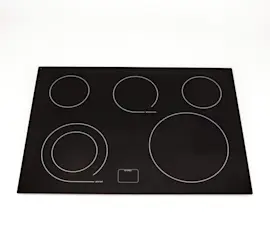
A ceramic (glass) cooktop like the GE JP5036DJ2BB holds heat after you turn the burner off, so it responds more slowly than gas and can keep cooking food. The glass surface also scratches and stains more easily, so spills and cookware choice matter. See the owner's manual for care and safety details.
Common disadvantages you will notice
- Slower heat changes: it takes longer to cool down or ramp up compared to gas.
- Retained heat: the surface stays hot after the controls are off, which increases burn risk.
- Scratching risk: knives, sharp tools, rings, and some cookware bottoms can scratch the glass.
- Spills can bake on: especially if you do not wipe up quickly.
- Some cookware performs poorly: warped, ridged, or rough bottoms can heat unevenly and damage the surface.
- Boil-dry damage: thin aluminum or copper overlays can leave marks; overheating can bond residue to the glass.
Cookware and surface risks (what to avoid)
The JP5036DJ2BB manual calls out several materials and conditions that can cause poor performance or damage.
| Item or condition | What can happen on a ceramic cooktop | What to do instead |
|---|---|---|
| Warped or ridged pan bottoms | Poor contact, uneven heating, possible scratching | Use flat-bottom pans; check with a straight edge |
| Glass-ceramic or stoneware cookware | Poor performance; may scratch | Use cookware designed for glass cooktops |
| Sliding pots and pans | Metal marks and scratches | Lift and place cookware; do not slide |
| Sugary spills or melted plastic | Can pit the glass surface | Remove promptly and carefully per manual guidance |
Cleaning and upkeep (extra work compared to other cooktops)
- Wait for the surface to cool and the hot-surface indicator to go out before routine cleaning.
- Use the recommended ceramic cooktop cleaner and cleaning pad for daily cleaning.
- Remove metal marks promptly so they do not become permanent.
- Treat sugary spills differently; they should be carefully scraped off while still hot using proper protection.
Why it matters
Most complaints about ceramic cooktops come from two things: heat retention (cooking control and safety) and surface care (scratches, stains, and baked-on spills). Using the right cookware and cleaning method keeps the cooktop looking good and heating evenly.
Last updated: February 2026
How much is it to replace an electric stove top?
Replacing the “stove top” can mean either replacing the entire cooktop assembly or repairing a failed component. For the GE JP5036DJ2BB electric cooktop, parts-only repairs often run about $100 to $450 depending on what failed; a full main top and control assembly can be much more, plus labor.
What you are actually replacing (and typical cost ranges)
In most homes, the total cost depends on whether you are doing a repair (one part) or a full cooktop replacement.
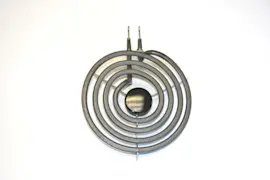
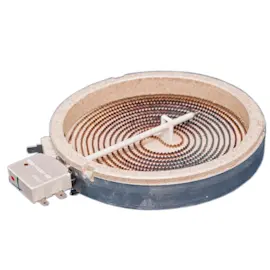
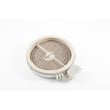
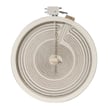
- Single radiant element replacement: typically $100 to $250 for the part
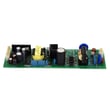
- Control or display repair: typically $60 to $450 for the part
- Full cooktop top and user interface assembly: typically $600+ for the part
- Labor and electrical/countertop work: often the biggest variable (especially for cutout changes)
Example parts pricing for GE JP5036DJ2BB (parts only)
| What failed | Example part for this model | Typical parts-only impact |
|---|---|---|
| Small surface element not heating | Range radiant surface element, 5-1/2-in WB30T10145 | Lower-cost repair path |
| Dual element not working correctly | Range dual radiant surface element WB30T10131 | Mid-range repair path |
| Cooktop dead or erratic | Cooktop power control board WB27X24011 | Mid to higher parts cost |
| Display not responding | Display board WB27X24230 | Often cheaper than power/relay boards |
| Glass top or top assembly damage | GE cooktop main top and user interface control WB62X26844 | Highest parts cost on this page |
What drives the installed price
- Countertop material and cutout work: solid-surface (granite, quartz) cutouts are typically handled by a pro
- Electrical hookup requirements: the cooktop must be on a properly grounded, correctly rated branch circuit
- Whether you are swapping like-for-like: changing size or wiring can add time and materials
- Troubleshooting time: intermittent heating can require testing wiring and components
Why it matters
If only one burner is out, replacing a radiant surface element is usually far more cost-effective than replacing the entire cooktop. If the cooktop is completely dead, budgeting for electrical diagnosis plus a control board is the right starting point.
Before you price parts or schedule work
- Disconnect power at the breaker before any service
- Confirm which burner position is failing (right front, dual, etc.)
- Check for visible damage to the element, wiring, or connectors
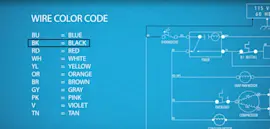
- Use the wiring diagram and installation requirements in the installation guide
- Use operating and troubleshooting tips in the owner's manual
Last updated: February 2026