Owner’s manual
 View engine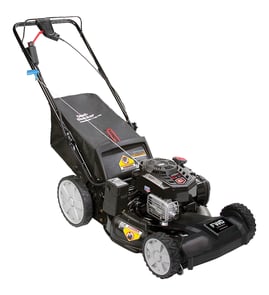



What model is 917380542?
Model 917380542 is a Craftsman gas walk-behind lawn mower; the owner’s manual identifies it as a 4.0 horsepower, 20-inch side-discharge, 3-in-1 convertible rotary lawn mower. For the full specifications and parts breakdown, use the owner's manual.
What this model includes (from the manual)
Here are the key identifiers we use for Craftsman model 917380542:
- 4.0 horsepower gas engine
- 20-inch cutting width
- Side discharge deck
- 3-in-1 convertible configuration (commonly side discharge, bagging, mulching depending on setup)
- Walk-behind mower platform
Where to find the model and engine numbers
Knowing both numbers helps you order the correct repair parts.
- Mower model number (917380542): on a decal attached to the rear of the mower housing
- Engine model number (143.944006): on the engine blower housing
- Record the serial number and date of purchase for your maintenance records
Quick reference table
| Item | What to look for | Where it’s located |
|---|---|---|
| Mower model | 917380542 | Rear of mower housing decal |
| Engine model | 143.944006 | Engine blower housing |
| Cutting width | 20 in. | Listed in manual specs |
| Engine output | 4.0 HP | Listed in manual specs |
Why it matters
Craftsman walk-behind mowers often share similar decks and controls across model families, but parts can vary by model and by engine model. Matching 917380542 (mower) and 143.944006 (engine) prevents ordering the wrong blade adapter, fasteners, or carburetor parts.
Last updated: February 2026
Why does my walk behind mower pull to one side?
Your Craftsman 917380542 walk-behind mower usually pulls to one side when the cutting system is not balanced or the deck is dragging unevenly. The most common causes are uneven wheel height settings, a worn or bent blade, or grass and debris buildup under the mower housing (all of which can steer the mower as you push).
Quick checks that fix most “pulling” problems
- Set all wheels to the same cutting height (uneven wheel heights are a top cause of uneven cut and pulling).
- Tip the mower safely and clean the underside of the mower housing; built-up grass can make the deck drag more on one side.
- Inspect the blade for bends, heavy nicks, or uneven wear; replace if damaged.
- Confirm the blade hardware is tight; a loose blade can cut unevenly and cause vibration.
- Mow slower in tall or heavy grass and consider raising the cut height to reduce drag.
For model-specific operating and cleaning guidance, follow the maintenance and mowing tips in the owner's manual.
What to look for (symptoms and likely causes)
| What you notice | Most likely cause | What to do first |
|---|---|---|
| Uneven cut plus pulling | Wheel heights uneven | Match all wheel height settings |
| Pulling gets worse as you mow | Grass buildup under deck | Clean underside of housing |
| Pulling plus vibration | Worn, bent, or loose blade | Tighten hardware; replace blade if bent |
| Pulling mainly in tall grass | Deck/blade dragging | Raise cut height; overlap passes |
Why it matters
When the deck drags or the blade cuts unevenly, the mower has to work harder, can leave clumps, and may feel like it is “steering itself.” Keeping the underside clean and the wheel heights even improves cut quality and reduces strain on the engine.
Last updated: February 2026
What year is Craftsman Model 917380542?
Craftsman model 917380542 is identified by its model number, but the year of manufacture is not encoded in the model number itself. To pin down the year, use the serial number and the identification decal locations shown in the owner's manual.
How to find the date information on your mower
On this Craftsman walk-behind mower, the model and serial information is on a decal attached to the mower.
- Look for the decal on the rear of the lawn mower housing.
- Record the serial number exactly as shown.
- Write down your date of purchase (the manual recommends keeping it for future reference).
- If the decal is dirty or faded, clean the area gently so the characters are readable.
- Keep the information with your maintenance records for parts lookup and service.
Model number vs. serial number (what each tells you)
| Item | What it identifies | What it usually helps with |
|---|---|---|
| Model number (917380542) | The mower configuration | Finding correct diagrams and repair parts |
| Serial number (on the decal) | Your specific unit | Determining production run and age |
| Date of purchase | When you bought it | Warranty and maintenance tracking |
Why it matters
Knowing the mower’s approximate age helps us match the right repair parts and maintenance schedule, especially for wear items like the blade adapter, recoil starter components, and carburetor parts.
Last updated: February 2026
Will a 42 inch mower fit through a gate?
A 42-inch mower only fits through a gate if the gate opening is wider than the mower’s true outside-to-outside width (including wheels and any side discharge chute). For a 42-inch deck, plan on needing at least a 44- to 48-inch gate opening for comfortable clearance.
How to measure it correctly
Measure the mower at its widest point with it set up the way you’ll actually roll it through the gate.
- Measure outside edge of left wheel to outside edge of right wheel
- Include the side discharge chute or flap if it sticks out
- Measure with the handle in the position you’ll use (some handles add width when folded)
- Compare to the gate opening at the narrowest spot (posts, latch hardware, hinges)
- Leave extra clearance so you are not scraping the gate or catching the chute
Quick fit guide (typical)
These are practical “real world” clearances most owners use for walk-behind and riding mowers.
| Deck size (nominal) | Typical overall width | Gate opening that usually works |
|---|---|---|
| 34-inch | About 36 to 38 inches | 40 inches or wider |
| 42-inch | About 44 to 48 inches | 48 inches or wider |
| 46-inch | About 48 to 52 inches | 52 inches or wider |
Tips if you are close on clearance
If you are within an inch or two, small changes often make the difference.
- Raise or secure the discharge flap so it does not catch
- Remove the chute (if your mower design allows) before moving through the gate
- Roll through slowly and straight; avoid turning while in the opening
- Check tire pressure; a low tire can change how the mower tracks and rubs
- If you must tilt the mower, follow the safety guidance in the owner's manual
Why it matters
Forcing a mower through a tight gate can bend the discharge chute, damage the deck edge, or scrape wheels and hardware. A little extra clearance also reduces the chance of the mower jerking sideways while you push it.
Last updated: February 2026
Should I use 87 or 89 gas for lawn mower?
For the Craftsman 917380542 gas walk-behind mower, use fresh, clean unleaded regular gasoline (typically 87 octane). The owner's manual says not to use premium gasoline, so 89 octane is unnecessary for normal mowing and does not improve performance on this engine.
What fuel to use for model 917380542
- Use unleaded regular gasoline (commonly 87 octane).
- Use fresh fuel; old gas causes hard starting, surging, and stalling.
- Fill carefully; do not overfill the tank.
- For storage, follow the manual’s fuel-system steps if the mower will sit.
Ethanol guidance (clear limits)
Most pump gas contains ethanol. For small engines like this mower, keep ethanol content at 10% or less.
- E10 (up to 10% ethanol): acceptable
- E15 (15% ethanol): avoid (exceeds the 10% limit)
- E85 (up to 85% ethanol): never use (not compatible with this type of engine)
Quick comparison: 87 vs 89 vs premium
| Fuel choice | Use it? | What you gain | Notes |
|---|---|---|---|
| 87 octane (regular) | Yes | Correct fuel for normal operation | Best choice when fresh and E10 or less |
| 89 octane (mid-grade) | Not needed | No practical benefit | Costs more; ethanol content still matters |
| Premium (often 91 to 93) | No (per manual) | None | Manual says do not use premium gasoline |
Why it matters
Using the correct octane and keeping ethanol at E10 or less helps prevent carburetor varnish, fuel-system corrosion during storage, and starting problems that can lead to extra repairs.
Last updated: February 2026