Installation guide
 Owner’s manual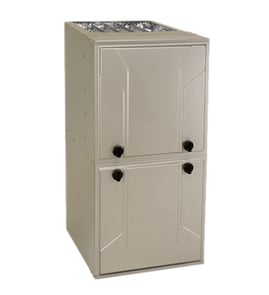




How to check furnace model?
To check the model for your Icp furnace, we look for the rating plate (data tag) on the furnace cabinet. On model N9MPD100J14A2, the rating plate lists the complete model and serial numbers you should use when ordering parts or scheduling service; see the owner's manual.
Where to find the model number on N9MPD100J14A2
The model number is printed on the rating plate. Common locations include:
- Inside the cabinet, typically near the blower compartment area
- On the inside of the casing (you may need to remove the front access panel)
- On the furnace cabinet wall near the burner or blower section
Safe steps to locate and record it
Before you remove any panel, use these steps:
- Turn OFF power to the furnace at the service switch or breaker
- Remove the front access panel (blower door)
- Find the rating plate and write down the full model number and serial number
- Reinstall the access panel securely (the door interlock switch must be engaged)
- Restore power
What information to write down (and why)
The rating plate includes multiple identifiers. We recommend recording all of these:
| What to record | Example format | Why it matters |
|---|---|---|
| Model number | N9MPD100J14A2 | Ensures correct parts list and fit |
| Serial number | Letters and numbers | Helps match production version |
| Brand | Icp | Confirms manufacturer family |
Why it matters
Furnaces often have similar-looking cabinets across different sizes and configurations. Using the complete rating-plate model number helps you match the correct parts (for example, an electronic control board or igniter) and avoid ordering the wrong component.
Last updated: February 2026
How to fix error code 31 on furnace?
On the Icp N9MPD100J14A2 90+ single-stage gas furnace, an “error code 31” is commonly tied to a pressure-switch draft/venting problem. We fix it by restoring proper airflow through the inducer and pressure-switch tubing, then resetting power to clear the lockout per the installation guide.
What to check first (safe, high-impact steps)
- Turn off electrical power to the furnace at the service switch or breaker.
- Make sure the furnace door is fully seated; a bad door switch can prevent normal operation (see furnace door switch 1171981).
- Inspect the pressure-switch rubber tubing for water, cracks, kinks, or loose connections.
- Pull the tubing off the pressure switch and gently blow through the tubing toward the inducer port to clear debris.
- Check the inducer housing port (where the tube connects) for blockage.
- Inspect the intake and exhaust PVC vent terminations outside for snow, leaves, or ice.
How the furnace behaves when the pressure switch is the issue
Your control board uses diagnostic flashes to show what it is seeing during a heat call. In the N9MPD series documentation, these are the pressure-switch related flash patterns:
| Control board flash code | What it indicates | What to do next |
|---|---|---|
| 2 flashes | Pressure switch closed when it should be open | Check for stuck switch, pinched tube, or water in tube |
| 3 flashes | Pressure switch open when it should be closed | Clear venting/tubing blockage; verify inducer runs |
After correcting the cause, a power reset clears a soft lockout.
Parts that commonly solve the underlying cause
If the tubing and venting are clear but the furnace still will not prove draft, these parts are frequent fixes:
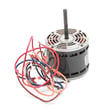
- Icp furnace inducer vent motor assembly 1172823 (creates draft for the pressure switch)
- Icp furnace electronic control board 1172550 (if diagnostics repeat immediately after a reset)
Why it matters
The pressure switch is a safety device; it confirms the inducer is moving combustion gases through the vent. If the furnace cannot prove draft, it will stop the ignition sequence to prevent unsafe operation.
Last updated: February 2026
What is the most common part to fail on a furnace?
On the Icp N9MPD100J14A2 90+ single-stage gas furnace, the most common “failure point” is usually not a single hard part; it is restricted airflow from a dirty air filter, which can overheat the furnace and trip a safety shutdown. After airflow issues, ignition-sensing components are frequent culprits.
What fails most often (in real-world troubleshooting)
We see these issues most often on high-efficiency gas furnaces like the N9MPD100J14A2:
- Dirty or clogged air filter causing overheating and limit trips
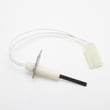
- Flame sensing problems (dirty sensor, weak flame signal) leading to short cycling or no heat
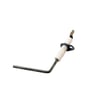
- Ignition problems (hot surface igniter wear or cracking)
- Draft/venting problems (inducer issues, pressure switch tubing issues, condensate drain restrictions)
- Safety switch trips (door switch, limit switch) from overheating or airflow restrictions
For the model-specific maintenance schedule and safety notes, follow the owner's manual.
Quick checks you can do first (before replacing parts)
Turn off electrical power to the furnace before removing panels.
- Replace or clean the air filter; inspect it at least monthly
- Look for supply registers blocked by rugs or furniture
- Inspect the burner area with a flashlight for loose soot or corrosion (do not run the furnace if you find soot)
- Check the condensate drain line and overflow line for blockage (common on 90+ condensing furnaces)
- Confirm the furnace door is fully seated so the door switch is engaged
Common “no heat” parts for this model (examples)
If airflow and basic checks look good, these are commonly replaced parts that match this model’s parts list:
| Symptom | Common suspect | Example part on this model |
|---|---|---|
| Burners light then shut off quickly | Flame sensing issue | Furnace burner flame sensor 1172827 |
| No ignition, no flame | Igniter failure | Furnace burner igniter 1172533 |
| Furnace shuts down on high temperature | Overheat/limit trip | Furnace temperature limit switch 1013102 |
| Draft/vent fault, pressure switch won’t close | Inducer problem | Icp furnace inducer vent motor assembly 1172823 |
| Intermittent operation, no response | Control issue | Icp furnace electronic control board 1172550 |
Why it matters
A dirty filter and restricted airflow can repeatedly overheat the furnace, triggering safety devices and making the system look like it has a “bad part.” Fixing airflow first prevents repeat shutdowns and protects expensive components like the blower motor and control board.
Last updated: February 2026
What is the most expensive part to fix on a furnace?
On an Icp N9MPD100J14A2 90+ single-stage gas furnace, the most expensive repair is typically a major assembly such as the heat exchanger or the blower motor. On this model’s parts list, the priciest common replaceable components are usually the blower motor and inducer assembly, with control boards also ranking high.
Most expensive repairs (what usually tops the list)
These are the repairs that most often drive the highest total cost because the parts are expensive and labor is more involved:
- Heat exchanger: typically the costliest component to replace
- Blower motor or blower assembly: high part cost and moderate-to-high labor
- Inducer vent motor assembly: common on 90+ furnaces; moderate-to-high labor
- Electronic control board: expensive part, plus diagnostic time
- Transition/collector components: can be costly if replacement is needed
What’s expensive on the N9MPD100J14A2 parts list
Below are examples of higher-cost parts we commonly see on this model page:
| Component type | Example part on this model | Why it can be expensive |
|---|---|---|
| Blower motor | Mtr blr 1013341 | High part cost; requires blower access and setup |
| Inducer assembly | Icp furnace inducer vent motor assembly 1172823 | Involves venting/pressure switch tubing checks |
| Control board | Icp furnace electronic control board 1172550 | “Brain” of the furnace; wiring must be exact |
How we recommend deciding: repair vs. replace the part
Use these checks to keep the decision practical and safe:
- Confirm the failure with the troubleshooting steps and wiring diagram in the owner's manual.
- Compare part cost to the furnace’s overall condition (rust, noise, repeated lockouts).
- If the furnace is short-cycling or overheating, check airflow issues first (filter, ducts, blower wheel).
- If ignition is the issue, lower-cost parts like a flame sensor or igniter can be the real fix.
- If a safety control is opening (limit switch, pressure switch), correct the root cause before replacing parts.
Why it matters
High-cost furnace repairs often involve combustion, venting, or safety controls. The installation instructions emphasize proper combustion air, approved gas type, and safe operation to prevent dangerous conditions; that is why accurate diagnosis matters before replacing expensive assemblies.
Last updated: February 2026
What are the most common furnace repairs?
For the Icp N9MPD100J14A2 90+ single-stage gas furnace, the most common repairs are airflow problems from a dirty filter, ignition or flame-sensing issues that cause short cycling, and venting or condensate-drain problems that trigger safety shutdowns. Our owner's manual outlines monthly inspections and seasonal maintenance that prevent many of these failures.
Most common repairs (and what you usually notice)
- Air filter service (clean or replace): weak airflow, longer run times, uneven heat.
- Flame-sensing/ignition service: burners light then shut off quickly, repeated clicking/tries.
- Inducer and venting checks: furnace starts then stops, pressure-switch related shutdown behavior.
- Condensate drain and trap clearing (90+ condensing): water around the furnace, intermittent heat.
- Blower motor or blower wheel issues: no air movement, loud humming, vibration, or squealing.
- Safety switch trips (limit or door switch): furnace stops mid-cycle or will not run with panels off.
Parts that commonly solve these problems on this model
If troubleshooting points to a failed component (not just cleaning or adjustment), these are common replacement parts for N9MPD100J14A2:
| Symptom | Common suspect | Example part on this model |
|---|---|---|
| Burners shut off after lighting | Dirty/weak flame signal | Furnace burner flame sensor 1172827 |
| No ignition or delayed ignition | Failed igniter | Furnace burner igniter 1172533 |
| Furnace overheats, shuts down | Limit switch opening | Furnace temperature limit switch 1013102 |
| No airflow or noisy blower | Blower motor or wheel problem | Mtr blr 1013341 |
| Draft/vent proving problems | Inducer assembly issue | Icp furnace inducer vent motor assembly 1172823 |
What we recommend checking first (safe, high-impact)
Follow the shutdown steps in the manual before any service.
- Turn off electrical power before removing panels or doors.
- Inspect the air filter monthly; dirty filters are the most common cause of poor heating performance.
- Do a quick monthly visual inspection: vent connector condition, corrosion/soot, and obvious deterioration.
- Inspect the condensate drain and overflow line monthly on condensing setups.
- Watch burner flame quality; abnormal flame or soot means stop and have the furnace serviced.
Why it matters
This furnace uses safety controls to shut down when it detects overheating, poor draft, or ignition problems. Keeping airflow, venting, and condensate drainage in good shape reduces nuisance lockouts and helps the furnace run efficiently.
Last updated: February 2026