Owner’s manual
 Error Codes


What is the warranty on LFX25973ST?
For the LG LFX25973ST refrigerator, the limited warranty (USA) covers parts and labor for 1 year from the original retail purchase date; the sealed system is covered for 7 years (parts only), and the linear compressor is covered for 10 years (parts only). See the LFX25973ST owner's manual for the full warranty terms.
Warranty coverage at a glance (USA)
Here is the warranty breakdown shown in the warranty section:
| Component group | Coverage length | What’s covered |
|---|---|---|
| Refrigerator (overall) | 1 year | Parts and labor |
| Sealed system (condenser, dryer, connecting tube, refrigerant, evaporator) | 7 years | Parts only |
| Linear compressor | 10 years | Parts only |
What you should do before requesting warranty service
These steps help you confirm eligibility and avoid delays:
- Locate your proof of original retail purchase (receipt or invoice).
- Write down the model and serial number from the refrigerator’s ID label.
- Confirm the purchase date and that the unit has been used under normal home conditions.
- Review exclusions and requirements in the LFX25973ST owner's manual (for example, what is considered normal operation).
- If you need help identifying a covered component, contact Sears PartsDirect support.
Why it matters
Warranty coverage changes by component. For example, a cooling failure tied to the sealed system or compressor can have different coverage (parts-only) than a general refrigerator issue (parts and labor for 1 year). Knowing which system is involved helps you plan the next step.
Last updated: February 2026
Why is my LG refrigerator leaking from the bottom?
A bottom leak on your LG LFX25973ST is usually caused by a clogged or frozen defrost drain that overflows into the base, or a water-supply issue to the ice maker or dispenser (leaking valve, tubing, or connection). Use the owner's manual to locate access points and follow safe service steps.
Most common causes (and what to check first)
- Defrost drain clogged: Water from normal defrosting cannot flow to the drain pan, so it spills into the cabinet and out the bottom.
- Drain tube issue: The external drain tube can be loose, restricted, or misrouted.
- Ice maker fill leak: A small crack or loose fitting can drip and run down to the bottom.
- Water inlet valve seep: The valve can weep slowly even when not dispensing.
- Door seal air leak: Warm air intrusion creates excess frost, which later melts and overwhelms the drain.
Quick diagnostic steps (10 to 20 minutes)
- Confirm the liquid: If it is clear and near the front, it is often defrost water; if it is near the back by the wall connection, it is often supply-line related.
- Inspect the freezer floor: A sheet of ice on the freezer bottom strongly points to a defrost drain problem.
- Check the drain pan area: Look for cracks, overflow, or a pan that is out of position.
- Inspect water connections: Look for wet fittings at the valve, tubing, and ice maker fill area.
- Check door closing and gasket contact: Look for gaps, tears, or areas that do not seal.
Parts that commonly fix bottom leaks on this model
| Symptom you see | Likely area | Part to consider |
|---|---|---|
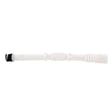
| Water pooling under crisper or freezer ice sheet | Defrost drain path | Refrigerator drain tube 5251JA3003D |
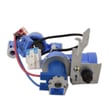
| Drips near back lower area, especially after ice maker runs | Water supply circuit | Refrigerator water inlet valve AJU73432801 |
| Slow seep, wet line routing, intermittent puddles | Internal water line | Refrigerator water tubing MJU62070602 |
| Condensation, recurring frost, leak returns after defrost | Door sealing | Refrigerator door gasket MDS64172919 |
Why it matters
A continuing leak can lead to ice buildup, poor cooling airflow, and water damage around the refrigerator. Fixing the root cause (drain restriction vs. water supply leak) prevents repeat puddles and helps the compressor and fans run normally.
Helpful DIY guidance
- Follow our step-by-step tips in how to get rid of refrigerator puddles to narrow down whether the leak is defrost-related or plumbing-related.
Last updated: February 2026
What is the most common problem with the LG refrigerator?
For LG bottom-mount refrigerators like model LFX25973ST, the most common issue we see is a cooling complaint (fridge or freezer not staying cold). Many “not cooling” calls trace back to airflow restrictions, fan operation, or temperature sensing; use the owner's manual to match symptoms and normal noise descriptions.
Common symptoms customers notice
- Fresh food section warm while freezer seems closer to normal
- Freezer warming up; ice production slows or stops
- Temperature swings (food freezing, then warming)
- Fan noise gets louder, or you do not hear the fan running
- Clicking, rattling, gurgling, or whooshing (some can be normal)
Quick checks before replacing parts
- Set controls correctly; allow 24 hours after changes for temperatures to stabilize.
- Keep interior vents clear; do not pack food tightly against air outlets.
- Confirm doors close fully and seals are clean and making full contact.
- Listen for airflow from the evaporator fan in the freezer area.
- Make sure the cabinet is level and not vibrating against a wall or cabinet.
Model-specific parts often involved in cooling diagnosis
| What you’re seeing | What to inspect | Example part for LFX25973ST |
|---|---|---|
| Warm temps, weak cooling | Compressor circuit | Refrigerator compressor TCA38091801 |
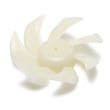
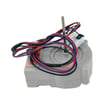
| Poor airflow, warm sections | Evaporator fan | Refrigerator evaporator fan motor 4681JB1027C |
| Temps seem inaccurate | Thermistor/sensor | Refrigerator temperature sensor 6500JB2001B |
Why it matters
Cooling problems can spoil food, reduce ice production, and increase run time. Fixing airflow or sensing issues early helps the refrigerator maintain stable temperatures and reduces strain on major components.
Last updated: February 2026