Error Codes




Does the GE UltraFresh vent system use a lot of electricity?
The UltraFresh vent system on your GE GFW550SSN5WW washer uses a small amount of electricity while it runs; it is a low-wattage fan and airflow routine designed to dry the drum and door area over several hours, not a high-heat dryer cycle.
What to expect for energy use
Because this is a fan-based venting and drying feature (not a heater-driven drying cycle), the power draw is typically closer to a small fan than a major appliance load.
- It can run for hours, so it may sound like it is “working hard” even though wattage is low.
- It is meant to reduce moisture that leads to odors and mildew in front load washers.
- It generally costs far less than running a clothes dryer.
- If you notice unusually loud operation, check for vibration or a door seal issue.
- If the washer will not start the vent routine because the door will not lock, the door lock system is a common place to check.
Quick comparison: vent system vs. dryer
| Feature | Typical purpose | Typical electrical demand |
|---|---|---|
| UltraFresh vent system | Dry the washer drum and gasket area | Low (fan-level) |
| Clothes dryer | Dry wet laundry with heat and airflow | High (heater-level) |
When higher-than-expected usage can happen
If the vent feature runs more often than you expect, the “extra” cost usually comes from runtime, not high wattage. These conditions commonly trigger longer moisture control routines:
- Frequent cold-water washing
- Leaving the door closed between loads
- Heavy soil cycles that leave more moisture behind
- High-humidity laundry rooms
- A door boot that stays wet or traps water
If the door seal area is staying wet, inspect the door boot and clamp seating; a damaged seal can hold water and defeat the drying routine. For parts related to sealing and door closure, see washer door boot WH05X29521 and GE washer door lock WH01X29528.
Why it matters
Front load washers are efficient, but they can trap moisture around the door boot and inner drum. A low-power venting routine helps keep the washer fresher between loads and can reduce the need for repeated cleaning cycles.
Last updated: February 2026
How to identify GE washer model?
To identify your GE washer model, we look for the model and serial tag on the washer cabinet. For the GE front-load washer model GFW550SSN5WW, the tag is typically on the door opening (door frame) or just inside the door area, and the model number is printed clearly on that label.
Where to look on a GE front-load washer
Check these common tag locations first:
- On the door frame around the opening (most common)
- Just inside the door opening near the hinge side
- Along the front cabinet edge behind the door
- On the back panel of the washer cabinet
- On a side panel near the rear
What the model number looks like (and what to write down)
Record the information exactly as shown on the label:
- Model number (example: GFW550SSN5WW)
- Serial number (used for date and production details)
- Any suffix letters or extra digits (they matter for parts matching)
Why the exact model number matters for parts
Many GE washers share similar styling, but parts can differ by revision. Using the exact model number helps us match the correct door, control, and drain components for your washer.
| If you’re shopping for parts | Use this from the tag | Example part on this model page |
|---|---|---|
| Door won’t lock or unlock | Model number + symptom | GE washer door lock WH01X29528 |
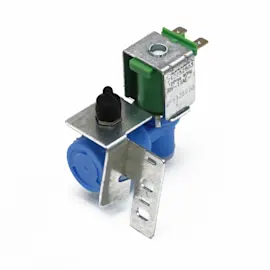
| Won’t fill with water | Model number + inlet issue | Water valve WH23X29538 |
| Won’t drain | Model number + drain symptom | GE washer drain pump assembly WH11X39237 |
Why it matters
A single character difference in a GE model number can change the correct part fit (especially for electronic controls, door lock assemblies, and hoses). Getting the model number right prevents wrong-part returns and repeat repairs.
Last updated: February 2026
Is the GE 4.8 front load washer any good?
Yes. The GE GFW550SSN5WW 4.8 cu. ft. front load washer is a strong choice for most homes because it combines large capacity with efficient cleaning and typically quiet operation; it is especially appealing if you want odor-control features and modern convenience.
What “good” looks like for this model
When we evaluate a front load washer like the GE GFW550SSN5WW, we focus on cleaning results, reliability basics, and day-to-day usability.
Common strengths
- Large 4.8 cu. ft. capacity for bulky loads (comforters, towels)
- Efficient water use typical of front load washers
- Generally strong stain removal when paired with the right cycle and detergent
- Faster wash options for lightly soiled loads
- Good fit for pedestal or stacking setups (space dependent)
Common tradeoffs
- Front load washers require routine door gasket and dispenser cleaning to prevent odors
- Over-sudsing from non-HE detergent can cause performance issues
- Out-of-balance loads can still happen with bulky items
Quick buyer-fit checklist
Use this to decide if it matches your household.
- You wash large loads often (family laundry, bedding)
- You want lower water use than a typical top load washer
- You are willing to wipe the door boot and leave the door ajar between loads
- You prefer a washer that can run quietly in a nearby living space
- You want a model with modern features (varies by configuration)
Reliability and repairability: what to know
Like most front load washers, long-term satisfaction depends on keeping water where it belongs (door seal, hoses, pump path) and ensuring the door locks correctly.
| Area | What you may notice | Common fix path |
|---|---|---|
| Door won’t lock/start | Clicking, won’t begin cycle | Check/replace GE washer door lock WH01X29528 |
| Won’t fill or fills slowly | Long fill time, low flow | Check screens/hoses, consider water valve WH23X29538 |
| Won’t drain | Standing water, drain errors | Check filter/hoses, consider GE washer drain pump assembly WH11X39237 |
Why it matters
A “good” washer is not only about cleaning performance; it is about consistent starts, proper draining, and odor control. With front load designs, simple habits (HE detergent, routine cleaning, airflow) make a big difference in how the washer performs over time.
Helpful DIY reference
If you ever see a code on the display, use GE gfw front load washer error codes to narrow down the cause before replacing parts.
Last updated: February 2026
What features does the GFW550SSN5WW have?
The GE GFW550SSN5WW is a 28-inch front-load washer built for high-capacity loads (commonly sold as 4.8 cu. ft.) with smart connectivity, multiple wash cycles, high-speed spin (commonly listed around 1300 RPM), and cleaning and odor-control options such as sanitize and self-clean features.
Key features you can expect
- Front-load design with large capacity for bulky items
- Smart-enabled controls (app features vary by setup)
- Multiple cycle selections (often listed as about 10 cycles)
- High-speed spin for better water extraction (often listed around 1300 RPM)
- Sanitize-style cycles and add-on options (such as sanitize with Oxi)
- Self-clean style cycle to help reduce residue and odors
Feature quick guide
| Feature area | What it does | Why you care |
|---|---|---|
| High-speed spin | Removes more water before drying | Shorter dryer time, less energy use |
| Sanitize options | Uses higher-temp or boosted cleaning steps | Helps with heavily soiled loads |
| Odor control / venting | Helps reduce moisture left in the tub | Less chance of musty smells |
| Smart features | Remote status, alerts, cycle tools | Convenience and better tracking |
Why it matters for everyday washing
Front-load washers like the GFW550SSN5WW clean efficiently by tumbling through a shallow water level; features like high spin speed and self-clean cycles help with drying performance and keeping the washer fresher between loads.
When a “feature” problem is really a repair issue
If a feature is not working (for example, the door will not lock so the cycle will not start), the issue is often a component rather than a setting. These parts are commonly involved:
- GE washer door lock WH01X29528 (cycle will not start, door lock errors)
- Door latch WH01X32580 (door not latching consistently)
- Water valve WH23X29538 (won’t fill, fills slowly, wrong temperature)
For display messages and cycle-stopping faults on this front-load platform, use our GE gfw front load washer error codes reference to match the code to the most likely cause.
Last updated: February 2026
What is the warranty on the GE washer GFW550SSN5WW?
Warranty coverage for the GE washer model GFW550SSN5WW depends on the specific warranty terms that came with your purchase (and the component involved). Use your proof of purchase and the washer’s model and serial information to match your issue to the correct coverage period.
What a long limited warranty typically covers
Most long limited warranties on front-load washers focus on specific major components rather than the entire appliance.
- Coverage is usually limited to certain parts (not every part on the washer)
- Labor may be limited or not included after the initial period
- Normal wear items and cosmetic issues are commonly excluded
- Installation issues, misuse, and improper maintenance can void coverage
- Proof of purchase date often determines the warranty start date
Quick warranty checklist before you schedule service
Use this list to avoid delays when you contact Sears PartsDirect support or a qualified technician.
- Confirm the exact model number: GFW550SSN5WW
- Record the serial number from the rating label
- Find your purchase receipt or delivery invoice
- Note the symptom and any error code shown on the display
- If the washer will not start, check the door is fully latched
Common parts related to “won’t start” or “door won’t lock” symptoms
Warranty questions often come up when the washer will not run. These parts are commonly involved in door-lock related failures.
| Symptom | Common related part | Example part for this model |
|---|---|---|
| Door will not lock, cycle will not start | Door lock | Washer door lock WH01X29528 |
| Door feels closed but won’t engage | Door latch | Door latch WH01X32580 |
| Door alignment issues | Door hinge | Door hinge WH13X29632 |
Why it matters
A long limited warranty can be valuable, but it is not the same as full coverage for the entire washer. Knowing whether your symptom points to a covered component helps you decide between warranty documentation steps and a standard repair.
Last updated: March 2026
Why is my GE front load washer leaking from the front?
Front leaks on the GE GFW550SSN5WW washer almost always come from the door area: the door boot not sealing, the door not latching tightly, or oversudsing that forces water past the seal. Start by cleaning and inspecting the door boot and confirming the door closes firmly.
Quick checks we recommend first
- Wipe the entire door boot (rubber gasket) and the glass; remove hair, coins, and detergent residue.
- Check the bottom of the boot for small drain holes; clear any debris so water can drain back into the tub.
- Run a rinse and spin with the washer empty to see if the leak happens without laundry.
- Reduce detergent to HE-only and the correct dose; too many suds can push water out the front.
- Verify the washer is level front-to-back and side-to-side; a tilt can send water toward the door.
Parts that commonly cause a front leak on this model
If cleaning and detergent changes do not stop the leak, these parts are the most common fixes:
| Symptom | Most likely area | Part to consider (if damaged) |
|---|---|---|
| Water drips from door opening during fill/tumble | Door boot not sealing or torn | Washer door boot WH05X29521 |
| Door feels loose, sagging, or misaligned | Hinge or door alignment | Door hinge WH13X29632 |
| Door closes but does not pull in tight | Latch/lock system not securing | Door latch WH01X32580 or GE washer door lock WH01X29528 |
Why it matters
A front leak can quickly lead to floor damage and can also cause the washer to stop mid-cycle if moisture reaches electrical components. Fixing the seal or latch issue early also helps prevent odor and mold around the door opening.
If the leak looks like it is coming from the dispenser area
Overflow from the detergent drawer can run down the front and look like a door leak. Pull the drawer, clean buildup, and check the fill path for clogs. If you suspect a cracked or loose feed line, inspect the dispenser fill hose WH01X29652.
Last updated: February 2026