Owner’s manual

What kind of gas goes in a Craftsman 3000 PSI pressure washer?
For the Craftsman gas pressure washer model 580752770, we use clean, fresh, unleaded gasoline with a minimum 87 octane (87 AKI, 91 RON) rating. Gasoline with up to 10% ethanol is acceptable; do not use E15 or E85.
Fuel type and what to avoid
Use these fuel guidelines to protect the engine and help it start and run smoothly:
- Use unleaded gasoline only
- Use 87 octane minimum (87 AKI, 91 RON)
- Use fuel that is fresh and clean (old fuel can cause hard starting)
- Gasohol with up to 10% ethanol is OK
- Do not use E15 or E85
- Do not mix oil into the gasoline
For the exact wording and any high-altitude notes for model 580752770, check the 580752770 owner's manual.
Safe fueling steps (quick checklist)
We follow these steps any time we add fuel to a gas pressure washer:
- Shut the engine OFF and let it cool at least 2 minutes
- Fuel outdoors only
- Loosen the fuel cap slowly to relieve tank pressure
- Fill without overfilling; leave room for fuel expansion
- If fuel spills, wait until it evaporates before starting
- Keep fuel away from sparks, pilot lights, and open flames
Quick reference table
| Item | What to use | What to avoid |
|---|---|---|
| Gasoline type | Unleaded | Leaded fuel, mixed fuels |
| Octane rating | 87 AKI minimum | Lower than 87 AKI |
| Ethanol content | Up to 10% | E15, E85 |
| Mix with oil | No | Yes |
Why it matters
Correct fuel helps prevent hard starting, surging, and carburetor issues, and it reduces the chance of engine damage. Using the wrong ethanol blend (like E15 or E85) is a common cause of poor performance in small engines.
Last updated: January 2026
What PSI should my pressure washer be?
For the Craftsman gas pressure washer model 580752770, the rated maximum pressure is 2700 PSI (at 1.8 GPM). For typical home cleaning, you usually use less than max PSI and choose the right spray nozzle and distance to match the surface. See the 580752770 operator’s manual for the exact performance ratings and safe-use guidance.
PSI guidance for common home tasks
Use the lowest effective pressure first, then increase only as needed.
- Cars, patio furniture, grills: ~1200 to 1900 PSI
- Decking and fences (wood): ~1500 to 2500 PSI (test first)
- Vinyl siding: ~1300 to 2500 PSI (avoid forcing water behind siding)
- Concrete driveways and sidewalks: ~2500 to 3000 PSI
- Paint prep: start low; too much PSI can gouge wood or etch concrete
What your model is designed to deliver
Your actual PSI at the spray tip changes with nozzle size, hose condition, and water supply.
| Spec (Craftsman 580752770) | Rating |
|---|---|
| Max pressure | 2700 PSI @ 1.8 GPM |
| Max flow | 2.1 GPM @ 2000 PSI |
| Required water supply (minimum) | 20 PSI at the washer; flow greater than 3.1 GPM |
| Water supply temperature | 41°F to 100°F |
Quick checks if PSI feels weak
Before assuming a pump problem, we check the basics that most often reduce pressure.
- Confirm the garden hose is fully on and not kinked; supply must meet the minimum flow/pressure.
- Purge air from the pump by squeezing the trigger with water on before starting.
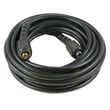
- Inspect the high-pressure hose for leaks; replace if damaged (example: pressure washer water hose 84006753).
- Clean the spray nozzle tip; debris can cause low pressure or a poor spray pattern.
- Verify tight connections at the pump and spray gun.
- Avoid letting the engine run 3 to 5 minutes without triggering the gun; the thermal relief can discharge hot water and performance can feel inconsistent.
Why it matters
Using the right PSI helps you clean faster while preventing surface damage, reducing kickback risk, and protecting the pump from overheating and premature wear.
Last updated: January 2026
How to tell if your pressure washer pump is bad?
On the Craftsman 580752770 gas pressure washer, a “bad pump” usually shows up as low or surging pressure even after you confirm proper water supply, purge air, and rule out nozzle or hose restrictions. Start by verifying water flow and connections, then test pressure behavior under a steady trigger pull.
Quick checks before blaming the pump
These steps catch the most common non-pump causes of low pressure.
- Confirm the water supply is ON and you are using cold water under 100°F.
- Make sure the supply can deliver more than 3.1 GPM and at least 20 PSI at the end of the garden hose.
- Inspect and clean the water inlet screen; replace it if torn.
- Purge air: press the red button on the gun and squeeze the trigger until flow is steady.
- Check for kinks, cuts, bulges, or leaks in the high-pressure hose.
For the model-specific setup and purge procedure, follow the steps in the 580752770 owner’s manual.
Signs the pump itself is failing
If the basics above are correct and pressure is still unstable, the pump is the likely cause.
| Symptom | What it usually points to | What to do next |
|---|---|---|
| Pressure spikes then drops while spraying | Internal valve or seal issue | Gauge test; inspect for leaks; consider pump service/replacement |
| Strong pressure only with a different tip/nozzle | Nozzle restriction, not pump | Clean/replace spray tip |
| Pulsing pressure with steady water supply | Air in system or sticking valves | Re-purge; check inlet screen; check hose connections |
| Warm water dumping on ground after idling | Thermal relief (normal protection) | Keep trigger engaged periodically; avoid long idle |
How to test pressure with a gauge
A pressure gauge test is the fastest way to separate “pump problem” from “accessory problem.”
- Install a pressure gauge at the pump outlet or between the pump and high-pressure hose.
- Start the engine and spray with a consistent tip and steady trigger pull.
- Watch for rapid spikes, heavy pulsing, or a quick drop to very low pressure.
Why it matters
Running with poor water supply or air in the pump can mimic pump failure and can also damage the pump. This model specifically warns not to run the pump without water connected and turned on, and it uses a thermal relief system to prevent overheating when the trigger is not pressed.
Last updated: January 2026