Owner’s manual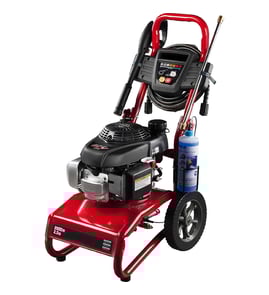




Can you put 87 gas in a pressure washer?
Yes. For the Craftsman 580752440 gas pressure washer, regular unleaded gasoline (87 octane) is the standard fuel choice for most small 4-cycle engines. Use fresh fuel and follow the fuel and storage guidance in the owner's manual to prevent hard starting and surging.
What fuel to use (and what to avoid)
- Use regular unleaded gasoline, 87 octane.
- Use fresh fuel (older fuel is a top cause of no-start and rough running).
- Avoid gasoline mixed with oil (that is for 2-cycle engines).
- Avoid stale fuel left in the tank or carburetor between seasons.
- If your area sells higher octane (89 to 93), it is fine, but it typically does not improve cleaning power.
Quick fuel checklist for reliable starting
| Item | Best practice | Why it matters |
|---|---|---|
| Octane | 87 (regular unleaded) | Matches typical small-engine requirements |
| Fuel freshness | Use within ~30 days | Reduces varnish and carburetor clogging |
| Storage | Drain or treat fuel before storage | Prevents hard starts after sitting |
| Oil | Use the correct 4-cycle engine oil | Protects the engine under load |
Why it matters
Pressure washers run at a steady, high load. Using fresh 87 octane fuel and the correct 4-cycle oil helps the engine maintain RPM, which helps the pump build consistent pressure at the spray nozzle.
Related maintenance parts we stock for this model
If you are doing seasonal maintenance, these commonly help performance:
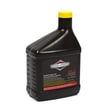
- Briggs & statton lawn & garden equipment 4-cycle engine oil, sae30, 18-oz 100005 (oil change)
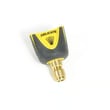
- Pressure washer spray nozzle 195846ZZGS (worn or clogged nozzle can reduce pressure)
- Pressure washer spray nozzle 195983RGS (alternate nozzle option)
Last updated: February 2026
Does Craftsman have a lifetime warranty on pressure washers?
Craftsman pressure washers, including model 580752440, are not sold with a single “lifetime warranty” that covers the entire machine. Warranty coverage is typically limited and can vary by component (for example, the frame, pump, and engine may have different terms), so the correct answer is the warranty statement for your exact unit in the owner's manual.
What to check for your specific warranty terms
Look for these items in the warranty section for your Craftsman pressure washer:
- Coverage length for the pressure washer frame
- Coverage length for the engine (often separate from the washer assembly)
- Coverage length for the pump and seals
- What is considered normal wear (O-rings, seals, nozzles, hoses)
- Proof-of-purchase requirements
- Exclusions (misuse, freezing damage, chemical damage, lack of maintenance)
Common warranty structure (what we see most often)
Even when a product line advertises strong coverage, pressure washers are usually covered by limited warranties that split coverage by major assemblies.
| Component | Typical coverage type | Notes |
|---|---|---|
| Frame | Limited term | Often longer than other parts |
| Engine | Separate limited term | Engine maker terms may differ |
| Pump | Limited term | Maintenance and freeze protection matter |
| Wear items | Often excluded | Nozzles, O-rings, seals, hoses |
Why it matters
Warranty terms affect whether you should repair or replace a failed component. For example, if you are troubleshooting low pressure or leaks, wear parts like seals and valves are common fixes and are usually treated as maintenance items, not lifetime-covered components.
Parts that are commonly replaced during normal maintenance
If your issue is performance-related (leaks, surging, low pressure), these are common service items for model 580752440:
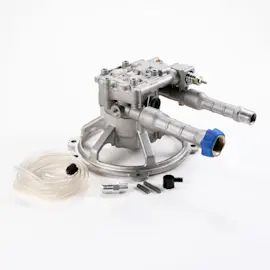
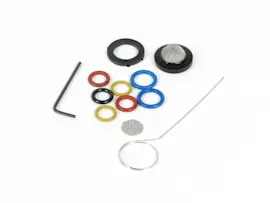
- Craftsman seal kit 706892 (pump sealing components)
- Pressure washer check valve kit 190657GS (helps maintain pressure and flow)
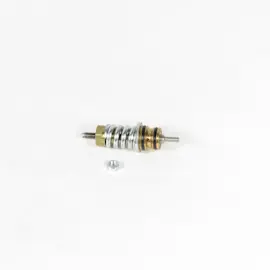
- Pressure washer unloader valve kit 193126GS (pressure regulation and bypass)
- Pressure washer spray nozzle 195846ZZGS (spray pattern and pressure at the tip)
Last updated: February 2026
Is it worth repairing a pressure washer?
Yes, it’s usually worth repairing a Craftsman pressure washer like model 580752440 when the problem is a wear item (nozzle, hose, seals, valves) and the fix restores normal pressure and flow for far less than replacing the whole unit. If the pump is badly worn or the engine has major damage, replacement often makes more sense.
Quick way to decide (repair vs. replace)
Use this simple checklist before you buy parts or schedule service:
- Repair when the issue is a clog, leak, or a single failed component (common and fixable).
- Repair when the machine starts and runs normally but has low pressure, pulsing, or leaks.
- Replace when repair cost is over about 50% of the cost of a comparable new washer.
- Replace when the pump housing is cracked, the engine has low compression, or it has repeated failures.
- Repair when parts are readily available and the frame, hose connections, and wand are in good shape.
Common repairs that are usually worth it
These are the most cost-effective fixes on gas pressure washers:
- Clogged or worn spray tip: replace the pressure washer spray nozzle 195846ZZGS
- Wand or accessory issues: replace the pressure washer extension wand 707471
- Pump leaks from seals or O-rings: consider a seal kit such as Craftsman seal kit 706890 or Craftsman seal kit 706892
- Pressure loss from pump valve wear: replace the pressure washer check valve kit 190657GS
- Pressure spikes or no bypass control: replace the pressure washer unloader valve kit 193126GS
Cost and downtime comparison
| Situation | Typical outcome | Usually worth repairing? |
|---|---|---|
| Low pressure caused by nozzle wear or clog | Fast fix, big improvement | Yes |
| Pump leaking at manifold/seals | Moderate repair, restores performance | Yes |
| Unloader or check valve failure | Moderate repair, stabilizes pressure | Yes |
| Major pump wear plus engine problems | High cost, uncertain reliability | No |
Why it matters
A pressure washer that runs but has low pressure often needs a targeted pump-side repair (nozzle, unloader valve, check valves, seals). Fixing the right part restores cleaning power and prevents running the pump under damaging conditions. For model-specific maintenance intervals and operating tips, use the owner's manual.
Last updated: February 2026
What is a good PSI for a gas pressure washer?
For most home cleaning jobs, a good gas pressure washer PSI is typically 1,300 to 2,800 PSI. For your Craftsman 580752440 pressure washer, the best PSI target depends on what you’re cleaning and how delicate the surface is; confirm your unit’s rated PSI and nozzle guidance in the owner's manual.
Quick PSI guide by job
- 1,300 to 2,000 PSI: cars, patio furniture, grills, painted surfaces
- 2,000 to 2,800 PSI: decks, fences, siding (use the right spray angle)
- 2,800 to 3,500 PSI: driveways, brick, heavy mildew (more risk of damage)
- 3,500+ PSI: typically pro-grade work; easy to etch concrete or strip finishes
PSI vs GPM: what matters most
PSI is “how hard” the spray hits; GPM (gallons per minute) is “how fast” it rinses. For many homeowners, a balanced PSI with decent flow cleans faster than chasing the highest PSI.
| Spec | What it affects | What to prioritize |
|---|---|---|
| PSI | Scrubbing power | Stuck-on grime, concrete, heavy mildew |
| GPM | Rinsing speed | Large areas, faster cleanup |
| Nozzle angle | Surface safety | Preventing gouging and paint stripping |
How to choose the right pressure safely
- Start with a wider fan nozzle and step up only if needed
- Keep the tip moving; don’t “park” the spray in one spot
- Increase distance first (often 12 to 24 inches is safer on wood and paint)
- Use detergent/chemical injector for mildew and grease, then rinse
- Test a small hidden area before doing the whole surface
Why it matters
Using too much PSI can etch concrete, shred wood fibers, and force water behind siding, while too little PSI wastes time. Matching PSI and nozzle choice to the job gives faster cleaning with fewer repairs.
Last updated: February 2026