Owner’s manual
 Error Codes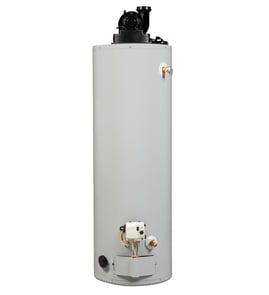




How to check a water heater model?
To check the model on your Kenmore gas water heater model 153332160, look for the model rating plate located near the gas control valve. That plate lists the model number and key specs (including the gas type), which you will need for parts and service. See the 153332160 owner's manual.
Where to find the model number on this Kenmore water heater
On model 153332160, the manual identifies the model rating plate near the gas control valve as the place to find the model number.
- Look on the outside of the tank jacket near the gas control valve area
- Check for a label or metal plate that includes model and serial information
- Use a flashlight and wipe dust off the plate so the numbers are readable
- Write down the model number exactly as shown (including all digits)
What to record from the rating plate (and why)
When ordering parts or scheduling service, we recommend recording these items from the rating plate:
| Item to record | Why it matters |
|---|---|
| Model number | Ensures diagrams and parts match your exact water heater |
| Serial number / manufacture date | Helps identify production version and age |
| Gas type (natural gas or LP) | Confirms correct fuel; using the wrong gas is unsafe |
| Input rating (BTU) | Helps match components like the temperature and pressure relief valve capacity |
Why it matters
The rating plate is more than an ID tag; it also confirms the approved gas type for the heater. Matching parts to the correct model and fuel type helps prevent ignition problems, nuisance shutdowns, and unsafe operation.
Last updated: January 2026
How to clean a thermocouple on a gas water heater?
On the Kenmore 153332160 gas water heater, we clean the thermocouple by shutting the gas control to OFF, letting everything cool, then gently removing soot and oxidation from the thermocouple tip near the pilot flame so it can generate a strong signal to keep the pilot lit. See the 153332160 owner's manual for access and lighting steps.
Safety first (gas and hot surfaces)
- Turn the gas control knob to OFF; do not force the knob.
- Let the burner compartment cool completely.
- Shut off the manual gas shutoff valve if you will disconnect any gas tubing.
- Keep the area clear of flammables.
- If you see heavy soot or a deteriorated vent, turn gas OFF and have the venting and burner system corrected before operating.
Step-by-step: cleaning the thermocouple
- Remove the outer access door and the inner door (if equipped) to reach the pilot assembly.
- Locate the thermocouple tip positioned in the pilot flame.
- Gently clean the thermocouple tip using one of these methods:
- Soft nylon brush
- Fine steel wool or an abrasive pad (light pressure only)
- Compressed air to blow off loose dust
- Vacuum loose deposits from the burner area through the access opening (a hose attachment works well).
- Reassemble doors and relight the pilot following the lighting instructions in the manual.
When cleaning is not enough
If the pilot still will not stay lit after cleaning, the thermocouple may be weak or the pilot flame may be unstable.
Common next checks:
- Pilot flame should be steady and engulf the thermocouple tip.
- Pilot orifice and pilot tube can be restricted.
- Burner area may have soot buildup that indicates a combustion or venting problem.
Quick symptom guide
| Symptom | Most likely cause | Typical fix |
|---|---|---|
| Pilot lights but goes out when you release the knob | Weak thermocouple signal | Clean or replace thermocouple |
| Pilot flame is small/yellow | Dirty pilot or restricted tube | Clean pilot, inspect pilot tube |
| Soot around burner/pilot | Venting or combustion issue | Correct venting, clean burner system |
Parts that are commonly involved
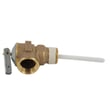
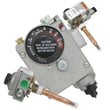
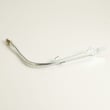
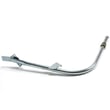
If you need to replace parts for this model, these are commonly related to pilot and thermocouple issues:
Why it matters
A clean thermocouple helps the gas control “prove” the pilot flame. When it is dirty or oxidized, the pilot safety circuit can shut off gas, leading to nuisance shutdowns and no hot water.
Last updated: January 2026
What is the average lifespan of a gas water heater?
A gas water heater typically lasts 8 to 12 years. For the Kenmore 153332160 (Economizer 6 gas water heater), consistent maintenance and safe installation practices from the 153332160 owner's manual help you reach the normal service life and reduce premature failures.
Typical lifespan and what changes it
Most gas water heaters fall into a predictable range, mainly based on water quality and maintenance.
- 8 to 12 years is the typical lifespan for a residential gas water heater
- Hard water and heavy hot-water use shorten life by accelerating scale buildup
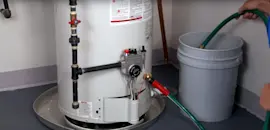
- Infrequent tank flushing increases sediment, noise, and burner inefficiency
- Poor combustion air or venting can cause sooting and unsafe operation
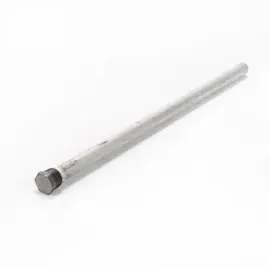
- Corrosion protection depends heavily on the anode rod condition
Maintenance that helps you get the full lifespan
These are the most effective, practical steps for extending service life.
- Flush sediment from the tank on a regular schedule
- Inspect for water leaks at fittings and the drain valve area
- Keep the burner area clean and make sure combustion air is not restricted
- Test the temperature and pressure relief valve discharge path for safe drainage
- Check and replace the anode rod when it is significantly depleted (common cause of early tank corrosion)
| Item | What it affects | Typical interval |
|---|---|---|
| Tank flushing | Sediment, noise, efficiency | 6 to 12 months |
| Anode rod inspection | Tank corrosion protection | 2 to 3 years |
| Burner and pilot inspection | Reliable heating, clean combustion | Yearly |
Why it matters
Once a gas water heater passes about 10 years, the risk of tank corrosion and performance decline rises quickly. Staying ahead of sediment and corrosion helps maintain hot water output and reduces the chance of sudden leaks.
Last updated: January 2026