 Owner’s manual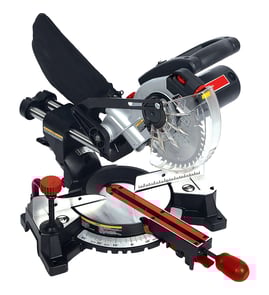

Will any miter saw stand work with any miter saw?
No. A miter saw stand is not guaranteed to fit every saw; even “universal” stands can require bracket adjustments or an adapter plate to match the mounting-hole pattern and base size of your Craftsman miter saw model 137212372. Use the 137212372 owner's manual to confirm safe mounting points and hardware guidance before you bolt anything down.
What determines whether a stand will fit
Most compatibility issues come down to how the saw attaches to the stand and how stable the setup is under load.
- Mounting-hole spacing on the saw base (front-to-back and side-to-side)
- Stand bracket range (how far the universal rails/brackets can slide)
- Base footprint (whether the saw base sits flat without rocking)
- Bolt size and length (enough thread engagement without bottoming out)
- Stand capacity and stability (weight rating plus how wide the legs sit)
Quick compatibility checklist (measure first)
Use a tape measure and check these items before buying or installing a stand.
| What to check | What “works” looks like | What to avoid |
|---|---|---|
| Hole pattern | Stand brackets line up with base holes | Drilling the saw base or forcing bolts at an angle |
| Base support | Base sits flat on rails or a plate | Saw teetering on ribs or casting bumps |
| Clamp clearance | Clamps and knobs clear the bevel/miter controls | Knobs hitting the fence, guard, or bevel lock |
| Extension supports | Work supports reach your stock length | Long boards sagging and twisting the cut |
If the stand is close but not perfect
A universal stand often works with a simple, safe mounting approach.
- Use the stand’s universal mounting brackets if they fully capture the saw base holes.
- If holes do not align, mount the saw to a flat adapter plate (commonly plywood) and then bolt the plate to the stand brackets.
- Use locking nuts or thread-locking hardware so vibration does not loosen fasteners.
- Re-check square and fence alignment after mounting; moving the saw can shift your setup.
Why it matters
A poor fit is not just inconvenient; it causes vibration, inaccurate miter cuts, and tip-over risk when supporting long stock. A properly mounted stand keeps the saw stable so the blade tracks consistently through the cut.
Ordering and model matching
When you are shopping for mounting hardware or replacement items for Craftsman model 137212372, start with the parts list for this model; you can also search by model number on Sears PartsDirect to find compatible options.
Last updated: February 2026
What should you never cut with a miter saw?
You should never use a Craftsman miter saw like model 137212372 to cut materials or setups that can bind, shatter, or grab the blade. Avoid rip cuts, freehand cuts, ferrous metals, masonry, and any workpiece that is too small or unstable to clamp securely; these situations commonly cause kickback and loss of control.
Materials and cuts to avoid
- Rip cuts (with the grain): a miter saw is for crosscuts and miters, not ripping boards.
- Ferrous metals (steel, iron): these require the correct metal-cutting saw and blade.
- Masonry (brick, concrete, tile): abrasive dust and improper cutting action make this unsafe.
- Loose knots, badly split, or severely warped lumber: the blade can pinch and throw the workpiece.
- Anything thicker or wider than the saw’s rated capacity: overloading increases binding and motor strain.
Setups you should never do
- Freehand cutting (no fence support, no stable base).
- Cutting tiny pieces close to the blade: if you cannot keep your hands well away, do not make the cut.
- Holding the workpiece by hand when it should be clamped: use a clamp or auxiliary stop.
- Cutting round stock without a V-block or jig: round material can roll into the blade.
Safer alternatives (quick guide)
| If you need to do this | Use this instead | Why it’s safer |
|---|---|---|
| Rip a board | Table saw with rip fence | Controlled feed and proper guarding |
| Cut steel/iron | Metal chop saw with correct blade | Correct RPM and blade design |
| Cut brick/tile | Masonry saw or angle grinder with masonry wheel | Designed for abrasive cutting and dust control |
| Cut very small parts | Jig, stop block, or different tool | Keeps hands away and prevents shifting |
Why it matters
Most miter saw injuries happen when the blade binds or the workpiece moves unexpectedly. Keeping the material flat to the table, tight to the fence, and properly clamped reduces kickback and helps you maintain control.
Where to confirm limits for your saw
For the exact cutting capacity, recommended blade type, and clamping guidance for model 137212372, follow the safety and setup sections in the 137212372 owner’s manual. For replacement parts and diagrams, start with the model parts list, or search by model number on Sears PartsDirect.
Last updated: February 2026
Which mitre saw is the most accurate?
The most accurate miter saw is the one that’s rigid, well-aligned, and stays calibrated; premium sliding saws often hold settings best, but a properly tuned Craftsman 137212372 can still cut very accurately for trim and framing. Use the alignment and adjustment procedures in the 137212372 owner's manual to dial in repeatable cuts.
What “most accurate” really means
Accuracy is a mix of factory build quality and how well the saw is set up. For any miter saw, including the Craftsman 137212372, these are the accuracy benchmarks that matter most:
- Miter scale reads true at 0°, 45°, and common angles
- Bevel stops hit true 0° and 45° (or your saw’s stop points)
- Fence is straight and square to the blade
- Blade runs true (minimal wobble) and is sharp
- Workpiece is supported and clamped consistently
How to get maximum accuracy from a miter saw
Most “inaccurate saw” complaints come from setup, blade choice, or technique. We use this checklist to tighten results fast:
- Install a high-quality, sharp crosscut blade (more teeth, cleaner cut)
- Clean pitch off the blade and keep the table/fence free of debris
- Square the fence to the blade, then verify with test cuts (not just a square)
- Set miter and bevel stops using a reliable square or digital angle gauge
- Support long stock with stands; don’t let it droop or twist
- Clamp the workpiece; don’t hand-hold small trim
Quick comparison: what typically separates “most accurate” saws
| Feature | Why it improves accuracy | What you’ll notice |
|---|---|---|
| Rigid arm and tight pivots | Less deflection during the cut | More repeatable miters |
| Stable fence and table | Keeps stock square to the blade | Fewer gaps in joints |
| Positive detents and adjustable stops | Easier to return to exact angles | Faster, consistent setups |
| Quality blade and arbor | Less runout and tearout | Cleaner cut line |
Why it matters
Even a small angle error compounds across a frame, casing, or crown run. Getting the fence square, stops set, and stock supported usually improves real-world accuracy more than upgrading brands.
Parts and diagrams for your saw
When you’re ready to replace wear items (like a fence, table insert, switch, or guards), start with the model-specific diagrams for Craftsman 137212372, then search by model on Sears PartsDirect if you’re comparing options.
Last updated: February 2026
Can you cut a 4x4 with a 12 inch miter saw?
Yes. A 12-inch miter saw typically has enough vertical cut capacity to crosscut a nominal 4x4 (actual about 3-1/2 in. x 3-1/2 in.) at 90 degrees in one pass; if your Craftsman model 137212372 comes up short, a flip-cut finishes it cleanly. For the exact cut capacity and safe setup, use the 137212372 owner's manual.
What determines if it cuts in one pass
Even with a 12-inch blade, the saw’s design sets the real cutting height.
- Fence and blade guard shape can limit tall stock
- Miter or bevel angles reduce capacity compared to 90 degrees
- Board twist or crown can prevent full-depth contact
- Dull blade increases burning and binding risk
- Sliding vs. non-sliding mainly affects crosscut width, not 4x4 height
Safe, accurate setup we use for 4x4 cuts
- Set the 4x4 flat on the table and tight to the fence
- Support long stock with stands so it stays level
- Clamp the workpiece when possible; keep hands clear of the cut path
- Let the blade reach full speed before entering the wood
- Wait for the blade to stop before lifting the saw head
If it won’t cut through: flip-cut method
- Make the deepest cut the saw allows.
- Power off and wait for the blade to stop.
- Rotate the 4x4 180 degrees (keep the same face against the fence).
- Align to the kerf and complete the cut.
| Cut | Typical outcome on a 4x4 |
|---|---|
| 90-degree crosscut | One pass on most 12-inch saws |
| 45-degree miter or bevel | Often needs flip-cut |
Why it matters
A complete cut reduces binding and kickback risk and keeps posts and blocking square for framing and deck work.
For parts diagrams and model-based lookup, search by model on Sears PartsDirect.
Last updated: February 2026
Why is 31.6 on a miter saw?
On the Craftsman 137212372 miter saw, 31.6° is a crown molding preset used for compound cuts. It is designed to be used with the matching 33.9° bevel preset so you can quickly make accurate inside and outside corner joints without doing angle math.
What the 31.6° preset is for
This marking exists to speed up a common trim task: cutting crown molding for a 90° room corner using compound miter and bevel settings.
- Used for crown molding compound cuts (miter plus bevel)
- Intended to pair with the saw’s 33.9° bevel preset
- Helps produce a 45° corner joint when crown is installed at common spring angles
- Reduces setup time and repeat cuts when you have multiple corners
- Works best when the molding is held consistently against the fence and table
For the exact crown molding procedure, detent locations, and safety steps for this model, follow the 137212372 owner's manual.
Quick reference: common angle pairs
Use these as a starting point, then confirm fit with scrap from the same molding.
| Cut type | Miter setting | Bevel setting | When you use it |
|---|---|---|---|
| Crown molding (compound method) | 31.6° | 33.9° | Fast preset method for typical crown corners |
| Flat stock corner (no bevel) | 45° | 0° | Baseboard, casing, and other flat trim |
Tips to get tight crown joints
Even with presets, small setup issues create visible gaps.
- Lock the miter detent firmly at 31.6° and verify there is no play
- Set the bevel to 33.9° using the bevel stop, then tighten the bevel lock
- Keep the molding orientation consistent (same edge against the fence each time)
- Clamp the workpiece so it cannot creep during the cut
- Make a test cut on scrap and fine-tune your technique before cutting finish pieces
Why it matters
Crown molding corners combine two angles; a small error in miter, bevel, or workholding shows up as an open joint. The 31.6° and 33.9° presets are there to make those compound cuts faster and more repeatable.
If you are shopping for replacement parts by model number, you can also search on Sears PartsDirect.
Last updated: February 2026