Owner’s manual
 Error Codes



Are all fridges 36 inches wide?
No. Refrigerators are not all 36 inches wide; widths vary by style and capacity. For Whirlpool model WRF767SDHZ02 specifically, the exact cabinet width is not identified in the model-specific information we have here, so we recommend measuring your opening and the refrigerator before planning an install (see the WRF767SDHZ02 use & care manual).
Common refrigerator widths (what you’ll see most often)
Refrigerator widths vary widely, but these are typical ranges you’ll run into when shopping or replacing a unit:
- 24 inches: apartment or compact full-height models
- 28 to 33 inches: many top-freezer and smaller bottom-mount models
- 33 to 36 inches: common for larger French door and side-by-side refrigerators
- 36+ inches: premium, built-in, or extra-capacity designs
How we recommend measuring (so you buy the right size)
Measure in three places because walls and cabinets are not always perfectly square:
- Width: left-to-right opening at front, middle, and back
- Height: floor to cabinet top (include any trim)
- Depth: from back wall to front edge of counters (and allow for door swing)
- Clearance: leave space for airflow and water line routing if you have an ice maker
For WRF767SDHZ02, our best practice is to measure the refrigerator itself and compare it to your opening, then confirm clearance guidance in the manual.
Quick comparison: what “36-inch fridge” usually means
| What you’re checking | What it refers to | Why it matters |
|---|---|---|
| Advertised width | Rounded category size (often “36-inch class”) | Helps narrow choices, but not exact |
| Actual cabinet width | True outside width of the refrigerator box | Determines if it physically fits |
| Door swing clearance | Space needed for doors to open fully | Affects drawer access and shelf removal |
Why it matters
A refrigerator that is even 1/4 inch too wide (or too deep once doors and handles are considered) can prevent proper installation, restrict door opening, and reduce ventilation, which can impact cooling performance.
Last updated: January 2026
How do I remove the base grille on my Whirlpool refrigerator?
On Whirlpool model WRF767SDHZ02, we remove the base grille by grasping it firmly and pulling it toward us. This model’s use and care instructions do not require unplugging just to remove the grille; power disconnection is typically for servicing or certain cleaning tasks.
Steps to remove the base grille (WRF767SDHZ02)
- Stand in front of the refrigerator and locate the base grille below the freezer drawer.
- Grasp the grille firmly with both hands.
- Pull the grille straight toward you to release it.
- Open the freezer drawer to access the brake feet and front rollers behind the grille.
- Set the grille aside where it will not get stepped on or bent.
Reinstalling the grille
To reinstall on WRF767SDHZ02, align the ends of the grille with the leveling assemblies on each side, then snap the grille into place.
| Situation | Likely cause | Fix |
|---|---|---|
| Grille will not snap in | Ends not aligned with leveling assemblies | Reposition the grille ends, then press until it seats |
| Grille feels loose | Tabs not fully engaged | Press along both ends to fully snap in |
| Rattling after install | One side not seated | Remove and reinstall, confirming both sides lock |
Why it matters
The base grille covers the brake feet and roller assemblies. Removing it gives access for leveling and helps you keep the front airflow area cleaner, which supports steady cooling performance.
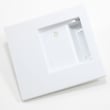
For the model-specific procedure, see the WRF767SDHZ02 use & care guide. If the grille is cracked or will not stay attached, the compatible replacement is the refrigerator grille W10871842.
Last updated: January 2026
What is the most common problem with Whirlpool refrigerators?
Many Whirlpool refrigerators, including model WRF767SDHZ02, are most often serviced for temperature-related complaints: the refrigerator section is too warm, the freezer is too warm, or ice production drops because airflow and cooling are not staying consistent. Start with the model’s built-in checks in the WRF767SDHZ02 use & care manual.
What to check first on WRF767SDHZ02
These steps come straight from common troubleshooting for this model’s controls, doors, and airflow:
- Verify the recommended set points: 37°F for the refrigerator and 0°F for the freezer.
- Wait 24 hours after any temperature change before judging results.
- Make sure air vents inside the fresh-food section are not blocked by packages.
- Confirm doors close fully and nothing is holding them open.
- If the unit is in a hot room, expect longer run times; high-efficiency compressors often run longer at varying speeds.
When a part is more likely involved
If the basics check out and symptoms continue, these model-compatible parts are commonly tied to the same complaints.
| Symptom | What it often points to | Model-compatible example |
|---|---|---|
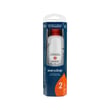
| Water tastes off or flow is weak | Filter overdue, not seated, or needs flushing | Refrigerator cartridge wrap assembly EDR2RXD1 |
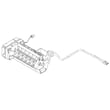
| Ice maker slow or not making ice | Ice maker system issue after water and temp checks | Assembly, icemaker W11658802 |
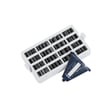
| Food odors linger in fresh-food section | Air filter needs replacement (if equipped) | Refrigerator air filter W10311524 |
Why it matters
Temperature and airflow problems can cause food to spoil, increase frost or moisture issues, and reduce ice output. Doing the quick checks first helps us avoid unnecessary part replacement and narrows the problem to the right system.
Last updated: January 2026