 Owner’s manual
 Error Codes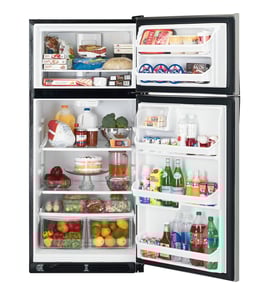



How to find the correct water filter for LG refrigerator?
For your LG LTNC11131V top-mount refrigerator, the correct water filter is identified by matching your exact model number to the filter type listed in the LTNC11131V owner’s manual or an LG filter finder. Using the model number prevents fit issues and protects water flow and taste.
- Confirm the model number is LTNC11131V (use the rating label inside the fresh food section).
- Check the water filter section in the LTNC11131V owner’s manual for the filter type and replacement interval.
- If your refrigerator uses a cartridge-style filter, match the printed filter model on the old filter (if installed).
- If you have low flow or odd taste after a change, flush several gallons of water to clear air and carbon fines.
- Replace the filter on schedule (most refrigerator water filters are changed about every 6 months, sooner with heavy use).
| What you check | Where to look | What it tells you |
|---|---|---|
| Model number | Inside refrigerator compartment | Ensures the filter is correct for LTNC11131V |
| Existing filter label | On the old filter body | Confirms the exact filter model |
| Water flow symptoms | Dispenser (if equipped) | Slow flow can indicate a clogged filter |
Some installations use an inline filter in the water line behind the refrigerator instead of, or in addition to, an internal cartridge.
- Look for a small cylinder filter on the supply line
- Match fittings (typically 1/4-inch tubing)
- Shut off the water supply before servicing
A mismatched refrigerator water filter can leak, restrict water flow, or leave you with poor-tasting water. Matching by model number (LTNC11131V) is the most reliable way to get the right fit and performance.
For additional guidance on LG filter styles and replacement basics, use how to replace the water filter in an LG refrigerator.
Last updated: February 2026
Are LG water filters worth it?
Yes, LG water filters are worth it for most households because they help protect taste and odor, reduce common water contaminants, and support reliable water flow in your LG refrigerator. For your LG LTNC11131V, using an LG-authorized filter also helps avoid leak and fit issues caused by off-brand filters.
- Better fit and sealing compared with many universal filters
- More consistent water flow and fewer nuisance drips after installation
- Predictable replacement intervals (most households replace about every 6 months)
- Higher upfront cost than many generic options
- Less risk of damage from non-authorized accessories (LG notes that non-authorized accessories such as water filters are not covered under the limited warranty)
Use this quick checklist:
- Your water has chlorine taste or odor
- You use the dispenser or ice regularly
- You have had past issues with leaks at the filter head
- You want the simplest “install and go” option
- You prefer staying with manufacturer-authorized consumables
| Option | Typical cost | Typical tradeoff | Best for |
|---|---|---|---|
| LG OEM filter | Higher | Fewer fit and leak complaints | Most owners who want reliability |
| Generic/universal | Lower | More variability in fit, flow, and sealing | Budget-focused owners willing to monitor closely |
| No filter (if bypass allowed) | Lowest | No filtration benefits | Homes with already-filtered water |
- Install exactly as shown in the LTNC11131V owner’s manual.
- Flush several gallons of water after installing a new filter to clear carbon fines.
- Check the filter housing for cracks and confirm the filter is fully seated.
- If you notice dripping, remove and reinstall the filter; a slightly misaligned O-ring seal is common.
For step-by-step filter selection and replacement tips, use how to replace the water filter in an LG refrigerator.
A properly fitting filter helps protect water quality and can prevent small leaks that lead to puddles, cabinet damage, or ice maker performance issues.
Last updated: February 2026
What is the most common problem with LG refrigerators?
The most common LG refrigerator problems we see are cooling-related issues: the fridge or freezer runs but temperatures rise, often tied to airflow (frost buildup, fan problems), dirty condenser areas, or a door that is not sealing tightly. For model LTNC11131V, start with the basic checks in the LTNC11131V owner's manual.
- Fridge warm, freezer OK: restricted airflow between compartments, blocked vents, or evaporator fan issues
- Freezer warm, fridge warm: condenser coils dirty, condenser fan not moving air, or sealed-system/compressor concerns
- Frost on back wall or heavy ice: defrost system problem or door left ajar
- Water puddles inside or under unit: defrost drain restriction or door seal gaps causing excess moisture
- Noisy operation: fan blade hitting ice, worn fan motor, or vibration from mounting hardware
- Confirm controls are set correctly and vents are not blocked by food packages.
- Check door closing and sealing; look for gaps, wrinkles, or debris on the gasket.
- Clean dust from the condenser area (unplug first).
- Listen for the evaporator fan (freezer) and condenser fan (near compressor) running.
- If you recently unplugged it, wait at least 5 minutes before plugging back in (per the manual).
| What you notice | Most likely cause | Typical fix |
|---|---|---|
| Warm temps, long run times | Dirty condenser, poor airflow | Clean condenser area; improve clearance |
| Frost buildup, weak airflow | Defrost issue or door leak | Defrost, then check door seal and vents |
| Door not sealing | Worn or deformed gasket | Replace the refrigerator door gasket ADX73750406 |
| Clicking or vibration near compressor | Loose mount/retainer | Inspect mounts; replace clip if needed |
Cooling and airflow problems can lead to food spoilage, excess frost, and higher energy use. Catching a door-seal or airflow issue early often prevents bigger repairs later.
If your LG refrigerator supports Smart Diagnosis, the manual outlines how it transmits data to LG support for faster troubleshooting. Follow the steps in the LTNC11131V owner's manual and only run it when instructed.
Last updated: February 2026
Why is my LG refrigerator icemaker not making ice?
If your LG LTNC11131V isn’t making ice, the most common causes are a shutoff water supply, a frozen fill tube, or the freezer not staying cold enough. We recommend confirming freezer temperature first, then checking water flow to the ice maker using the steps in the LTNC11131V owner’s manual.
- Make sure the ice maker is turned ON (arm/switch in the ice-making position).
- Confirm the freezer is cold enough; ice production drops sharply if temps rise above about 10°F.
- Verify the household shutoff valve is fully open and the supply line is not kinked.
- Look for a frozen fill tube behind/above the ice maker; thaw with the door open (no heat tools).
- Dump old cubes and re-seat the bin; clumped ice can block harvesting.
- After any power interruption, wait a full cycle; temperature can fluctuate after defrost.
- Check freezer temperature: Set the freezer colder and allow 24 hours to stabilize.
- Check water supply: Disconnect power, then inspect the water line for kinks and confirm strong water flow at the supply (use a towel and container).
- Inspect for ice blockage: If the fill tube is frozen, thaw naturally; then watch for refreezing.
- Listen and observe: If you never hear a fill or harvest cycle, the ice maker may not be getting power or the control may not be calling for ice.
If temperature and water supply are good, these parts are frequent culprits:
| Symptom | Most likely area | What to check next |
|---|---|---|
| No water entering ice maker | Water supply path | Frozen tube, inlet valve, line restriction |
| Ice maker cycles but no cubes | Water fill issue | Low pressure, frozen tube |
| Warm freezer, weak ice production | Cooling system | Evaporator fan airflow, frost buildup |
| Intermittent operation | Controls/sensors | Wiring connections, control board output |
For control-related issues on this model, the LG refrigerator electronic control board EBR83664871 is one of the key components that can affect ice maker operation.
An ice maker needs two things consistently: freezing temperatures and steady water flow. If either is marginal, you’ll see slow production, hollow cubes, or no ice at all.
- Use our how to prevent water dispenser and ice maker problems steps to reduce frozen lines, low flow, and mineral buildup.
Last updated: February 2026





