Installation guide
 Owner’s manual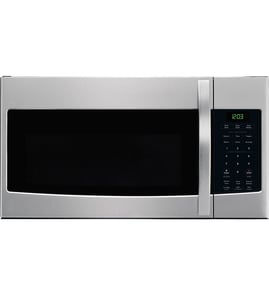




What is the disadvantage of a low profile microwave?
A low-profile over-the-range microwave like KitchenAid KMHS120ESS3 saves space, but the tradeoffs are usually less interior capacity, less clearance for tall cookware, and more installation constraints than a standard over-the-range unit. For exact fit and venting requirements, use the KMHS120ESS3 installation guide.
Common disadvantages (what customers notice most)
- Smaller cooking cavity: Large casserole dishes and tall containers may not fit as easily.
- Reduced vertical clearance: Less room between the cooktop and microwave can make stirring and lifting lids harder.
- More specific installation requirements: Cabinet cutout, mounting height, and vent routing can be less forgiving.
- Vent performance can feel limited: Compared with a dedicated range hood, capture area and airflow may be less effective for heavy frying.
- Access can be awkward: Shorter users may find it harder to reach hot items safely.
Quick comparison: low-profile vs standard over-the-range
| Feature | Low-profile microwave | Standard over-the-range microwave |
|---|---|---|
| Interior capacity | Smaller | Larger |
| Cooktop clearance | Often tighter | Often more forgiving |
| Installation flexibility | More constrained | Typically easier |
| Venting effectiveness | Good for light to moderate cooking | Often stronger options available |
What to check before you buy or replace one
Use these checkpoints to avoid fit and performance surprises:
- Cabinet opening and mounting points (match the template in the install instructions)
- Venting type (recirculating vs exterior vent) and duct path
- Clearance above the cooktop for your tallest pots
- Door swing and reach height for the primary user
- Typical cooking style (light reheating vs frequent high-heat stovetop cooking)
Why it matters
Low-profile models are designed to maximize space and improve sightlines, but the smaller cavity and tighter clearances can affect everyday usability. Confirming measurements and venting up front helps prevent a poor fit and disappointing ventilation.
Last updated: January 2026
Are all microwaves 1200 watts?
No. Microwaves are not all 1200 watts; most units run roughly 600 to 1,200+ watts of cooking power. For your KitchenAid KMHS120ESS3 microwave/hood combo, confirm the exact rated output and electrical specs in the KMHS120ESS3 installation guide.
Typical microwave wattage ranges
Higher wattage usually means faster heating and shorter cook times for the same food.
- 600 to 900 watts: basic reheating, longer cook times
- 900 to 1,100 watts: common mid-range performance
- 1,100 to 1,250+ watts: faster cooking and better results on larger portions
- Over-the-range models often land around 1,000 to 1,200 watts
How wattage changes cook times
Use wattage as a starting point, then adjust based on results.
| If directions assume | Your microwave is | Time adjustment |
|---|---|---|
| 1,000 watts | 1,200 watts | Start 10% to 20% shorter |
| 1,000 watts | 900 watts | Plan 10% to 20% longer |
| Unknown | Unknown | Use shorter bursts, stir, and recheck |
Quick ways to find your microwave’s wattage
These are the most reliable checks for KMHS120ESS3.
- Look for the rating label (commonly inside the door frame or on the cabinet)
- Check the specifications section in the KMHS120ESS3 installation guide
- Compare cooking results using a consistent test (same container, same starting temperature)
Why it matters
Wattage is the microwave’s cooking output. Knowing it helps you follow packaged-food directions accurately, avoid overcooking, and get consistent results across recipes.
Last updated: January 2026
Is there a big difference between 900W and 1000W in a microwave?
Yes. In a KitchenAid microwave/hood combo like model KMHS120ESS3, 1000W cooks about 10% faster than 900W, so reheats finish sooner and you usually reduce cook time slightly; results are the same once you adjust time, stirring, and standing.
What you will notice day to day
- Faster heating for beverages, leftovers, and frozen meals
- Slightly better recovery when you open the door and restart
- Less time at full power, which can reduce edge overcooking
- Same foods and recipes still work; you mainly adjust time
Quick time adjustment guide (900W vs 1000W)
Use these as starting points, then fine-tune for portion size and container shape.
| If a recipe is written for 1000W | Start with this on 900W | Typical change |
|---|---|---|
| 1:00 | 1:05 to 1:10 | +5% to +10% |
| 3:00 | 3:20 to 3:30 | +10% to +15% |
| 6:00 | 6:35 to 6:45 | +10% to +12% |
Tips for even heating at either wattage
- Cover food (vented) to trap steam and reduce splatter
- Stir, flip, or rotate halfway through for thick foods
- Use a wider, microwave-safe container for more even exposure
- Let food stand 1 to 2 minutes after cooking to finish heating
- If edges overcook, use 70% to 80% power and add time
Why it matters
Microwave wattage mainly changes cooking speed. A 900W unit can cook the same foods as a 1000W unit; you just add time and rely on technique (covering, stirring, standing) for consistent results.
For KMHS120ESS3 cooking features, sensor options, and recommended settings, use the KMHS120ESS3 installation guide.
Last updated: January 2026
How long is the warranty on a KitchenAid microwave?
KitchenAid microwaves are covered by a 1-year limited warranty from the date of purchase for factory-specified parts and repair labor when the unit is operated and maintained as directed. For model-specific installation requirements that can affect coverage, use the KMHS120ESS3 installation guide.
What the 1-year warranty generally covers
Most KitchenAid microwave warranties focus on defects in materials or workmanship during normal household use.
- Factory-specified replacement parts
- Repair labor to correct covered failures
- Coverage that starts on the purchase date (keep your receipt)
- Service performed through authorized channels
What is commonly not covered
These items are typically outside limited warranty coverage.
- Cosmetic damage after delivery (scratches, dents)
- Damage from improper installation, venting, or electrical supply issues
- Misuse, abuse, or non-household use
- Repairs caused by unauthorized modifications
Quick checklist before scheduling service
These steps help you confirm basics and document what is happening.
- Confirm the purchase date and have proof of purchase ready
- Verify power at the outlet and check the home breaker
- Make sure the door closes fully and latches securely
- Confirm the unit is installed and vented correctly per the KMHS120ESS3 installation guide
- Note symptoms (no power, runs but no heat, stops when door moves)
Parts vs. warranty: what is the difference?
If the microwave/hood combo is out of warranty, replacing a failed part is often the next step.
| Symptom | Common area involved | Example part for KMHS120ESS3 |
|---|---|---|
| Runs but will not heat | High-voltage circuit | Diode W11256462 |
| Dead/no power | Line protection | Microwave fuse W11707984 |
| Will not start with door closed | Door interlock circuit | Microwave door interlock switch W10269458 |
Why it matters
Knowing the warranty length helps you decide whether to schedule authorized service or move straight to troubleshooting and parts replacement. Correct installation and venting also prevent repeat failures and performance problems.
Last updated: January 2026