 Installation guide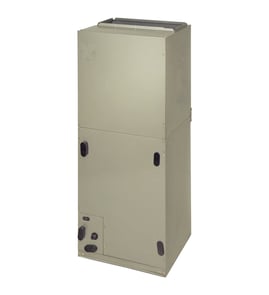


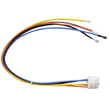
How to buy carrier parts?
You can buy replacement parts for your Carrier FY4ANF018000 air handler directly from the parts list for this model, then match the part by description and part number to what is installed in your unit. For installation and safety requirements, use the installation guide.
How we recommend buying the correct part
Use the model number and the unit rating plate to avoid ordering the wrong component.
- Confirm the model is FY4ANF018000 on the rating plate.
- Identify the failed part by function (blower, control, transformer, heater, capacitor).
- Match the part by part number and electrical rating (voltage, microfarads, amp rating) when applicable.
- If your unit has an electric heat package, verify the MCA and max fuse/breaker requirements before replacing electrical parts.
- Order the part that matches your configuration (for example, heater-equipped vs. non-heater units).
Common FY4ANF018000 parts customers replace
These are examples of parts available for this model that often come up during troubleshooting:
| Symptom | Part to check | Example part on this model |
|---|---|---|
| Blower will not run | Fan control board or blower motor | Central air conditioner air handler fan control board HK61EA006, central air conditioner air handler blower motor HC39AE206 |
| No 24-volt control power | Transformer | Central air conditioner air handler transformer HT01CN241 |
| Electric heat not working | Heating element assembly | Element L99H008 |
| Outdoor unit start issues with certain setups | Start assist components may be required | Check wiring and kit requirements in the installation guide |
Why it matters
Air handlers combine high voltage power, low voltage controls, and condensate management. The installation instructions call out safety practices and code requirements (including NEC considerations), and they note that electrical ratings can differ when a heater package is installed. Using the correct part and rating helps prevent repeat failures and nuisance breaker trips.
Safety and install notes we follow
- Shut off power at the breaker before opening panels.
- Use proper PPE (gloves, safety glasses) and follow local codes.
- Allow service clearance for wiring and servicing.
- If installed over a finished ceiling or living area, follow local code guidance for secondary condensate protection.
You can also search by model number on Sears PartsDirect if you are comparing parts across related Carrier equipment.
Last updated: February 2026
How much to replace an air handler unit?
Replacing a Carrier air handler like model FY4ANF018000 typically costs $1,800 to $3,500 installed, with many replacements landing around $2,800. Your final price depends on the air handler size, electrical and ductwork changes, refrigerant-line work, and local labor rates.
What drives the replacement price
- Unit size and features (ECM/X13 blower style, heater kit compatibility, cabinet configuration)
- Labor scope (attic vs. closet install, access, removal and disposal)
- Electrical work (disconnect, breaker sizing, transformer or control wiring updates)
- Ductwork and airflow setup (sealing, adding flexible connectors to reduce vibration)
- Condensate drain work (trap, drain pan connections, preventing blow-off)
- Refrigerant connection and evacuation (when the coil or metering device work is involved)
FY4ANF018000 install details that can add labor
The installation instructions for this model family call out steps that often affect labor time and materials, including duct sealing, electrical connections, refrigerant tubing connection and evacuation, and condensate drain setup. For example, duct-to-unit joints should be sealed, flexible connectors are recommended to reduce vibration, and ductwork in unconditioned spaces needs insulation with a vapor barrier. See the installation guide.
Quick cost-impact checklist
| Item | Why it changes cost | Typical impact |
|---|---|---|
| Duct modifications | Fit, sealing, vibration control | Low to medium |
| Electrical updates | Safe, code-compliant power and controls | Medium |
| Drain and trap work | Prevent leaks and condensate issues | Low to medium |
| Coil or metering device work | Refrigerant handling steps | Medium to high |
When a repair may be the better value
If the cabinet and coil are in good shape, a targeted repair can sometimes restore operation at a much lower cost than full replacement. Common air-handler repair items include:
- Motor run capacitor: capactr run 12907
- Fan control board: central air conditioner air handler fan control board HK61EA006
- Transformer: central air conditioner air handler transformer HT01CN241
- Blower motor: central air conditioner air handler blower motor HC39AE206
Why it matters
A properly sized and installed air handler protects comfort and efficiency; it also helps prevent airflow problems and condensate issues that can show up when ducts, static pressure, and drains are not set up correctly.
You can order replacement parts for your FY4ANF018000 from the parts list for this model, or search by model number on Sears PartsDirect.
Last updated: February 2026
How big is a 4 ton air handler?
A “4 ton” air handler is sized by cooling capacity (about 48,000 BTU/hr), not by one standard cabinet size; the physical dimensions vary by brand and series. For Carrier air handlers like model FY4ANF018000, use the installation guide to confirm the exact cabinet dimensions and approved installation clearances.
What “4 ton” means (and what it does not)
A 4 ton rating tells you the system capacity the air handler is typically matched with; it does not guarantee a specific height, width, or depth.
- 4 ton equals about 48,000 BTU/hr of cooling capacity
- Cabinet size varies by:
- blower size and motor type
- coil configuration (A-coil, slab coil)
- heater kit installed (if any)
- orientation (upflow, downflow, horizontal)
- duct connection style and filter setup
Typical size ranges you can expect
Most residential 4 ton fan coils and air handlers fall into a “medium to large” cabinet range. Use this as a planning estimate for closets, platforms, and service access.
| What you are measuring | Typical 4 ton range | Why it varies |
|---|---|---|
| Width | ~17 to 24 inches | Coil and blower cabinet family |
| Depth | ~20 to 28 inches | Coil depth, drain pan, filter rack |
| Height | ~45 to 60 inches | Upflow cabinet height and heater space |
How to confirm the right dimensions for your setup
We recommend verifying both the cabinet dimensions and the required service clearances before you build a platform or modify ductwork.
- Check the model label to confirm the exact model number (FY4ANF018000)
- Use the installation guide to verify:
- overall cabinet dimensions
- minimum clearances for service access
- approved mounting method (wall, floor, or suspended)
- duct flange sizes and connection details
- If you are matching to a 4 ton outdoor unit, confirm airflow targets (many systems are set up around 350 to 450 CFM per ton)
Why it matters
If the cabinet is too tight in the space, you can end up with restricted return air, difficult filter changes, and poor access for electrical connections, condensate drains, and blower service.
Ordering parts for this air handler
If you are planning a replacement or repair while measuring, you can order common FY4ANF018000 parts from the parts list for this model, or search by model number on Sears PartsDirect.
Last updated: February 2026
Why is my carrier air handler fan not running?
On your Carrier FY4ANF018000 air handler, a fan that will not run is typically caused by lost 24-volt control power (often a blown 5-amp PCB fuse), no thermostat G signal, a speed-tap/wiring issue at the fan relay PCB, or a failed blower motor, transformer, or control board. Follow the wiring and safety steps in the installation guide.
Safety first
- Shut off power at the disconnect before opening panels
- Confirm power is off with a multimeter before touching wiring
- Restore power only when actively taking voltage readings
Troubleshooting steps (in order)
The FY4A-style setup uses a PCB with a 5-amp protective fuse, fan speed tap selection (SPT), and a time delay relay feature.
- Confirm a fan call: Set thermostat to FAN ON; check for 24 VAC between R and G at the air handler
- Check the PCB 5-amp fuse: A blown fuse stops the board from responding to G
- Verify transformer output: If there is no 24 VAC anywhere, test the transformer supplying the low-voltage circuit
- Inspect wiring and connections: Look for loose spade terminals, burnt connectors, or damaged thermostat cable
- Check speed tap wiring: FY4A fan speed selection is made at the fan relay PCB; a disconnected motor lead at the SPT terminal can prevent blower operation
What failed vs. what you will see
| Likely issue | Common symptom | What to test |
|---|---|---|
| PCB fuse (5 amp) | No response to fan call | Fuse continuity; shorts in low-voltage wiring |
| Transformer | No 24 VAC control power | Line voltage in; 24 VAC out |
| Fan control board | 24 VAC present, no blower output | Relay output to motor; visible heat damage |
| Blower motor | Hums, overheats, or will not start | Free spin, windings, amp draw |
Parts that commonly resolve “fan not running”
- Central air conditioner air handler fan control board HK61EA006
- Central air conditioner air handler transformer HT01CN241
- Central air conditioner air handler blower motor HC39AE206
You can order replacement parts from the parts list for FY4ANF018000, or search by model on Sears PartsDirect.
Why it matters
On FY4ANF018000, the blower depends on stable 24 VAC control power and correct PCB connections; checking control power and the PCB fuse first helps prevent unnecessary motor or board replacement.
Last updated: February 2026
