


What are the names of air conditioner parts?
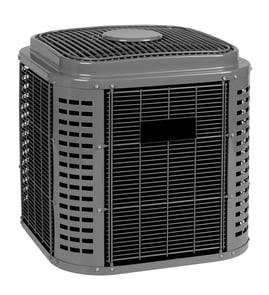
A central air conditioner like the Goodman CE48-1GB is made up of an outdoor condensing unit (compressor, condenser coil, condenser fan) and an indoor section (evaporator coil and blower in a furnace or air handler), plus controls and refrigerant-line components.
Common central AC parts (by section)
Outdoor condensing unit
- Compressor
- Condenser coil
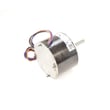
- Condenser fan motor and fan blade
- Contactor (relay)
- Run capacitor
- Service valves and refrigerant ports
Indoor section (furnace or air handler)
- Evaporator coil
- Blower motor and blower wheel
- Air filter (in the return grille, furnace, or air handler)
- Condensate drain pan and drain line
Refrigerant and safety components
- Refrigerant line set (suction line and liquid line)
- Filter drier (helps remove moisture and debris from the refrigerant)
- Pressure switches (on many systems)
Part name quick guide
| Part name | Where it is | What it does |
|---|---|---|
| Compressor | Outdoor unit | Pumps refrigerant and creates the pressure difference for cooling |
| Condenser coil | Outdoor unit | Releases heat to outdoor air |
| Evaporator coil | Indoor unit | Absorbs heat from indoor air |
| Filter drier | Usually in the liquid line | Protects the system from moisture/contamination |
Model-specific part you can order
For the Goodman CE48-1GB, one commonly referenced refrigerant-line component is the filter drier B12192-17.
Why it matters
Knowing the part names helps you describe symptoms accurately (for example, “outdoor fan not running” vs. “no cooling”), match the right replacement part, and avoid replacing the wrong component in the condensing unit or indoor coil section.
Last updated: February 2026
How to tell the tonnage on a Goodman AC unit?
For a Goodman central air condensing unit, we determine tonnage by finding the cooling capacity code in the model number on the outdoor unit data plate. On model CE48-1GB, the “48” indicates about 48,000 BTU/hr, which equals 4 tons (48,000 ÷ 12,000 = 4).
Quick steps (what to look for)
- Locate the data plate on the outdoor condenser cabinet (usually on the side panel).
- Find the model number and look for a capacity code such as 24, 30, 36, 42, 48, 60.
- Convert the code to tons: (capacity code ÷ 12) = tons.
- If the outdoor label is missing, check the indoor coil/air handler data plate for a matching capacity code.
- Confirm your system is properly matched (outdoor unit, indoor coil, and blower size).
Common Goodman capacity codes
| Capacity code in model | Approx. BTU/hr | Nominal tonnage |
|---|---|---|
| 24 | 24,000 | 2.0 |
| 30 | 30,000 | 2.5 |
| 36 | 36,000 | 3.0 |
| 48 | 48,000 | 4.0 |
| 60 | 60,000 | 5.0 |
Why it matters
Correct tonnage affects comfort, humidity control, and efficiency. An oversized unit can short-cycle and leave humidity high; an undersized unit can run constantly and still struggle on hot days.
Related part note (when servicing the sealed system)
If you are diagnosing cooling issues that involve the refrigerant circuit, a common sealed-system component is the filter drier B12192-17. This type of part helps protect the system by trapping moisture and contaminants.
Last updated: February 2026
How much do AC spare parts usually cost?
AC spare parts for your Goodman CE48-1GB central air condensing unit range from low-cost electrical items to high-cost refrigeration components. Most homeowners see parts prices from under $10 up to $3,000+, with many common repairs landing in the $100 to $700 range depending on the exact part and system size.
Typical AC part price ranges (parts only)
- Small electrical items (fuses, wire terminals, some capacitors): $10 to $60
- Contactors and relays: $20 to $150
- Sensors and switches (pressure/temperature, safety controls): $20 to $200
- Fan motors (condenser fan): $100 to $500
- Control boards (on units that use them): $150 to $700
- Major refrigeration parts (compressor, condenser coil): $800 to $3,000+
Example part on this model page
One common sealed-system support part you can price directly for CE48-1GB is the filter drier B12192-17. Filter driers are used in the refrigerant circuit to help trap moisture and contaminants; replacement is typically done during sealed-system service.
| Part type | What it affects | Typical cost range |
|---|---|---|
| Electrical (fuse, capacitor, contactor) | Power delivery and starting | $10 to $150 |
| Air movement (fan motor) | Heat rejection at the outdoor unit | $100 to $500 |
| Refrigeration (compressor/coil) | Cooling capacity and efficiency | $800 to $3,000+ |
What changes the price the most
- System tonnage and compatibility (larger systems usually cost more)
- Sealed-system vs. electrical repair (sealed-system parts and service cost more)
- OEM vs. substitute part options (when available for the model)
- Whether additional parts are needed (capacitor with a motor, contactor with a burned wire)
- Condition of wiring and terminals (heat damage can add parts)
Why it matters
Parts cost is only half the decision. On central air conditioners, labor and refrigerant handling can outweigh the part price, so comparing total repair cost versus the age and condition of the CE48-1GB helps you choose the most practical fix.
Last updated: February 2026
What are common problems with Goodman air conditioners?
Common problems we see with Goodman central air conditioners (including model CE48-1GB condensing units) are “not cooling,” weak airflow, outdoor unit not running, icing, and unusual noises. Many issues start with airflow restrictions or electrical start components, while refrigerant leaks and compressor problems are less common but more serious.
Most common symptoms and likely causes
- Not cooling or cooling poorly: dirty indoor air filter, blocked return/supply vents, dirty outdoor condenser coil, low refrigerant charge
- Outdoor unit will not start: tripped breaker, blown disconnect fuses, failed contactor, failed capacitor
- Short cycling (turns on and off quickly): dirty coil, oversized system, thermostat or control issue, low refrigerant
- Ice on the refrigerant lines or coil: restricted airflow, low refrigerant, dirty evaporator coil
- Buzzing, rattling, or humming: loose panels, failing contactor, fan motor issues, debris in the condenser
Quick checks we recommend first (safe homeowner steps)
- Set thermostat to cool and 3 to 5°F below room temp; confirm it has power.
- Check the breaker and outdoor disconnect (reset only once if tripped).
- Replace/clean the indoor air filter and open all supply/return vents.
- Clear leaves and debris; keep at least 24 inches of clearance around the outdoor unit.
- If you suspect an electrical issue, use a meter only if you are trained; otherwise use a technician.
When a part is often involved
Electrical and refrigerant-circuit problems are the most part-related. For refrigerant-circuit contamination or restrictions, a filter drier is a common service item; for this model, see the filter drier B12192-17.
| Problem area | What you notice | Typical fix type |
|---|---|---|
| Airflow/maintenance | weak airflow, icing | filter/coil cleaning, duct checks |
| Electrical start | outdoor unit won’t run, humming | capacitor/contactor diagnosis |
| Refrigerant circuit | not cooling, icing, oil stains | leak repair, evacuation, recharge |
Why it matters
Running a central air conditioner with low airflow or low refrigerant can lead to coil icing, high operating pressures, and compressor stress. Addressing basic airflow and electrical checks early prevents bigger, more expensive failures.
Last updated: February 2026
What is the life expectancy of a Goodman AC unit?
A Goodman central air condensing unit like model CE48-1GB typically lasts 15 years. With correct installation, clean airflow, and yearly service, many units reach 12 to 20 years before major components (compressor, condenser fan motor, coil) drive replacement decisions.
Typical lifespan ranges
Most central air conditioners fall into these real-world ranges:
- 10 to 12 years: harsh conditions (coastal corrosion, heavy run time, poor airflow)
- 12 to 20 years: normal use with routine maintenance
- 20+ years: excellent installation, clean coils, stable electrical supply
| What you maintain | What it protects | What it helps prevent |
|---|---|---|
| Outdoor condenser coil cleanliness | Compressor and head pressure | High amp draw, overheating, short cycling |
| Indoor airflow (filter, ducts, blower) | Evaporator coil and compressor | Coil icing, low capacity, compressor stress |
| Electrical connections and capacitors | Motors and contactor | No-starts, nuisance shutdowns |
| Refrigerant charge (correct, no leaks) | Compressor | Floodback, overheating, poor cooling |
What shortens (or extends) AC life
These are the biggest factors we see affecting lifespan on central AC systems:
- Installation quality (correct sizing, airflow, refrigerant charge)
- Coil condition (dirty coils raise pressure and heat)
- Refrigerant leaks (low charge strains the compressor)
- Electrical stress (loose connections, failing capacitors)
- Run time and climate (long cooling seasons reduce years of service)
Signs your unit is nearing end of life
If your CE48-1GB is approaching the typical 12 to 20 year window, these symptoms matter most:
- Rising electric bills with no change in usage
- Frequent hard starts, buzzing, or repeated breaker trips
- Cooling is uneven or the system runs constantly
- Repeated refrigerant recharging (leak not resolved)
- Major repair estimates involving the compressor or coil
Why it matters
Knowing the expected lifespan helps you decide whether to repair or replace. Smaller repairs (electrical parts, airflow issues) often make sense; repeated refrigerant leaks or compressor problems usually signal the system is at the replacement tipping point.
If you are diagnosing cooling problems tied to refrigerant restrictions or moisture in the sealed system, the Filter drier B12192-17 is a common component used in sealed-system repairs.
Last updated: February 2026