Error Codes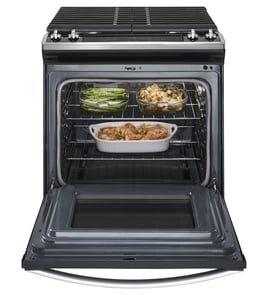




What are the most common issues with DGRSC366?
The most common issues we see on the Dynasty DGRSC366 gas range are burner ignition problems, uneven oven heating, and intermittent electrical symptoms (like a dead display or no spark) caused by wiring or connection faults. Many fixes start with cleaning, tightening connections, and replacing worn hardware.
Common symptoms and what they usually point to
- Burner clicks but won’t light: dirty burner ports, misaligned cap, weak spark, or gas flow restriction
- Burner flame is uneven or lifts off: cap not seated, debris in ports, incorrect air shutter setting
- Oven bakes unevenly: rack position issues, blocked airflow, temperature calibration drift
- No spark on one or more burners: loose/failed wiring, switch/igniter circuit issue, harness damage
- Intermittent power or dead controls: loose connections, damaged harness, failed internal fuse (if equipped)
Quick checks we recommend first (safe, no parts)
- Turn the burner off; let everything cool, then remove and reseat the burner cap so it sits flat.
- Clean burner ports with a soft brush; avoid enlarging ports with metal tools.
- Verify the range is getting steady power (no tripped breaker, solid plug connection).
- If you smell gas, stop and have a qualified technician check the gas supply and fittings.
- If symptoms are electrical, inspect for pinched or heat-damaged wires behind panels.
Parts that commonly solve these problems
If cleaning and reseating do not help, these model-matched parts are often involved:
| Problem area | Part to consider | What it affects |
|---|---|---|
| Burner cap fit/low simmer performance | Cap (simmer) 70001063 | Flame shape and ignition consistency |
| Intermittent spark or dead circuits | Wiring harness 70001106 | Power and signal paths to ignition/controls |
| Loose or broken connection | Jumper wire 70001025 | Restores a failed electrical link |
Why it matters
On a gas range like the DGRSC366, small issues (a mis-seated cap, dirty ports, or a loose wire) can cause repeated clicking, delayed ignition, uneven cooking, and unnecessary stress on ignition components.
Last updated: March 2026
What are the most common stove parts to replace?
For the Dynasty DGRSC366 gas range, the most commonly replaced parts are the ones that see the most heat, movement, and cleaning: oven racks and rack supports, burner caps, and occasional wiring or small hardware. On this model, we commonly see customers shop for items like oven rack 70001093 and cap (simmer) 70001063.
Most common replacement parts (gas range)
- Oven racks and rack guides: warp, discolor, or stop sliding smoothly
- Burner caps and related burner pieces: clog from spills, corrode, or get damaged during cleaning
- Door and trim pieces: cosmetic wear, loosened fasteners, bent trim
- Electrical items (when symptoms point there): wiring harnesses, jumper wires, connectors
- Small mounting parts: screws, grommets, brackets that crack or strip
Quick “symptom to part” guide
| Symptom | Most likely area | Example parts for DGRSC366 |
|---|---|---|
| Rack won’t slide or sits uneven | Rack or rack support/guide | Guide rack 70001097, oven rack 70001091 |
| Burner flame is uneven after cleaning | Burner cap/ports need attention | Cap (simmer) 70001063 |
| Intermittent electrical issue (lights, ignition circuit behavior) | Wiring/connection issue | Wiring harness 70001106, jumper wire 70001025 |
| Loose handle or trim fit | Mounting hardware/trim | Bracket handle (gold) 70002547, trim 70001234 |
How we recommend choosing the right replacement
- Match your model number DGRSC366 first, then confirm the part description.
- Compare the part’s location on your range (left/right, upper/lower, front/rear).
- If the issue is performance-related (flame, heat, ignition), clean and inspect first, then replace the worn part.
- For electrical parts, shut off power to the range before inspecting connections.
Why it matters
Replacing the correct wear item restores safe, consistent cooking performance and prevents secondary damage (for example, a bent rack can stress rack supports; a damaged burner cap can cause uneven flame and poor simmer control).
Last updated: February 2026
What are the parts of a gas stove?
A gas stove (gas range) like the Dynasty DGRSC366 is made up of a cooktop burner system on top and an oven system below, plus the controls and wiring that run ignition and temperature functions. Knowing the main parts helps you identify what to inspect, clean, or replace.
Main parts you will see on the cooktop
- Burners (burner heads) where the gas and air mix
- Burner caps (sit on top of the burner head for proper flame shape)
- Grates (support cookware over the flame)
- Knobs and valve stems (control gas flow to each burner)
- Igniters (spark to light the burner)
Main parts inside and around the oven
- Oven cavity (the insulated cooking box)
- Oven racks (hold cookware at different heights)
- Rack guides (support and position the racks)
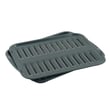
- Broil pan (catches drippings during broiling)
- Lower panels and trim (cover and protect internal components)
Common electrical and connection parts (often involved in “won’t light” issues)
Even gas ranges rely on electrical parts for ignition and controls.
- Wiring harnesses and jumper wires (carry power and signals)
- Connectors and grommets (protect wiring where it passes through metal)
- Gas fittings (such as elbows) used at certain connection points
Model-specific examples of parts we list for DGRSC366
| Area | Example part on this model | What it does |
|---|---|---|
| Oven interior | Oven rack 70001093 | Supports cookware in the oven |
| Rack support | Guide rack 70001097 | Helps position and support racks |
| Broiling | Broiler pan 4396923 | Holds food and catches drippings |
| Electrical | Wiring harness 70001106 | Routes power/signals to components |
Why it matters
When a burner flame is uneven, the issue is often at the burner cap or burner head. When a burner will not spark, the issue is often ignition wiring, an igniter, or a connection. Matching the symptom to the correct “system” (cooktop, oven, or electrical) saves time and helps you order the right replacement part.
Last updated: February 2026