Owner’s manual
 View engine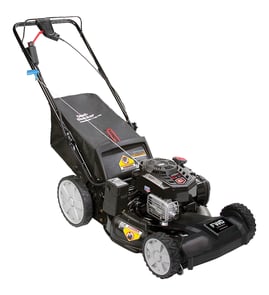


How much does it cost to repair a hydrostatic transmission on a lawn mower?
Hydrostatic transmission repairs are typically a riding-mower cost; your Craftsman 917387630 gas walk-behind mower normally does not use a hydrostatic transmission. If you are pricing a hydrostatic repair for a different mower, plan on a wide range: minor service can be modest, while a full transmission replacement is often one of the most expensive repairs.
Typical cost ranges you can expect
Hydrostatic costs vary most by mower type (residential vs. commercial), whether the unit is serviceable, and labor time.
- Basic diagnosis and fluid service (if serviceable): often the lowest-cost path
- Drive belt, idler, or linkage repair (often mistaken for transmission failure): moderate cost
- Hydrostatic transaxle replacement (common on many riders): high cost
- Commercial-grade hydrostatic replacement: highest cost category
| Repair scenario | What you are paying for | Typical cost impact |
|---|---|---|
| “Won’t move” but engine runs | Belt, cable, linkage, pulleys | Lower to moderate |
| Hydrostatic slipping or weak drive | Service, purge, possible internal wear | Moderate to high |
| Complete hydrostatic failure | Transaxle or transmission replacement + labor | High |
Before you assume the hydrostatic is bad
We see many “transmission” complaints caused by simpler drive issues. Check these first:
- Drive belt condition and tension
- Control cable adjustment and free movement
- Debris wrapped around axles or pulleys
- Wheel key/pin engagement (if applicable)
- Oil leaks around the transaxle (riding mowers)
For model-specific operation and maintenance guidance on your Craftsman 917387630, use the owner's manual.
Why it matters
Hydrostatic replacements can cost more than the value of an older mower. Confirming whether the problem is a belt, cable, or linkage issue first can save significant time and money.
If you need replacement parts for your mower, order from the parts list for model 917387630 or search by model number on Sears PartsDirect.
Last updated: February 2026
Should I use 87 or 89 gas for lawn mower?
For the Craftsman 917387630 gas walk-behind lawn mower, use fresh unleaded regular gasoline (87 octane) for normal operation. Higher octane (89) does not improve power or reliability in this type of small 4-cycle engine; fuel freshness and proper storage matter more. See the owner's manual for fuel handling and operating basics.
What to use (and what to avoid)
- Use 87 octane unleaded from a clean, approved gas can.
- Buy fuel in small amounts so it stays fresh.
- Avoid using old gas that has been sitting for weeks or months.
- Keep gasoline off painted surfaces and wheels; wipe spills promptly.
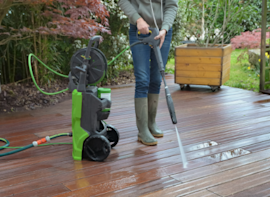
- Do not wash the mower with a hose unless sensitive components are protected (water in the engine shortens engine life).
When 89 octane makes sense
89 octane is fine if it is what you already have, but it is not required for this mower. Octane mainly relates to knock resistance; most walk-behind mower engines are designed to run correctly on regular fuel.
Quick fuel guidance table
| Fuel choice | OK to use? | What you gain |
|---|---|---|
| 87 octane (regular) | Yes (recommended) | Correct performance for typical small engines |
| 89 octane (mid-grade) | Yes | No meaningful benefit in normal mowing |
| Old/stale gas | No | Hard starting, rough running, deposits |
| Fresh gas + stabilizer for storage | Yes | Easier starts after storage, fewer fuel issues |
Why it matters
Most “won’t start” and “runs rough” complaints on walk-behind mowers trace back to stale fuel, dirty carburetor passages, or storage without stabilizer, not octane rating. Using fresh 87 octane and storing fuel correctly protects the carburetor and helps the engine start reliably.
Helpful maintenance parts we stock for this mower
If you are doing seasonal maintenance, these common items for model 917387630 are available:
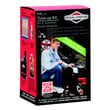
- Briggs & statton tune-up kit 5140B (routine tune-up items)
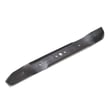
- Lawn mower blade 532406713 (replace a bent or badly worn blade)
You can order replacement parts from the parts list for your model, or search by model number on Sears PartsDirect.
Last updated: February 2026
Why is my self-propelled lawn mower pulling to one side?
If your Craftsman 917387630 self-propelled mower pulls to one side, the most common causes are uneven wheel height settings, a worn or bent blade, or grass and debris buildup under the deck that creates drag. Start by matching wheel heights side-to-side, then inspect the blade and underside of the mower.
Quick checks that fix most “pulling” problems
- Set all wheels to the same cutting height on both sides (front pair match; rear pair match).
- Clean packed grass from the underside of the mower deck (with the engine off and blade fully stopped).
- Inspect the blade for bends, heavy nicks, or uneven wear.
- Check that the blade hardware is tight and the blade is mounted correctly.
- Avoid mowing in wet grass; it increases drag and can steer the mower.
What to inspect first (in order)
| What to check | What you may notice | What to do |
|---|---|---|
| Wheel height settings | One side cuts lower; mower “leans” | Match wheel settings side-to-side |
| Blade condition | Uneven cut; vibration | Replace the blade if bent or badly worn |
| Deck underside buildup | Heavy push; clumping; mower “tracks” | Scrape and rinse the deck, then dry |
| Blade adapter fit | Vibration; blade not running true | Replace the adapter if damaged |
Parts that commonly solve the issue
If the mower is pulling because the cutting system is out of balance or not tracking true, these model-compatible parts are common fixes:
- Replace a damaged blade with the lawn mower blade 532406713.
- If the blade won’t seat tightly or runs off-center, replace the lawn mower blade adapter 581547901.
Why it matters
A mower that pulls to one side usually means the deck is dragging or the blade is cutting unevenly. Fixing it improves cut quality, reduces vibration, and helps prevent premature wear on wheels, brackets, and the self-propel drive.
Helpful reference
For safety steps and maintenance guidance (including stopping the engine and cleaning practices), follow the 917387630 owner's manual. You can also find additional replacement parts by model number on Sears PartsDirect.
Last updated: February 2026
What size belt does a 42 in Craftsman lawn mower take?
A 42-inch Craftsman riding mower belt size depends on the exact tractor and deck model, not the Craftsman name alone. Your Craftsman 917387630 is a 22-inch gas walk-behind mower, so it does not use a 42-inch deck belt; use the parts list and the 917387630 owner's manual to identify the correct belt or drive components for this mower.
Confirm what you have before buying a belt
A “42-inch Craftsman mower” usually means a riding mower with a 42-inch cutting deck. Model 917387630 is a walk-behind mower (22-inch blade), so belt sizing charts for 42-inch decks will not match.
- Check the model tag; it should read 917387630 for this walk-behind mower.
- If you truly have a 42-inch riding mower, use the riding mower’s model number (often under the seat or on the frame).
- If you are replacing a belt, match the old belt’s part number printed on the belt.
- Compare belt routing and pulley layout to avoid ordering the wrong style (deck belt vs ground drive belt).
- Use the parts diagrams for the exact model to confirm length and width.
What belts are common on 42-inch Craftsman riding mowers (general guidance)
For many 42-inch deck riding mowers, deck belts are commonly around 1/2-inch wide and often fall in a mid-90-inch to low-100-inch length range. Exact length varies by deck design, idler setup, and whether the deck is 2-blade or 3-blade.
| Mower type | What “42-inch” refers to | Belt you are usually shopping for |
|---|---|---|
| Riding mower | Deck cutting width | Deck belt (spindles and idlers) |
| Self-propelled walk-behind (917387630) | Blade size is typically 21 to 22 inches | Drive belt (self-propel) or no belt at all depending on design |
If your 917387630 is not self-propelling or the blade will not spin
On this model, many “belt-like” symptoms are actually blade mounting or control issues. These parts are commonly involved:
- Lawn mower blade 532406713 if the blade is damaged or incorrect
- Lawn mower blade adapter 581547901 if the blade slips or will not seat correctly
- Walk-behind lawn mower engine cable 532176556 if the engine zone control is not engaging properly
Why it matters
Belt length and width must match the pulley system exactly. A belt that is even slightly off can slip, jump off, or overload bearings and idlers, leading to poor cutting and premature wear.
Last updated: February 2026
What are the common problems with Craftsman lawn mowers?
Common problems on the Craftsman 917387630 gas walk-behind lawn mower include no-start conditions (often fuel, air, or ignition related), loss of power from grass buildup under the deck, poor or uneven cutting from a worn or loose blade, and excessive vibration from blade or crankshaft issues. For model-specific checks and corrections, use the owner's manual.
Most common symptoms and what usually causes them
- Won't start: dirty air filter, empty or stale fuel, carburetor fuel issues, spark plug or plug wire problem, or the control bar not held to the handle
- Loss of power: cutting too much grass, deck packed with clippings, dirty air filter, too much oil, or walking speed too fast
- Poor cut (uneven): worn or bent blade, uneven wheel height settings, debris under the mower housing
- Excessive vibration: worn or loose blade, broken blade adapter, or a bent crankshaft
- Starter rope hard to pull: blade dragging in grass, blade adapter issue, or brake engagement when the control bar is released
Quick checks we recommend first (fast, high-impact)
- Drain old gas and refill with fresh, clean fuel
- Clean or replace the air filter
- Inspect the spark plug and confirm the wire is firmly connected
- Tip the mower safely and clean the underside of the mower housing (grass and debris buildup)
- Check the blade for damage and confirm the blade bolt is tight
Parts that commonly solve cutting and vibration problems
If your mower is cutting poorly or shaking, these are the most common wear items to inspect and replace:
| Symptom | Most likely wear item | What to look for |
|---|---|---|
| Uneven cut | Lawn mower blade 532406713 | bent edge, heavy nicks, thinning, imbalance |
| Vibration | Lawn mower blade adapter 581547901 | cracks, wobble, stripped drive features |
| Blade won’t stay tight | Lock nut 532409149 | threads worn, nut won’t hold torque |
Why it matters
A dull or damaged blade and a packed mower deck make the engine work harder, which can cause stalling, poor bagging or mulching, and premature wear. Vibration is also a warning sign; fixing it quickly helps protect the blade adapter and engine shaft.
When to stop and inspect immediately
- You hit a rock, stump, or curb and the mower suddenly vibrates
- The blade looks bent or the adapter appears cracked
- The mower throws debris unusually or the cut quality changes abruptly
For ordering model-correct replacement parts, use the parts list for Craftsman 917387630, or search by model number on Sears PartsDirect.
Last updated: February 2026